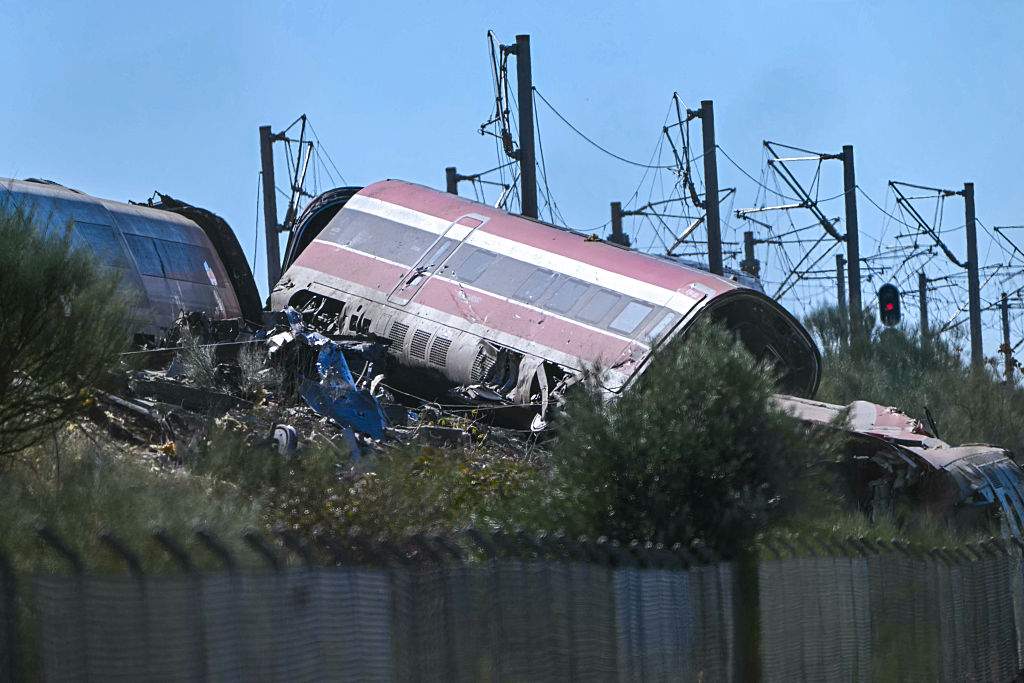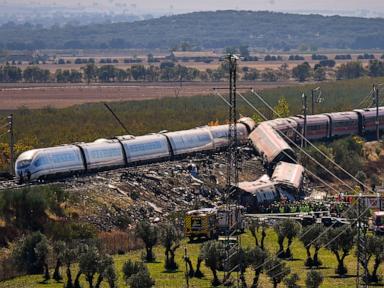
Silence.
That is the first thing you notice when a train stops where it is not supposed to stop, long before the smell of scorched grease or the distant wail of an ambulance reaches the carriage. Anyone who has ridden the rails across the Iberian Peninsula knows the particular, hypnotic percussion of Spanish steel—the low hum of the Cercanías commuter lines threading through the industrial outskirts of Madrid and Barcelona, or the breathless, aerodynamic whisper of the AVE slicing across the arid plains of Castile at three hundred kilometers an hour. We trust that rhythm with a blind, almost religious faith because we have been taught that steel tracks are linear promises, bolted into the earth, immune to the erratic swerves of human error that plague our highways.
This year, that promise fractured four separate times across Spain.
If you look at the standard news tickers, those four fatal crashes are reduced to clinical arithmetic—dates, regional rail corridors, casualty counts, and preliminary statements from Adif (the state railway infrastructure manager) and Renfe (the national operator). Bullet points. Cold ink. A tidy summary designed to be skimmed over morning coffee and forgotten by lunch.
Yet behind every dry dispatch lies a terrifyingly intimate reality, one that forces us to confront a question few travelers want to ask while stowing their luggage overhead: what happens when a world-class transit system begins to fray at its unseen edges?
The Illusion of the Iron Track
To understand why these four collisions and derailments feel like such a profound betrayal, you first have to understand the pride Spain takes in its tracks. Over the last three decades, the country engineered a miracle of modern mobility. It built the longest high-speed rail network in Europe, second globally only to China, transforming a sprawling, mountainous nation into an interconnected web where a morning meeting in Seville and dinner in Madrid became routine. Rail travel became the gold standard of Spanish civic life—clean, punctual, civilized.
Consider a composite morning on a regional commuter line outside Barcelona, a hypothetical scenario built from the real testimonies of daily riders who take these routes every week. Imagine Elena, a thirty-four-year-old hospital nurse gripping a lukewarm thermos, leaning her forehead against the cool glass of a 6:45 AM train. Around her, dozens of passengers are half-asleep, scrolling through phones, mentally rehearsing their shifts. None of them are thinking about axle counters, automated braking beacons, or the aging signaling relays buried in gravel beds beside the sleepers. Why would they? Safety, in modern transit, is supposed to be invisible.
Then comes the violent, unnatural lurch. The screech of locked wheels fighting momentum. The sudden, terrifying physics of tons of rolling stock meeting an obstacle—a stalled freight car, a landslide-choked curve, a misrouted switch—that should never have been there.
When news broke of the first deadly crash early this year, officials treated it as a freak anomaly, an isolated statistical outlier in a system that moves hundreds of millions of passengers annually. By the second fatality, commuters started glancing nervously down the platform when their train ran ten minutes behind schedule. By the third and fourth incidents—spanning regional commuter corridors, freight intersections, and secondary lines—the narrative of mere bad luck collapsed entirely. Four fatal accidents in a single calendar year is no longer an outlier. It is a pattern demanding an explanation.
Anatomy of Four Fractures
So what actually went wrong on the Spanish network this year? When you strip away the bureaucratic jargon of transport ministry press conferences, the four crashes point toward a troubling convergence of old vulnerabilities and new pressures.
Think of a national railway not as a single machine, but as a circulatory system. High-speed lines like the AVE are the thick, reinforced arteries—monitored by continuous digital telemetry, fenced off from stray vehicles, equipped with the European Rail Traffic Management System (ERTMS) that can automatically bring a runaway train to a halt even if the driver loses consciousness. These flagship lines get the lion's share of political ribbon-cuttings and capital budgets.
The veins and capillaries—the Cercanías commuter networks, the regional Media Distancia lines, and the rural freight spurs—tell a very different story.
Across the four deadly incidents this year, investigators kept returning to the same structural fault lines:
- Aging Signaling and Legacy Infrastructure: On several secondary and commuter stretches, trains still rely on older track-circuit systems and legacy automatic braking setups like ASFA (Anuncio de Señales y Frenado Automático). Unlike modern continuous-monitoring systems, older beacons act like intermittent checkpoints—imagine driving down a dark highway where you only get a flash of light every few hundred meters to tell you if the road ahead is blocked. If something goes wrong between those checkpoints, survival shrinks to a matter of human reaction time measured in milliseconds.
- Level Crossings and Perimeter Breaches: Despite decades of pledges to eliminate them, hundreds of at-grade level crossings still slice across rural and semi-urban Spanish tracks. One of this year's fatal collisions underscored just how vulnerable a multi-ton passenger train remains when an unauthorized vehicle or fallen debris obstructs the right-of-way on a blind curve.
- Maintenance Backlogs Amid Record Ridership: Following government subsidies and discounted transit passes introduced to ease the cost of living and curb carbon emissions, passenger numbers on Spanish commuter and medium-distance trains surged to historic highs. More trains running closer together means less downtime for track inspection, steeper wear on switches and rolling stock, and mounting fatigue for signalers and drivers alike.
- Climate Stress on Track Beds: Extreme weather across Spain—torrential downpours following prolonged droughts—has quietly destabilized embankments, culverts, and retaining walls that were engineered for the climate of the 1970s, not the volatile storms of the mid-2020s.
I remember standing on a rain-slicked platform in northern Spain during a rail strike a couple of winters ago, watching a maintenance crew in high-visibility jackets inspect a switched junction with flashlights and crowbars while frustrated commuters paced beneath the flickering fluorescents. At the time, the delay felt like an inconvenience. Looking back through the lens of this year's four tragedies, those workers in the rain were holding together a system stretched far thinner than the glossy tourism brochures ever let on.
The Human Ledger Behind the Statistics
It is easy to talk about systemic strain in the abstract, as if railway safety were merely a math problem waiting for the right spreadsheet. It isn't.
When a train crashes, the shockwaves radiate outward in concentric circles that never make the evening broadcast. First come the victims and their families—people who kissed their partners goodbye at a kitchen table, bought a two-euro ticket at a turnstile, and never walked out of the destination station. Then come the train drivers, the maquinistas, who sit alone at the front of the cab behind a pane of reinforced glass, often the first to see disaster rushing toward them with nowhere to swerve and hundreds of meters of braking distance still separating steel from impact.
Spanish rail unions have spent months sounding the alarm, warning that drivers are increasingly acting as the final, fragile failsafe for aging track infrastructure and understaffed control centers. Yet to speak candidly about safety flaws inside a state-owned enterprise carries its own quiet stigma; nobody wants to be accused of scaremongering or sabotaging public confidence in green transit.
Here is the uncomfortable truth that rarely gets voiced aloud: building shiny new high-speed corridors wins elections, whereas replacing rusted relay boxes, grading rural embankments, and upgrading decades-old commuter signals does not. For years, Spain poured billions into the glamorous visible layer of its rail network while allowing the unglamorous, everyday infrastructure used by working-class commuters to age in place.
We are witnessing the bill come due.
Why This Matters Beyond Spain’s Borders
If you do not live in Madrid, Valencia, or Galicia, it is tempting to file Spain's four deadly rail crashes under distant foreign news. That would be a mistake.
Across Europe and North America, governments are aggressively pushing citizens out of private cars and onto public rail in the name of climate targets and urban livability. Ridership is climbing, schedules are tightening, and rail networks built in the nineteenth and twentieth centuries are being asked to carry twenty-first-century traffic volumes. Spain is simply the canary in the coal mine—a stark demonstration of what happens when ridership growth and political ambition outpace foundational maintenance.
Passengers deserve transparency, not soothing press releases. True rail safety requires boring, relentless, unsexy investment: modernizing every kilometer of legacy signaling, eliminating every remaining level crossing, listening to the warnings of engineers on the ground before a curve fails, and treating a suburban commuter's life with the exact same technological protection as a business traveler's on a flagship express.
Late at night, after the last commuter train rattles past the shuttered storefronts on the edge of town, the tracks go quiet again. Walk near an overpass in the dark and you can still hear the faint metallic ticking of the rails cooling down, contracting millimeter by millimeter in the night air—a reminder that every journey we take rests on thousands of silent, unseen joints holding fast against the weight of the world.