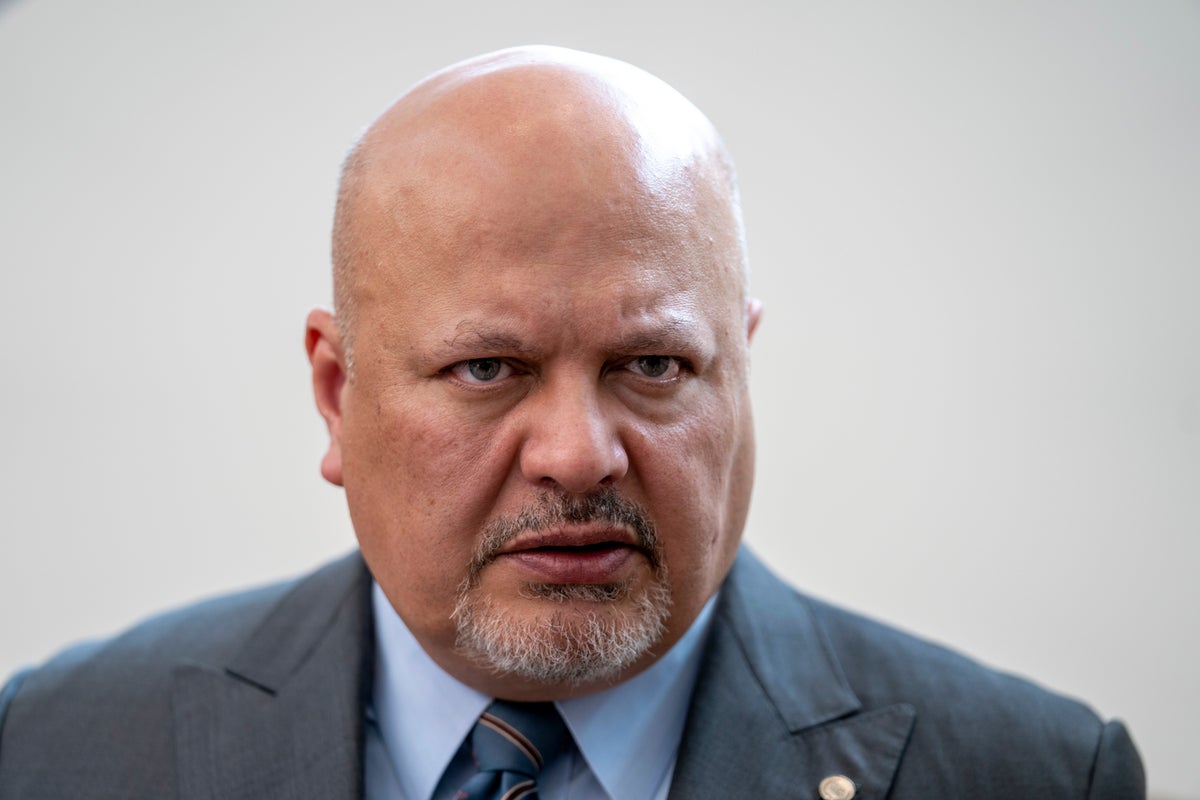
On Tuesday, Britain’s legal watchdog dealt a devastating blow to Karim Khan, the suspended chief prosecutor of the International Criminal Court, by upholding his interim suspension from practicing law in his home country. The Bar Standards Board, which regulates barristers in England and Wales, solidified a temporary ban first imposed in June, leaving the embattled prosecutor legally disarmed in London while he fights for his professional life in The Hague.
This regulatory decision represents far more than a routine disciplinary action against a prominent lawyer. It is the latest tremor in a geopolitical earthquake that threatens to pull down the world's court of last resort. With the oversight body of the International Criminal Court scheduled to vote on his permanent removal on July 24, Khan now faces a coordinated institutional squeeze from which escape seems increasingly unlikely.
The Dual Track of a Legal Crisis
For over two years, a quiet battle has raged behind the scenes of the global court, pitting the personal conduct of its chief prosecutor against the immense political weight of his office. The crisis spilled into the open in June when the executive committee of the Assembly of States Parties, the governing body of the International Criminal Court, took the unprecedented step of suspending Khan and referring him for formal disciplinary proceedings. They concluded that the chief prosecutor had committed serious misconduct.
Eleven days later, the British regulator followed suit, issuing an immediate interim suspension on the grounds of public risk and professional integrity.
Yesterday's closed-door review by the Bar Standards Board in London cemented that domestic ban. The regulator's decision to maintain the suspension indicates that their independent panel found the underlying allegations sufficiently credible to warrant keeping Khan away from legal practice until a full disciplinary tribunal can rule on the merits.
Khan’s legal team, led by the high-profile London libel firm Carter-Ruck, has fought these moves with fierce bureaucratic resistance. They have characterized the court's governing executive committee as a political body that overreached, accusing it of overriding an earlier judicial advisory panel that found a United Nations investigation into the matter inconclusive. But the defense's attempt to frame the regulatory actions as a politicized hit job is struggling to hold water against the parallel findings of two distinct legal watchdogs in two separate jurisdictions.
The Anatomy of the Misconduct Allegations
To understand how Khan arrived at this point of near-total isolation, one must examine the specific and highly detailed nature of the accusations that have slowly corroded his authority since early 2024.
The primary complaint stems from a female aide, a Muslim Malaysian lawyer, who joined Khan's office at the headquarters in The Hague. Whistleblower documents and subsequent investigative reports paint a troubling picture of a coercive relationship within the absolute hierarchy of the prosecutor's office. According to these records, Khan allegedly identified the woman in another department, transferred her directly to his personal staff, and made her a near-constant companion on official international travel.
The specific allegations are explicit. During one official trip, Khan is accused of asking the aide to rest with him on a hotel bed before sexually touching her against her will. Other documented incidents include Khan locking his office door and putting his hand inside her pocket, alongside repeated, unwanted invitations to accompany him on private vacations.
The timeline of these events is critically important. The alleged behavior began shortly after the aide joined his team in early 2023. By early 2024, the allegations had reached the court’s internal independent watchdog. For months, the complaint lingered in a state of suspended animation. The complainant was reportedly hesitant to pursue a formal inquiry because she feared that a public scandal would derail the court’s highly sensitive work, particularly the pending arrest warrants for senior leaders.
The situation was further complicated in August 2025, when a second woman came forward. She accused Khan of a pattern of predatory behavior dating back to 2009, long before his appointment to the international tribunal, alleging that he had repeatedly pressured her for sexual relations while he was practicing as a private barrister. This secondary accusation effectively destroyed the defense argument that the allegations were merely a contemporary conspiracy designed to undermine his recent work at the war crimes tribunal.
The British Regulatory Machinery
The decision by the Bar Standards Board to uphold the interim suspension of a sitting international prosecutor is an extraordinary measure. In the United Kingdom, the regulator reserves such immediate suspensions for cases where the public interest and the reputation of the legal profession are at severe, immediate risk. It is a preventive mechanism, not a final finding of guilt, but its deployment is a clear indication of the gravity of the prima facie evidence.
Under British administrative law, an interim panel must satisfy itself that the allegations, if proven, would lead to a charge of serious professional misconduct and likely disbarment. By refusing Khan's appeal to lift the suspension, the panel confirmed that the threshold of risk remains high.
This leaves Khan in a highly unusual position. He is a Queen's Counsel (now King's Counsel) who is legally prohibited from acting as a barrister in the jurisdiction that formed the bedrock of his career.
This domestic disqualification severely weakens his position as he prepares for the decisive battle at the United Nations headquarters in New York on July 24. It is difficult for his diplomatic allies to argue that the allegations are merely the work of hostile intelligence agencies when the highly conservative legal establishment of his own country has determined that he is currently unfit to practice law.
The Geopolitical Crosswinds
No analysis of Karim Khan's fall can ignore the ferocious political arena in which the International Criminal Court operates. Khan's supporters have consistently argued that the timing of the leaks and the sudden acceleration of the disciplinary process are politically motivated.
They point to his boldest actions as chief prosecutor. He successfully secured an arrest warrant for Russian President Vladimir Putin over the war in Ukraine. More controversially, he sought and obtained arrest warrants for senior Israeli officials, including Prime Minister Benjamin Netanyahu, alongside leaders of Hamas, in connection with the conflict in Gaza.
These actions drew immediate, furious retaliation from major global powers. The United States government, which is not a member of the court, threatened to dismantle the institution and imposed sanctions on its personnel. Prominent politicians in Washington openly warned of severe consequences for any international official who pursued prosecutions against American allies.
For Khan’s defenders, the resurrection of the 2023 misconduct allegations in late 2024 and their ultimate weaponization in 2026 are the direct result of this external pressure. They argue that the court's governing body succumbed to political intimidation, using the internal complaints as a convenient pretext to remove a prosecutor who had become too dangerous to powerful state interests.
Yet, this narrative of a grand political conspiracy is increasingly difficult to reconcile with the institutional facts. The first reports of misconduct were filed by a female colleague within the court itself, long before the Gaza warrants were even drafted. To suggest that her complaint was a manufactured intelligence operation requires ignoring the extensive internal documentation, the independent corroboration by whistleblowers, and the parallel findings of the British regulator.
The tragic irony of the situation is that both things can be true at once. Khan may have been targeted by political adversaries who exploited his vulnerabilities, but those vulnerabilities were of his own making.
The Institutional Survival of the Court
The upcoming vote on July 24 by the Assembly of States Parties is not just about the fate of Karim Khan. It is a critical test of the institutional credibility of the International Criminal Court.
If the member states vote to retain Khan, they risk permanently damaging the court’s moral authority. The tribunal’s mission is to hold the world’s most powerful individuals accountable for heinous crimes against humanity. To do so effectively, its leadership must be beyond reproach. A prosecutor dogged by serious, credible allegations of domestic abuse of power and sexual misconduct cannot credibly stand before international tribunals to demand justice for victims of systemic violence.
Conversely, if the assembly votes to dismiss him, it will demonstrate that the institution’s rules apply to everyone, including its most powerful officials. It would show that the court refuses to sacrifice its internal ethical standards on the altar of geopolitical convenience.
The deputy prosecutors who are currently running the office in Khan's absence have maintained that the work of the court continues uninterrupted. The investigations into Ukraine, Gaza, and other global conflict zones are institutional mandates, not personal crusades.
The era of the celebrity prosecutor is ending. The immediate suspension of Karim Khan by both his home regulator and his international employers suggests that the era of institutional accountability has finally begun. If the global legal order is to survive the challenges of a fracturing world, it must prove that no one, not even the chief prosecutor of the war crimes court, is above the law.