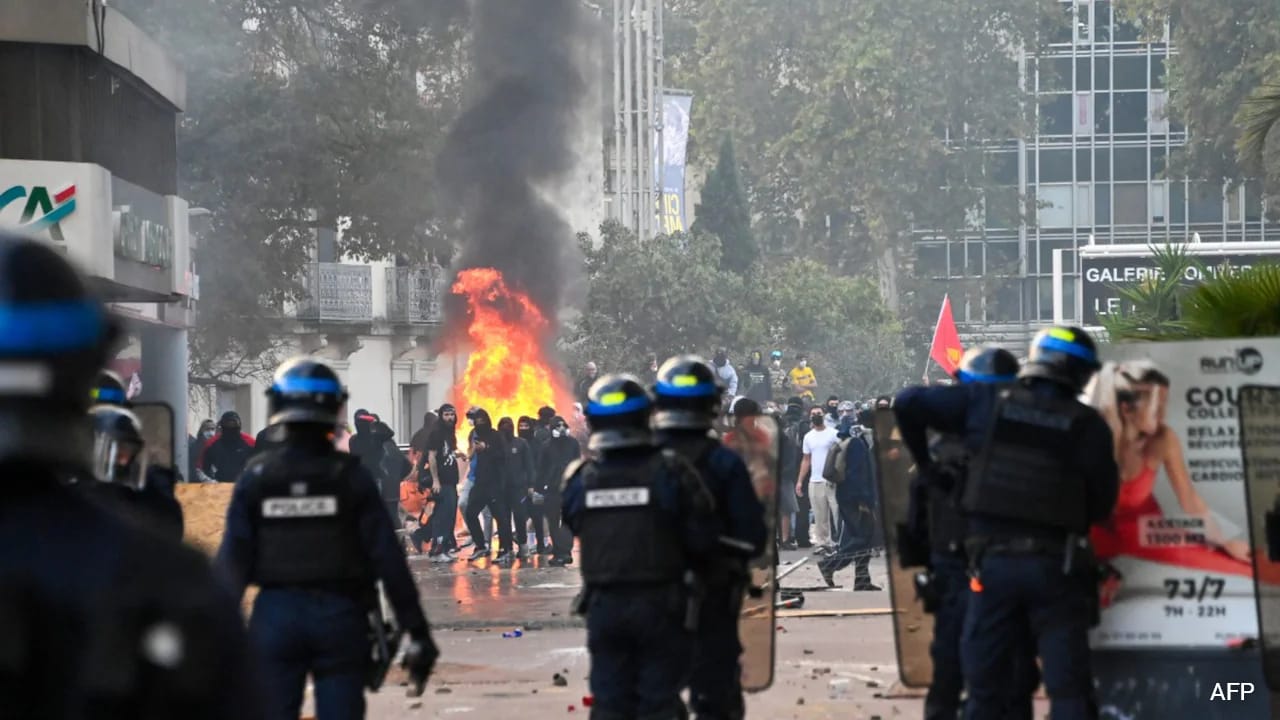
Turn on the news in Paris on any given weekend and you'll see a familiar, tense script playing out. Riot gear, armored vehicles parked near iconic monuments, and tens of thousands of officers lining the boulevards. When the French interior ministry announces it's sending out 70,000 police officers to handle weekend demonstrations, it isn't just a security update. It’s a sign of a deep, ongoing friction between citizens and the state over economic pressure, living costs, and political frustration.
If you're wondering why these security numbers keep scaling up or what's actually driving people into the streets week after week, you have to look past the smoke canisters. This isn't a sudden flash in the pan. It's a simmering movement born from soaring everyday expenses, student grievances regarding educational conditions, and general weariness with government policies.
The Anatomy of a Massive Security Response
Mobilizing 70,000 law enforcement personnel requires a massive logistical machine. We aren't just talking about local beat cops standing on corners. This high-stakes deployment pulls in mobile force units, specialized crowd control squads, drones overhead, water cannons, and armored vehicles positioned at strategic choke points.
Authorities face a persistent dilemma. How do you protect the constitutional right to peaceful protest while keeping violent agitators from hijacking the march? Experience from previous weekends shows that large demonstrations often start with legitimate grievances—such as rallies against the cost of living or student-led marches—only for fringe groups to turn the dispersal phase into a battlefield.
To combat this, the interior ministry relies heavily on preventive tactics:
- Conducting targeted security checks at railway stations and major entry roads to confiscate objects that can be used as weapons.
- Restricting or banning marches in specific sensitive city centers while forcing approved demonstrations onto rigid, pre-planned routes.
- Closing high-profile cultural landmarks and major tourist spots—like parts of the Louvre or canceling sections of major events—to minimize collateral damage.
Why Protesters Keep Coming Back
You can't solve civil unrest purely with batons and tear gas. The root cause of these recurring mobilizations is economic anxiety. Inflation, climbing utility bills, and housing strains have left a massive chunk of the French population feeling squeezed. When students protest school funding or unions strike over wages, it strikes a chord with workers who feel left behind by shifting national policies.
The government draws a hard line between authorized union marches and what officials label as radical elements bent on destruction. Interior Minister Laurent Núñez has repeatedly emphasized a zero-tolerance policy toward looting and attacks on public property. Yet, critics argue that heavy-handed policing and blanket bans on certain assemblies only escalate tensions rather than calming them down.
What This Means for Everyday Life
If you're traveling to France or living there, these weekend deployments disrupt daily rhythms instantly. Public transport gets rerouted, shops board up their windows with plywood just in case, and major city centers turn into ghost towns on Saturday afternoons.
The strategy keeps evolving, but the core issue remains unresolved. Until the underlying economic pressures driving citizens to the streets are addressed, those 70,000 officers are going to keep seeing familiar faces across the barricades.
France On Edge: 70,000 Police Deployed As Anti-Government Protests Sweep The Country | N18S
This short video clip provides a quick visual look at the heavy police presence and anti-government protests sweeping French cities.