The Eurovision Song Contest (ESC) functions as a high-stakes laboratory for the intersection of soft power, transnational broadcasting, and consumer-led activism. While the EBU (European Broadcasting Union) maintains a mandate of "non-political" cultural exchange, the 2024 edition in Malmö demonstrates a systemic failure of this neutrality framework. The contest is currently navigating a triangular conflict between institutional bylaws, public sentiment regarding the conflict in Gaza, and the commercial requirements of its sponsorship tier. This isn't merely a cultural dispute; it is a stress test of the EBU’s governance structure and its ability to insulate a multi-million-euro intellectual property from geopolitical volatility.
The Mechanics of Institutional Neutrality
The EBU operates under a governing charter that treats participation as a matter of public service broadcasting rather than state-level politics. This distinction is the primary mechanism used to justify Israel’s inclusion via its national broadcaster, Kan. However, the EBU’s own precedent—specifically the 2022 exclusion of Russia—created a structural inconsistency that critics have exploited. If you found value in this piece, you might want to check out: this related article.
The divergence in these two cases highlights the EBU’s reliance on "Broadcaster Compliance" versus "State Conduct." In the Russian context, the EBU argued that the membership of Russian broadcasters posed a threat to the competition’s reputation because those entities were deemed mouthpieces for the state. In the current iteration, the EBU maintains that Kan satisfies the requirements of an independent public broadcaster, effectively isolating the media entity from the military and political actions of the Israeli government. This creates a friction point: the audience perceives the contest as a platform for nations, while the organizers view it as a closed-loop agreement between television networks.
The Economic Cost of Political Proximity
The EBU’s revenue model relies on three primary streams: host city investment, broadcast rights fees from participating members, and "Big Five" (UK, France, Germany, Italy, Spain) contributions. When a participant becomes a lightning rod for boycotts, the risk distributes across several tiers of the operation. For another look on this event, refer to the latest coverage from E! News.
- Sponsorship Attrition: The primary risk involves global partners like Moroccanoil. When activist groups target sponsors, the brand equity of the partner is leveraged against the EBU. If a sponsor perceives that the cost of negative sentiment (brand damage) exceeds the value of the 160 million viewers reached, the financial bedrock of the contest destabilizes.
- Security Overhead: The City of Malmö and the Swedish police (Polisen) have had to scale operations to a "Level 4" security environment. This includes reinforcements from Denmark and Norway. This represents a significant externality—a cost born by the public and the host city that was not factored into the original economic impact projections.
- Talent Retention and Morale: The pressure on individual artists (such as Olly Alexander or Bambie Thug) to withdraw creates a secondary crisis. If a significant percentage of performers were to coordinate a withdrawal, the broadcast product would suffer a catastrophic loss in quality, leading to potential "make-good" requirements for advertisers.
The Content Filtering Process
The controversy surrounding Eden Golan’s entry, "Hurricane," illustrates the EBU’s granular control over political expression. The initial submission, "October Rain," was rejected for violating Rule 2.7, which prohibits lyrics, speeches, or gestures of a political or commercial nature.
The transition from "October Rain" to "Hurricane" functions as a semantic sanitization. The EBU’s role shifted from "event organizer" to "lyrical editor," an intervention that paradoxically highlights the very politics it seeks to suppress. By forcing a rewrite, the EBU validated the claim that the original content was a political statement, thereby tying the broadcast even more tightly to the external conflict. This process demonstrates that "neutrality" in a high-tension environment is not a passive state but an active, ongoing effort of censorship and negotiation.
The Malmö Paradox: Local vs. Global Narratives
Malmö was selected for its infrastructure and history with the contest, but its demographic composition makes it a volatile site for this specific geopolitical flashpoint. The city has a large Palestinian diaspora, creating a geographic proximity between the protest and the venue that was less pronounced in previous years.
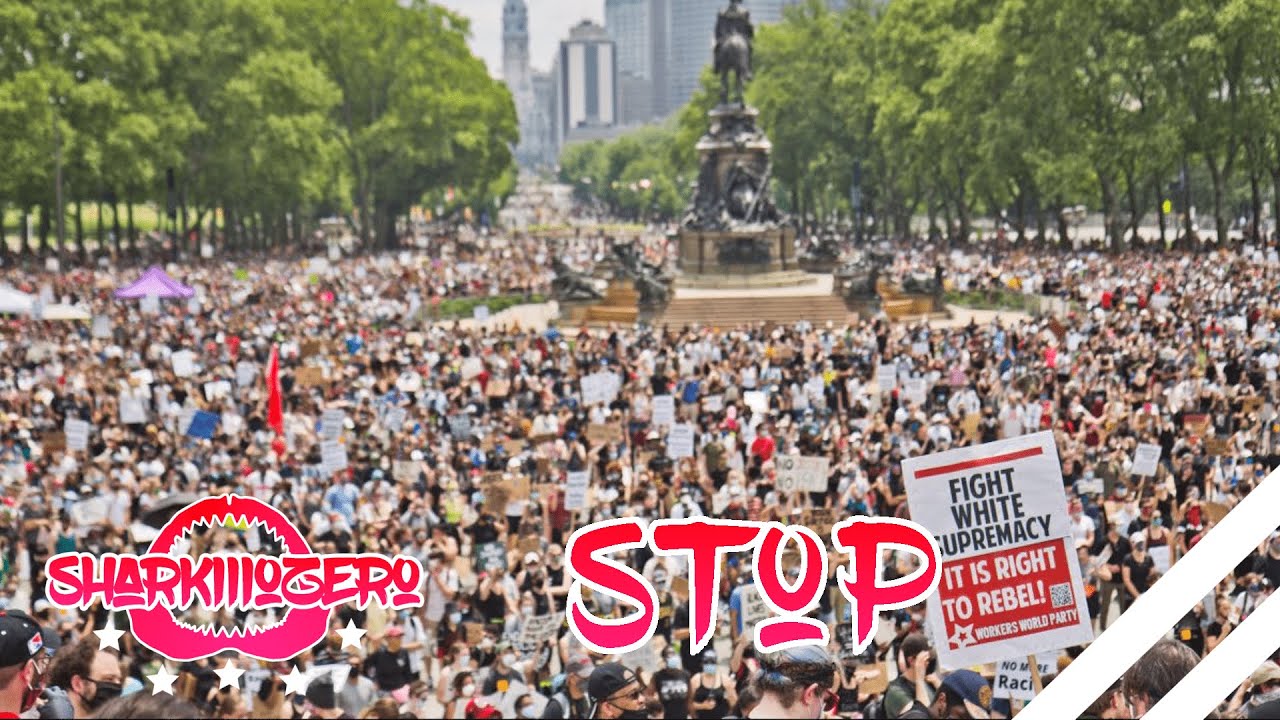
The protest movement has organized under the "Stop Israel" banner, planning large-scale marches coinciding with the semifinals and final. The EBU’s strategy to mitigate this has been the implementation of a "Security Ring" policy, which includes:
- Ban on flags other than those of participating nations and the Pride flag.
- Prohibition of "political" signage within the Malmö Arena.
- Enhanced digital surveillance and social media monitoring to identify potential disruptions in real-time.
These measures create a "Clean Zone" for the cameras, ensuring that the television audience sees a curated version of reality that differs sharply from the physical environment outside the arena walls. This divergence between the "Broadcast Reality" and the "On-Ground Reality" erodes the authenticity that the ESC brand relies on.
The Influence of Digital Grassroots Activism
The 2024 boycott movement is distinct from previous years due to the sophistication of its digital coordination. Activists are not just calling for a television blackout; they are targeting the "Eurovision Industrial Complex." This includes:
- Streaming Sabotage: Coordinating to depress the chart performance of specific entries.
- Fan Media Blackouts: Major fan sites and YouTube commentators refusing to cover the Israeli entry, thereby creating an information vacuum around the performance.
- Direct Action via Social Media: Flooding the official Eurovision accounts with protest imagery to make the comment sections unusable for standard fan engagement.
This digital friction reduces the "Social Currency" of the event. Eurovision traditionally thrives on "Second Screen" engagement (Twitter/X, TikTok). When that engagement becomes a battleground, the casual viewer—the core demographic for advertisers—is likely to disengage to avoid the toxicity of the discourse.
Operational Vulnerabilities in the Live Broadcast
The most significant threat to the EBU’s "non-political" mandate is the unpredictability of a live global broadcast. Despite a seven-second delay often used in such high-profile events, the risk of "Stage Infiltration" or "Artist Defiance" remains high.
If an artist displays a flag or utters a slogan during the live feed, the EBU faces a binary choice:
- Sanction the Artist: This risks a backlash from other performers and the public, potentially triggering a mid-contest walkout.
- Ignore the Violation: This undermines the EBU’s authority and sets a precedent that the rules are unenforceable, inviting further disruption.
The EBU has attempted to mitigate this by briefing delegations on the legal and financial consequences of rule-breaking, but in an environment where moral stance is valued higher than professional compliance by the public, these threats may lack teeth.
Structural Reform as a Survival Necessity
The EBU’s current "Political Neutrality" framework is a legacy tool designed for a 20th-century media environment. It assumes that the organizer can dictate the boundaries of conversation. In the modern era of fragmented media and hyper-polarized audiences, this model is failing.
To preserve the ESC brand, the EBU must move toward a "Values-Based Governance" model rather than a "Neutrality-Based" one. This would involve:
- Transparent Criteria for Suspension: Replacing the vague "repute of the contest" clause with objective metrics regarding international law or human rights, applied consistently to all members.
- Crisis Management Decentralization: Giving host cities more agency in the participation dialogue to ensure local stability.
- Redefining "Political": Acknowledging that in a contest based on national identities, the mere act of participation is political, and shifting the focus to "Harm Mitigation" rather than "Silence."
The 2024 semifinals are not just a musical competition; they are the execution phase of a massive risk-mitigation strategy. The success of this week will not be measured by the quality of the songs, but by whether the EBU can prevent the external world from shattering the televised illusion of European unity. The current trajectory suggests that while the broadcast may remain intact, the institutional credibility of the EBU has been permanently compromised by the friction between its bylaws and the global political climate.
The immediate strategic play for stakeholders is to pivot toward "Controlled Transparency." The EBU must stop insisting the event is non-political—a claim that is now demonstrably false to the average consumer—and instead frame it as a "Difficult Dialogue." By acknowledging the tension rather than suppressing it, they may retain the engagement of a disillusioned audience. Failure to do so will result in the "Eurovision" brand becoming synonymous with institutional stagnation, making it an increasingly toxic asset for future host cities and corporate sponsors.