Beijing smells like cold exhaust and anticipation in the winter. Inside a nondescript office park in the Haidian district, a young engineer named Zhang stands by a window, watching the gray fog roll past the high-rises. His eyes are bloodshot. On his desk sits a small, metallic component—a fuel injector valve for a liquid-oxygen kerosene rocket engine. It is light enough to hold in one hand, but it carries the weight of a billion-yuan dream. Zhang does not think about geopolitics when he tightens a bolt. He thinks about the microscopic tolerances of metal under extreme heat. He thinks about whether his company will exist in three years.
Thousands of miles away, across a different ocean, Elon Musk’s SpaceX is preparing for a record-shattering public listing that could value the aerospace giant at upwards of $250 billion. That number is too large for the human mind to properly digest. It is an abstract monolith. But to Zhang, and to the hundreds of private space startups currently blooming across China, that number is a starter pistol.
The global space race is no longer just a clash of national flags and government budgets. It is a race of private capital, stock tickers, and initial public offerings. The cosmos is being commercialized, and the silent scramble to fund the next giant leap has officially begun.
The Mirage of the Monopoly
For a long time, the narrative surrounding Western space exploration was simple: SpaceX won. By perfecting reusable rockets, Falcon 9 brought the cost of reaching orbit down to a fraction of traditional government launches. The company became a utility, a dominant force that seemed to leave no room for competitors.
But monopolies are rarely permanent in a hungry global economy.
Consider what happens next when a market becomes heavily reliant on a single provider. Prices eventually stabilize, capacity hits a ceiling, and customers begin looking for a backup plan. In the business of orbit, a backup plan is not just convenient. It is vital. National security, global telecommunications, and climate monitoring cannot depend on the launch schedule of just one company, no matter how revolutionary it is.
This is where the Chinese private space sector saw its opening. Five years ago, companies like LandSpace, iSpace, and Galactic Energy were whispered about in venture capital circles as mere imitators. They were small teams working with modest state-backed grants and early-stage seed money. They built small solid-fuel rockets, launched minor payloads, and celebrated modest victories.
Then the valuation of SpaceX skyrocketed. Suddenly, the financial world realized that space was not a money pit; it was a frontier with tech-industry margins. The realization rippled across the Pacific. Chinese venture capitalists, looking for the next generational investment after the smartphone and electric vehicle booms, turned their gaze upward.
The Factory Floor at Midnight
To understand how fast this industry is moving, you have to look at the numbers behind the metal. Beijing’s policy shift in 2014 first opened the door for private capital to flow into aerospace, a sector previously guarded with fierce state jealousy. By 2024, the commercial space sector was explicitly designated as a "strategic emerging industry" at the highest levels of Chinese economic planning.
The results on the ground are tangible, loud, and expensive.
In late 2023, LandSpace’s Zhuque-2 rocket became the world’s first methane-powered rocket to successfully reach orbit, beating Western rivals to a crucial technological milestone. Methane burns cleaner and is far easier to produce than traditional rocket propellants, making it the holy grail for cheap, reusable spacecraft. It was a clear signal to the global market: the startups were no longer just building models. They were building the future.
But engineering genius requires a relentless pipeline of cash. A single launch failure can wipe out years of development and millions of dollars in seconds. When a rocket explodes on a pad, it does not just scatter aluminum and telemetry data across the desert; it shatters investor confidence.
That is why the upcoming wave of public listings is so critical. Chinese space startups are eyeing the public markets not out of vanity, but out of necessity. They need the deep, liquid pools of capital that only an IPO can provide. They are racing to mature their technology fast enough to look attractive to public shareholders before their private venture runways run out.
The math is brutal. Developing a medium-lift, reusable liquid-propellant rocket costs hundreds of millions of dollars. Testing it requires state-of-the-art facilities, specialized test stands, and regulatory clearances that take years to secure. Private equity can only carry a company so far through this valley of death. The public market is the oasis they are all trying to reach.
The Invisible Constellations
We rarely think about satellites unless our GPS drops or the weather forecast misses a major storm. But right now, an invisible real estate war is being fought 300 miles above our heads. Low Earth Orbit (LEO) is a finite resource. There are only so many orbital planes, only so many frequencies, and only so much room before the risk of collisions becomes unmanageable.
SpaceX’s Starlink already has thousands of active satellites in orbit, painting a digital web around the planet. The goal is total global coverage.
For China, letting a single Western corporation control the orbital infrastructure of the future is an unacceptable risk. The response is the creation of its own mega-constellations. Projects like the "G60 Starlink" in Shanghai and the national "Guowang" network aim to launch tens of thousands of satellites over the next decade.
But who is going to put them up there? State-owned giants like CASC have their hands full with deep-space exploration, lunar bases, and massive military payloads. They lack the surplus capacity to launch thousands of commercial internet satellites every single month.
The burden falls directly on the private startups.
This creates a guaranteed, massive domestic market for companies like Orienspace and Space Pioneer. They have a built-in customer: their own government’s digital ambitions. If they can prove their rockets are reliable and reusable, they are guaranteed a steady stream of revenue that would make any Wall Street analyst drool. The IPO boom is not just speculation; it is the financing of a massive infrastructure project that has already been greenlit.
The Weight of the Ring
It is easy to get lost in the romance of the stars, but the people who build these companies live in a world of harsh trade-offs.
I remember talking to an aerospace executive who spent three years sleeping on a cot in a hangar near the Gobi Desert. He spoke of the terrifying silence that falls over a control room in the final ten seconds of a countdown. Your entire life's work, the jobs of three hundred employees, and the retirement funds of early believers are sitting on top of a controlled explosion. If it goes well, you get a brief mention in a tech blog. If it goes wrong, you are a footnote in a cautionary tale about over-leverage.
He told me that the hardest part wasn't the physics. The physics was predictable. Gravity always pulls at $9.8 m/s^2$. The metallurgy followed strict laws.
The hardest part was the human psychology. It was convincing a twenty-four-year-old software genius to turn down a massive, stable salary at an internet giant like Tencent or Alibaba to come scratch out a living at a startup where the product might explode on television. It was convincing traditional bankers, used to evaluating real estate portfolios and manufacturing plants, to underwrite a vehicle designed to leave the planet entirely.
The upcoming IPOs change that psychological equation. A public listing offers liquidity. It offers validation. When a company lists on the Shanghai STAR Market or the Hong Kong Stock Exchange, it signals to the world that space is a legitimate, sustainable career path, not just a billionaire’s playground or a state-funded science experiment.
The Shift in the Wind
We are witnessing a profound decentralization of technological power. The early days of the space age were defined by absolute government control—the USSR versus NASA, a clash of two titanic ideologies where cost was no object. The second phase was defined by the disruptors—the Silicon Valley mavericks who treated rockets like software and forced the old guard to adapt.
Now, we are entering the third phase. The institutionalization of commercial space.
It is an era where the success of a launch vehicle is measured not just by its thrust-to-weight ratio, but by its price-to-earnings ratio. The competitors to SpaceX are not coming from legacy aerospace defense contractors who take a decade to design a fuel tank. They are coming from lean, agile, aggressively funded startups in the industrial parks of Shenzhen and Beijing, operating with the same frantic energy that built the global smartphone supply chain.
This creates a strange, beautiful paradox. The more crowded the sky becomes with competing systems, the cheaper access to space becomes for everyone. A university in Kenya will be able to launch a climate monitoring satellite for the price of a mid-sized sedan. An agricultural cooperative in Brazil will have access to real-time soil moisture data refreshed every hour. The financial competition between East and West is the engine that will democratize the cosmos.
The View from the Ground
Back in Haidian, the afternoon light begins to fade. Zhang finally puts down his wrench. The valve injector is verified. It is perfect. In a few months, it will be installed in a rocket frame, driven out to a launch pad in Inner Mongolia, and fired into the sky.
If it works, his company moves one step closer to its public offering. The founders will ring a bell on a trading floor. The early investors will look at their screens and see their risk rewarded. The headlines will talk about capital flows, market share, and geopolitical balance.
But Zhang will likely not be on that trading floor. He will be back at this desk, looking at the data from the telemetry sensors, already working on the next iteration. He knows what the markets are only just beginning to realize. Money can build the ladder, but it is human ingenuity, stubborn and exhausted, that actually climbs it.
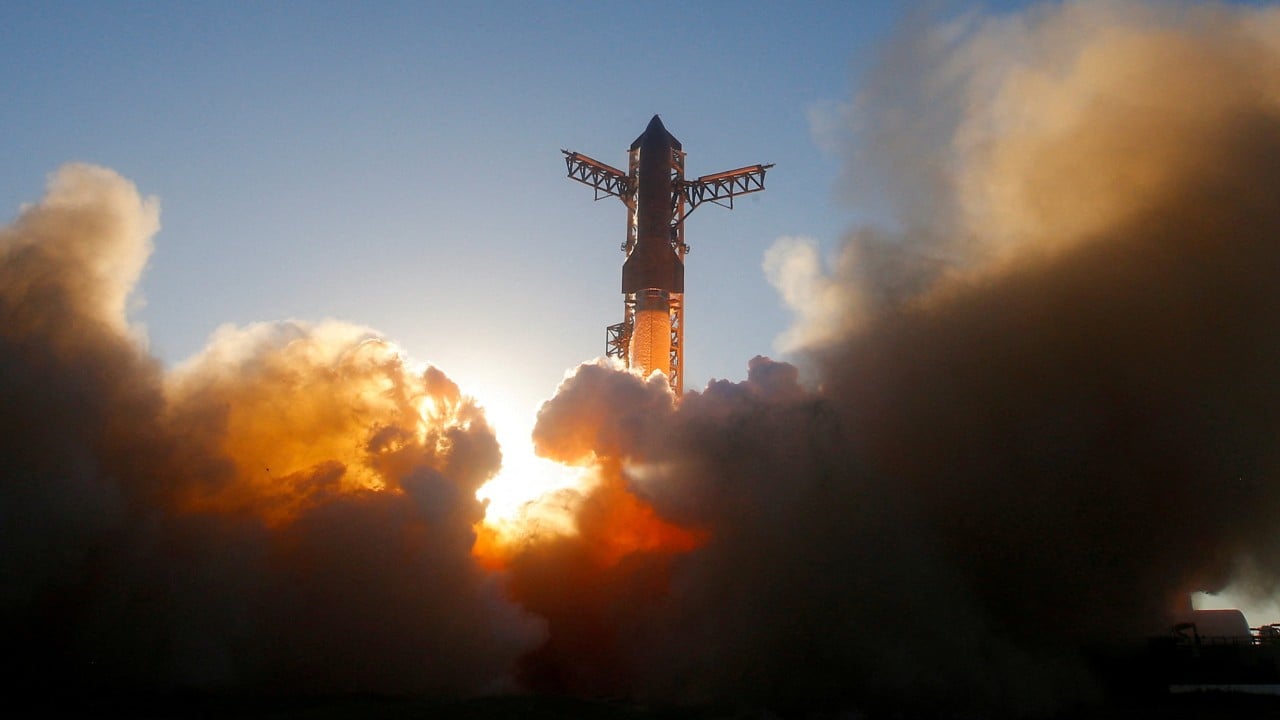
The fire that lights up the night sky during a launch is spectacular, but the true heat is found in the quiet, desperate rooms where people dare to build things that defy gravity. The tickers will fluctuate, the valuations will rise and fall like the tide, but the trajectory is set. We are going up, and we are taking the markets with us.