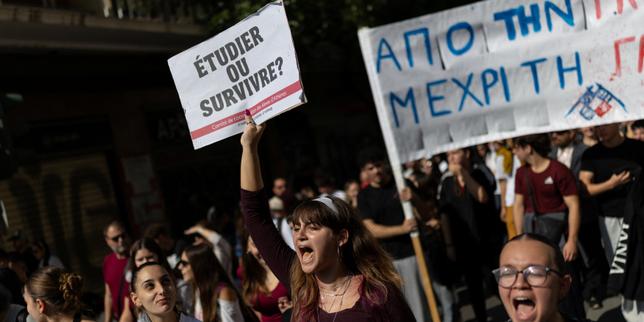
Thousands of students, teachers, and civil servants poured into central Athens and other Greek cities in October 2026, chanting slogans linking their fight directly to protests in France. Their message was blunt. They aren't marching out of abstract political theory. They're marching because rent eats half a paycheck, classrooms have broken windows or dodgy heating, and studying your way out of poverty feels like running up a downward escalator.
When young Greeks point to France, they're looking at a familiar playbook of street pressure over public services and living costs. French high schoolers and university students have long used walkouts, street marches, and cross-sector solidarity to force governments to answer for underfunded schools and shrinking horizons. Seeing French youth push back hard gave Greek protesters a spark—and a reminder that staying quiet hasn't fixed broken radiators or sky-high grocery bills.
Why French Street Action Resonates So Strongly in Athens
Protest culture travels fast when the underlying pain feels shared. Across Europe, young people are hitting the same brick walls: steep housing costs, stagnant real wages, and public institutions that look stretched thin. In France, student demonstrations over public funding and living pressures have drawn wide attention, while in Greece, demonstrators chanted calls for free, public education in solidarity with French peers.
Look closer, though, and you'll notice a twist. Greece already has a fierce protest tradition of its own—from the 1973 Athens Polytechnic uprising to years of anti-austerity marches between 2009 and 2018. So why invoke France right now? Because seeing another European country's youth make headlines for refusing to accept declining public standards makes local grievances feel less isolated. When a student in Athens says French protests help push change back home, they're talking about momentum, visibility, and bargaining power.
Still, copying France isn't a magic wand. French movements often collide with deep institutional gridlock and sharp clashes over policing and public order. Greek organizers know their economy and labor market carry scars from over a decade of austerity that still shape everyday life. Borrowing the energy doesn't mean pretending the two countries have identical budgets or safety nets.
Precariousness and the Squeeze on Young Greeks
Let's be honest about what "precarity" actually means on the ground in Greece. It's not a buzzword from a sociology seminar. It's working uncertain hours, living with roommates longer than you planned, or watching inflation chip away at what little you earn. Data from Eurostat showed Greek inflation jumping to 5.1% year-on-year in September 2026, well above the eurozone average of 3.8%.
When essentials climb that fast, young people feel the squeeze first. Rent and daily expenses don't care whether you're writing a thesis or working a shift. Even when headline economic numbers look better than they did during the worst debt-crisis years, purchasing power for ordinary households and students hasn't magically caught up.
A degree is supposed to open doors, yet too many graduates face low pay, short-term contracts, and housing costs that punish anyone starting from scratch.
Government officials have pointed to state support measures—including roughly €1 billion in aid aimed at helping households and businesses cope with elevated energy costs. Subsidies can take the edge off a brutal bill. They don't, by themselves, fix structural wage weakness or turn precarious entry-level work into stability.
What Is Actually Happening Inside Greek Public Education
Walk past the slogans and you hit concrete, physical problems in schools and universities. Students and teachers haven't just been complaining about abstract budgets; they've pointed to broken windows, faulty heating in classrooms, and safety scares that shut down school buildings. When a large Athens school complex closes for nearly two weeks over a gas leak scare affecting around 4,000 pupils, parents and students don't see a minor hiccup. They see neglect.
Underfunded public education hits low- and middle-income families hardest. Wealthier households can patch over gaps with private tutoring, backup options, or better housing near schools. Everyone else absorbs the friction—missed classes, crowded spaces, tired teachers, and union walkouts when civil servants and educators join forces.
On the policy side, Greek authorities have highlighted major capital plans, including more than €733 million tied to building new student dormitories and renovating educational facilities. Building dorms and fixing buildings matters—housing shortages and aging infrastructure are real bottlenecks. Yet students and teachers tend to judge promises by daily reality: whether the heater works in winter, whether staffing is steady, and whether money arrives fast enough to stop the slide.
Common Misconceptions About These Mobilizations
People outside Greece—and sometimes even inside the debate—often flatten these protests into a few lazy clichés. Here's where those shortcuts go wrong:
- Misconception 1: It's just students skipping class. Teachers and civil servants, including the ADEDY confederation, have joined demonstrations and work stoppages. That signals broader frustration over pay, working conditions, and public services, not just campus restlessness.
- Misconception 2: Every protest is violent street chaos. Reporting from major demonstrations in October 2026 noted that marches in Athens and other cities were largely peaceful, even with heavy security and checkpoints along routes. Loud chants and sit-ins aren't the same thing as riots.
- Misconception 3: Economic recovery automatically fixes youth precarity. Macro recovery doesn't automatically lower rents or raise entry-level wages overnight. Young people react to what's in their wallet right now, not GDP charts.
- Misconception 4: It's a one-day blowoff. Organizers have explicitly framed their actions as ongoing campaigns rather than single-day venting, with demonstrations continuing into November around campus and civic anniversaries.
What Could Shift Next for Students, Families, and Policymakers
Whether this wave of mobilization turns into lasting reform or fades into another round of stalled talks depends on follow-through. Governments face pressure to prove that announced investments—like dormitory construction and energy subsidies—translate into visible relief rather than slow bureaucracy. At the same time, ministries have to balance spending pledges with fiscal discipline across the eurozone.
For students, educators, and families watching this unfold, a few practical steps can help you stay grounded and effective:
- Track primary budgets and local school updates, not just viral clips. Check official municipal announcements, ministry briefings (such as updates from the education ministry on infrastructure projects), and credible wire dispatches from Reuters or AP News to separate rumor from verified facts.
- Document concrete facility and safety issues. Parent associations, student councils, and union reps get farther with specific records—maintenance logs, building inspections, heating failures, and class-size numbers—than general frustration alone.
- Compare housing and cost-of-living supports early. If you're planning university studies or budgeting as a young worker, look closely at dorm eligibility, municipal transit or housing aid, and realistic local rent ranges before locking in plans.
- Watch how coalitions hold up over time. Movements gain real leverage when students, teachers, and broader labor groups coordinate clear, achievable demands instead of scattering across too many targets at once.
Young people in Greece aren't looking to France just for slogans; they're looking for proof that organized pressure can force real answers on affordable living and dignified public schools. Until classrooms stay warm, safe, and well-staffed—and a young person's paycheck covers basic life without constant strain—those streets won't stay quiet for long.