Silence.
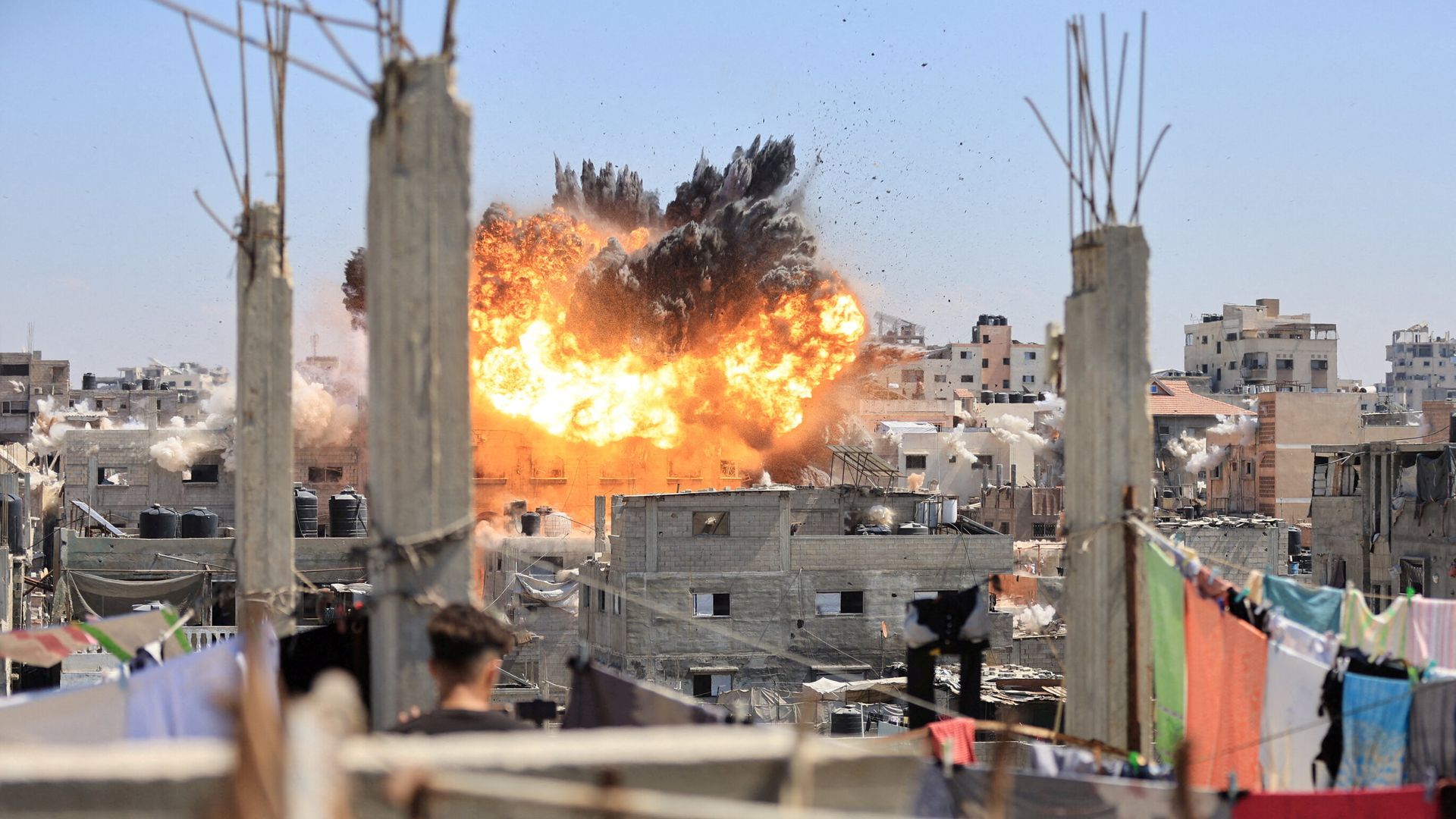
In a place that has known only the roar of artillery and the low, persistent hum of surveillance drones, silence feels less like peace and more like a sudden drop in barometric pressure. Your ears ring. You look up at the sky, waiting for the whistle that usually follows a flash, and for the first time in months, nothing falls.
When a ceasefire is announced, the rest of the world exhales. Editors change the headlines. Diplomats shake hands in brightly lit rooms in Geneva or New York, their tailored suits uncreased, their voices calm and measured. The cameras pack up and move on to the next crisis, satisfied that the story has reached its natural pause.
A United Nations report, however, insists that the story did not pause. According to findings presented by Francesca Albanese, the UN Special Rapporteur on the occupied Palestinian territories, the legal and physical conditions that constitute genocide did not evaporate when the ink dried on a truce. Instead, the report argues, the violence simply changed its clothes.
To understand why a UN official would make such a stark, contested claim—and why Israeli officials and their allies fiercely reject it as a distortion of international law—you have to leave the diplomatic halls behind. You have to step into the dust of a Tuesday morning when the bombs have stopped, and the slow, grinding machinery of daily survival takes over.
The Anatomy of a Truce
Consider a hypothetical family in northern Gaza. Let us call them the Mansours—Tariq, a former civil engineer, his wife Nadia, and their seven-year-old son, Sami. They are fictional, a composite drawn from thousands of documented testimonies, yet their morning routine reflects the exact reality that international observers spend months trying to quantify.
On the morning after a ceasefire takes hold, Tariq does not wake up to an airstrike. He wakes up to a different problem.
Water.
In the vocabulary of war, a bullet is loud and immediate. In the vocabulary of international law, specifically the 1948 Genocide Convention, destruction does not require a trigger to be pulled. Article II(c) of the Convention defines one of the acts of genocide as "deliberately inflicting on the group conditions of life calculated to bring about its physical destruction in whole or in part."
This is the precise legal hinge upon which the UN report turns.
When Tariq walks two miles with a battered plastic jerrycan to find a functioning desalination point, he is navigating the aftermath of shattered infrastructure. According to assessments from UN agencies and humanitarian organizations like Oxfam, the vast majority of Gaza’s water and sanitation facilities were damaged or destroyed during the conflict. A ceasefire stops the missiles, yes, but it does not magically rebuild a blown-up sewage treatment plant or reconnect severed municipal pipes.
If the trucks carrying spare parts, chlorine tablets, and fuel for water pumps are held up at border crossings for weeks due to shifting inspection protocols, the threat to Sami’s life does not disappear. It merely shifts from shrapnel to cholera. From blast waves to acute dehydration.
Think of a house fire. Putting out the flames is an undeniable relief. The heat subsides, the smoke begins to clear, and the neighbors go back inside. Yet if the fire has burned through the load-bearing beams, and no one is allowed to bring in timber to shore up the roof, the house will still collapse. It just happens quietly, three weeks later, when no one is watching.
The Architecture of Intent
This is where the debate becomes fiercely polarized, and where the precision of language matters most.
Critics of the UN report, including the Israeli government and several Western legal scholars, argue that labeling post-ceasefire conditions as ongoing genocide stretches the legal definition past its breaking point. Their position is straightforward: military operations in Gaza were a legitimate act of self-defense following the Hamas-led attacks of October 7, 2023, in which roughly 1,200 people were killed and more than 250 taken hostage. In their view, humanitarian bottlenecks are the tragic, chaotic byproduct of a complex urban war against an adversary embedded in civilian infrastructure—not a calculated effort to destroy a people.
Under international law, proving genocide requires proving dolus specialis—special intent. It is the highest evidentiary bar in global jurisprudence. You cannot simply show that people are suffering or dying; you must prove that the suffering is being engineered with the specific goal of destroying a national, ethnic, racial, or religious group.
Here, the UN Special Rapporteur’s report points to a pattern that extends beyond the battlefield. It cites public statements made by senior Israeli officials early in the conflict, alongside ongoing restrictions on humanitarian aid, the systematic destruction of agricultural land, and the leveling of hospitals and universities.
Let us return to Nadia, Tariq’s wife, to see how this legal argument translates into human skin and bone.
Nadia is diabetic. During the height of the fighting, her insulin supply became erratic. Now, during the ceasefire, she walks to a field clinic set up by an international medical charity. The clinic is overwhelmed. According to the World Health Organization, only a fraction of Gaza’s hospitals remain partially functional, and medical evacuations for thousands of critically ill patients move at a crawl through bureaucratic approvals.
When Nadia is told that the clinic has run out of cold-chain storage equipment because generators and solar panels are classified as "dual-use" items—materials that could theoretically be repurposed for military use—she is experiencing the friction between security imperatives and human survival.
To an Israeli security official reviewing a manifest at the Kerem Shalom crossing, a solar inverter or a heavy-duty water pipe is a potential component for a tunnel network or a rocket launcher. To Nadia, it is the thin line keeping her blood sugar from spiking into a coma.
Both realities exist simultaneously. That is what makes this crisis so agonizingly difficult to untangle, and why observers looking at the exact same border crossing see two entirely different moral universes.
The Invisible Ledger
History shows us that the deadliest phase of modern conflicts often begins after the formal cessation of hostilities.
During the 1990s in Iraq, comprehensive sanctions following the Gulf War left the country's electrical grid and water systems in ruins. There were no daily bombing raids, yet public health researchers documented a staggering rise in child mortality caused by waterborne diseases and malnutrition. In Bosnia, even after the Dayton Accords silenced the snipers in Sarajevo in 1995, the demographic erasure achieved during the war remained largely permanent because the conditions required for displaced families to return—security, housing, livelihoods—were systematically withheld.
In Gaza, the sheer density of the population magnifies every logistical failure. Over two million people are compressed into a strip of land roughly twice the size of Washington, D.C. When more than eighty percent of the population is displaced, living in makeshift tents fashioned from tarps and salvaged wood, the margin for error vanishes.
Consider what happens when the seasons turn.
Summer brings blistering heat inside nylon tents, turning unrefrigerated food into poison. Winter brings driving rain that floods low-lying encampments, mixing raw sewage with the mud where children play. Without heavy machinery to clear an estimated forty million tons of rubble—a task the UN Environment Programme estimates could take more than a decade—communities cannot even begin to lay foundations.
A ceasefire freezes the front lines, yet it often leaves the underlying geometry of control untouched. Buffer zones carved out along the perimeter of the territory swallow up vital farmland, shrinking the already narrow space where food can be grown. Fishing boats remain tethered to the shore, barred from entering deeper waters.
When you cannot farm your land, cannot fish your sea, cannot pump clean water from your aquifer, and cannot import building materials without navigating a labyrinth of permits, you are not living in peace. You are living in suspension.
The Weight of a Word
Why does it matter whether we call this a "humanitarian crisis," a "post-war recovery challenge," or "genocide"?
To Tariq, standing in line for bread with a ration card, the terminology debated in Geneva puts zero calories into his son’s stomach. Words do not filter brackish water. Legal classifications do not mend shattered femurs.
Yet in the architecture of international politics, words are the triggers for obligation.
Under the Genocide Convention, states that have ratified the treaty are not merely asked to express concern when genocide is occurring; they are legally bound to prevent and punish it. That single word carries the weight of arms embargoes, economic sanctions, diplomatic isolation, and universal jurisdiction in foreign courts.
This explains the ferocity of the battle over the UN report’s conclusions.
If the international community accepts the premise that the conditions of life in Gaza remain genocidal even after a ceasefire, then every government supplying weapons, intelligence, or diplomatic cover faces potential legal complicity. Conversely, if governments treat the ceasefire as the end of the emergency, they can pivot to familiar diplomatic routines: pledging reconstruction funds that remain frozen until political conditions are met, issuing statements of concern, and allowing the status quo to harden into permanence.
The International Court of Justice in The Hague has already weighed in on the plausibility of these risks, issuing provisional measures that ordered Israel to ensure the unimpeded flow of humanitarian aid and prevent the destruction of evidence. Yet court orders have no army. They rely entirely on the political will of nations that are themselves deeply divided over security, alliances, and historical grievances.
What Remains When the Dust Settles
It is tempting to look away when a conflict leaves the front pages. Human attention is finite, easily fatigued by complexity and despair. When the dramatic footage of explosions gives way to bureaucratic disputes over truck manifests and water purification permits, the urgency seems to drain out of the room.
That quiet fading of attention is precisely what the UN report warns against.
Imagine Sami, our seven-year-old boy, sitting on a concrete block outside his family's tent at dusk. The sky is clear. There are no jets overhead. By every conventional metric used by newsrooms and foreign ministries, the war is on hold.
Yet Sami has missed over a year of school. His physical growth is stunted by months of caloric deficit, a condition pediatricians warn causes irreversible cognitive and physical delays. His nights are punctuated by nightmares, and his days are spent hauling plastic jugs through streets lined with pulverized concrete.
If you ask Tariq whether the war is over, he will not quote international treaties or cite UN rapporteurs. He will look at the empty water tank beside his tent, look at the prescription his wife cannot fill, and look at his son staring at a horizon blocked by rubble.
The bombs stopped falling. The silence arrived. And in that silence, the question of whether a people will be allowed to truly live—or merely be left to slowly disappear—remains entirely unanswered.