An ethics complaint filed with the Los Angeles City Ethics Commission targets political advertisements that falsely portray Los Angeles City Councilmember Nithya Raman as actively promoting and expanding homeless encampments. The complaint alleges that outside political spenders used manipulated quotes, deceptive visual framing, and misleading mailer tactics to manufacture a policy position Raman never held, violating municipal campaign disclosure and misrepresentation rules during a fiercely contested election cycle.
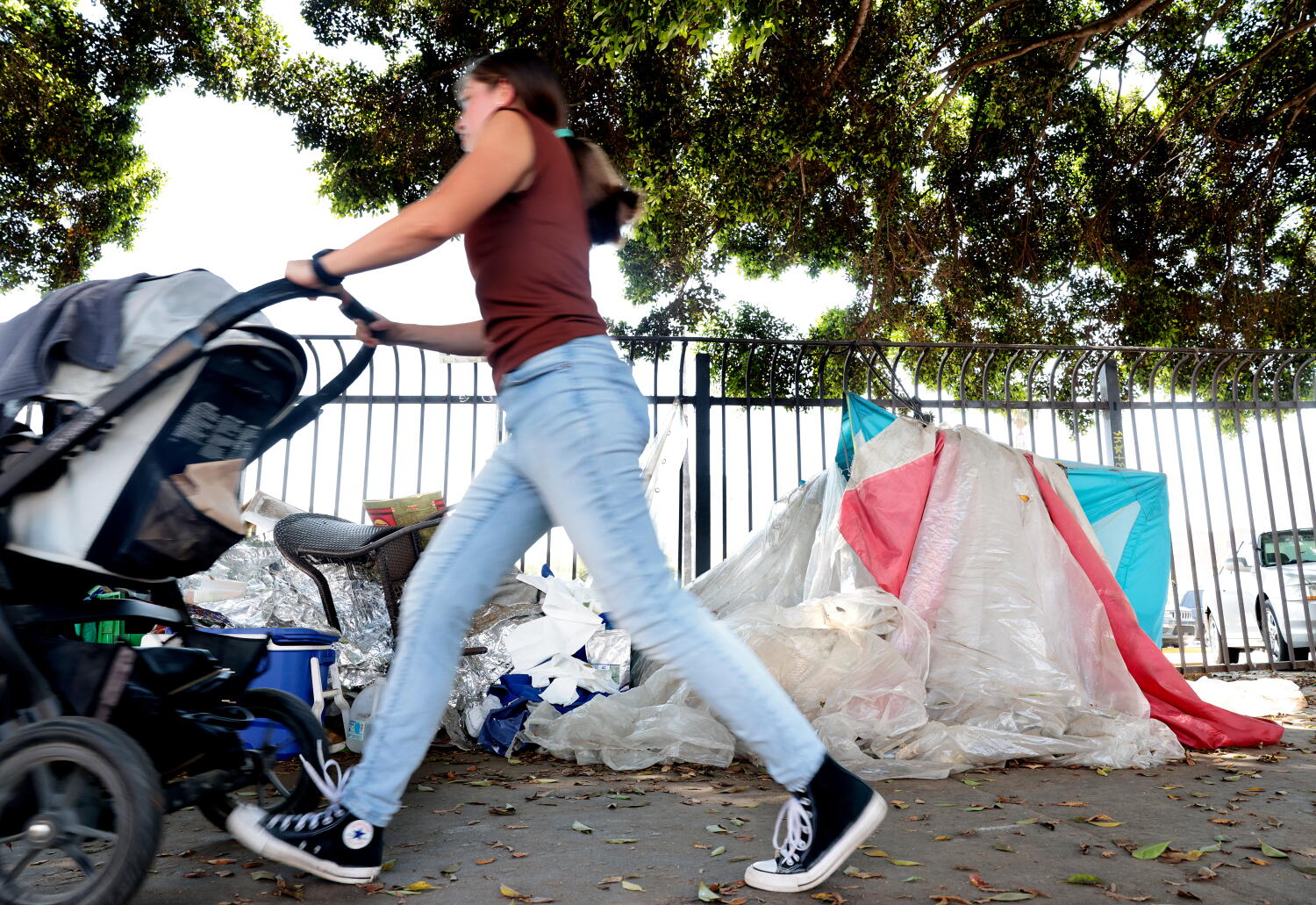
The ads hit mailboxes and social media feeds across Council District 4 with a simple, visceral message. They showed images of sprawling sidewalk tent cities paired with text suggesting Raman wanted to turn neighborhood parks and commercial corridors into permanent encampment zones. For voters already frustrated by visible street homelessness in Los Angeles, the imagery was designed to provoke immediate anger before anyone bothered to check a voting record or read a full policy brief.
Anatomy of a Manufactured Political Narrative
Attack ads exaggerate. Anyone who has spent more than five minutes watching municipal politics knows that candidates routinely stretch their opponents' words to the breaking point. Yet the dispute surrounding the ethics complaint over fake homeless camp ads crosses a distinct line between aggressive political spin and outright fabrication.
In standard political messaging, an opposition researcher pulls an awkward vote or an out-of-context floor speech and builds a narrative around it. Here, the complaint centers on advertisements that attributed stances to Raman that directly contradicted her actual legislative record and public statements. Specifically, the mailers and digital spots implied she campaigned on encouraging street camping and blocking shelter placement, omitting her documented votes to fund interim housing, support targeted street engagement teams, and clear specific encampments once shelter beds were secured.
The mechanics of this kind of distortion rely on visual anchoring. When a mailer prints a high-resolution photograph of trash-strewn sidewalks alongside a candidate's smiling headshot and a fabricated or heavily doctored quote, the human brain processes the image faster than the fine print. Even if a tiny disclaimer sits in six-point font at the bottom corner of the cardstock, the emotional impression is already locked in.
Why Homelessness Makes Such Potent Political Ammunition
Los Angeles voters do not treat homelessness as an abstract policy debate. It is a daily reality visible on freeway underpasses, outside grocery stores, and along residential sidewalks. That proximity creates a high-stress information environment where nuanced policy explanations struggle to survive.
Consider how housing-first policy actually works on the ground. Moving chronically unhoused individuals off the street requires acquiring motel rooms, building interim tiny-home villages, deploying mental health clinicians, and maintaining sustained outreach over months. It is slow, expensive, and visually messy while the transition is underway. An opponent, by contrast, can summarize a critique in four words on a postcard.
Political consultants understand this asymmetry intimately. Explaining why a specific encampment resolution took six months of outreach and bed-matching requires three paragraphs. Claiming a councilmember wants to legalize tent cities everywhere takes one headline. When independent expenditure committees dump hundreds of thousands of dollars into repeating that headline, truth becomes a secondary consideration to repetition.
How Independent Expenditure Committees Skirt Accountability
To understand why these ads appear so frequently—and why stopping them in real time is nearly impossible—you have to follow the money through independent expenditure committees, commonly known as IE committees or local super PACs.
Under federal and California campaign finance law, individuals and corporations face strict limits on how much money they can donate directly to a city council candidate. However, those same donors can pour unlimited sums into independent expenditure committees, provided those committees do not legally coordinate their strategy with the rival candidate's official campaign.
This legal firewall creates a massive accountability vacuum.
- Plausible deniability for candidates: The rival campaign can publicly distance itself from the harshest attack mailers while quietly benefiting from the voter suppression or outrage those mailers generate.
- Shell naming conventions: IE committees routinely register under bland, civic-sounding names like "Neighbors for a Safer Los Angeles" or "Coalition for Fiscal Responsibility," obscuring the real estate developers, landlord associations, or corporate interests funding the mailings until post-election disclosure deadlines pass.
- Hit-and-run timing: Deceptive mailers frequently drop during the final ten days before ballots are counted, long after local newspapers have published their voter guides and too late for a targeted candidate to mount an effective rebuttal.
In the case of the complaint involving Raman, the filing zeroes in on how these outside groups presented their messaging and whether their disclosures met the strict transparency standards mandated by the Los Angeles Municipal Code. Even when a committee properly files its financial paperwork, deliberately falsifying a candidate's official platform or misrepresenting government actions can trigger formal investigations into deceptive campaign practices.
The Regulatory Bottleneck at the Ethics Commission
Filing an ethics complaint makes for a strong press release. Getting a ruling before Election Day is another matter entirely.
The Los Angeles City Ethics Commission operates under strict due-process rules that require formal intake, preliminary review, evidence gathering, subpoena issuance, and administrative hearings. That process routinely takes months, and complex cases involving multiple independent expenditure committees and media buyers frequently drag on for one to two years.
By the time the commission levies a fine, the election is ancient history.
Let us look at a hypothetical example of how this plays out in a typical municipal race. Suppose an outside group spends $250,000 on misleading digital ads and glossy mailers two weeks before a primary election. The targeted candidate files an ethics complaint the next morning. Eighteen months later, after the challenger has already been sworn into office or the incumbent has spent half a term fighting off the narrative, the Ethics Commission concludes its investigation and issues a $15,000 civil penalty for disclosure violations or deceptive formatting.
To the donors who funded the committee, that $15,000 fine is not a punishment. It is a rounding error—an anticipated line item in the cost of winning a municipal seat that controls billions of dollars in zoning, contracting, and housing decisions.
First Amendment Protections Versus Deliberate Falsehoods
Critics of aggressive campaign regulation often raise a valid constitutional point. Political speech sits at the very core of First Amendment protections, and courts have historically been reluctant to let government agencies act as ministries of truth during active elections.
If an ethics commission had the unilateral power to pull ads off the air within twenty-four hours based on a complaint from a rival politician, incumbents would weaponize that power to silence legitimate criticism. Calling a councilmember "soft on crime" or accusing them of "failing to clear encampments" is protected political opinion, even if the councilmember fiercely disputes the characterization.
The gray area—and the exact legal battleground in the Raman complaint—emerges when an ad crosses from opinion into demonstrably false statements of fact. Claiming a politician voted for a specific measure when the official roll call shows they voted against it, or fabricating a policy platform out of thin air to deceive voters about what a law actually says, tests the outer limits of constitutional protection. California law prohibits certain forms of fraudulent misrepresentation in campaign materials, particularly when ads impersonate official government notices or falsely attribute endorsements and statements. Proving actual malice and intentional deception, however, requires clear documentary evidence rather than mere political outrage.
The Digital Amplification Problem
Print mailers leave a paper trail. Every postcard sent to a District 4 household carries a bulk-mail permit number, a return address, and a physical artifact that journalists and ethics investigators can scan and examine. Digital advertising operates in a far murkier environment.
Micro-targeted ads on social media platforms, streaming television networks, and local news websites allow political operatives to serve hyper-specific versions of an attack ad to narrow demographic slices. A homeowner in Sherman Oaks might see an ad emphasizing property values and encampments near parks, while a renter in Silver Lake sees a different creative variation focused on small business closures.
While major tech platforms maintain public ad libraries for political content, outside groups frequently bypass these transparency tools by routing spending through third-party media buyers, native advertising networks, or influencer partnerships that do not register as traditional political buys. When an ad falsely portrays a candidate promoting homeless camps on a local display network, the targeted campaign might not even know the ad exists until a supporter takes a screenshot on their phone.
What Voters Actually Need to Look For
When an ethics complaint hits the news cycle over deceptive political ads, voters are often left wondering who to believe. Both sides immediately issue dueling statements—one decrying a smear campaign, the other claiming they are simply exposing a hidden agenda.
Cutting through that noise requires ignoring the emotional framing of the ad and checking three basic markers on any piece of campaign material:
- The "Paid For By" disclosure block: Look past the committee's flattering title and read the required list of top funders printed underneath. If the top contributors are out-of-district trade associations, real estate PACs, or corporate entities with pending city business, the ad's outrage is driven by financial self-interest rather than neighborhood concern.
- Primary source citations: Legitimate policy critiques cite specific council file numbers, dates of votes, or verbatim transcripts. Ads that rely entirely on paraphrased accusations without a single verifiable council file number are almost always distorting the record.
- Visual manipulation cues: Pay close attention to whether the photographs used in an ad actually match the location and timeframe being discussed. Political mailers routinely recycle stock photos of encampments from other cities—or even other states—to create a sense of immediate crisis in a local district.
The complaint surrounding the ads targeting Nithya Raman highlights a structural vulnerability in modern municipal democracy. Local journalism has shrunk, leaving fewer watchdogs to fact-check mailers in real time, while outside money has flooded into city council races at unprecedented levels. Until enforcement penalties carry real financial deterrence and digital ad transparency catches up with modern media buying, fabricated narratives will remain a standard weapon in the political playbook.