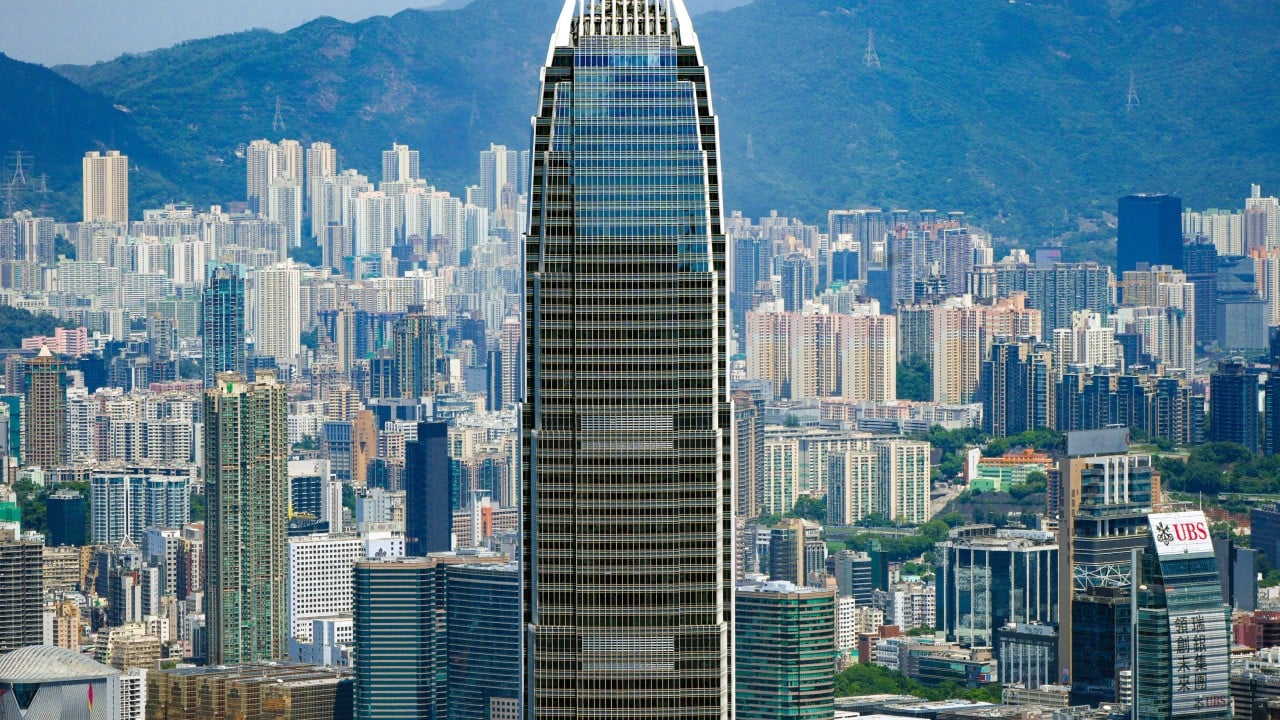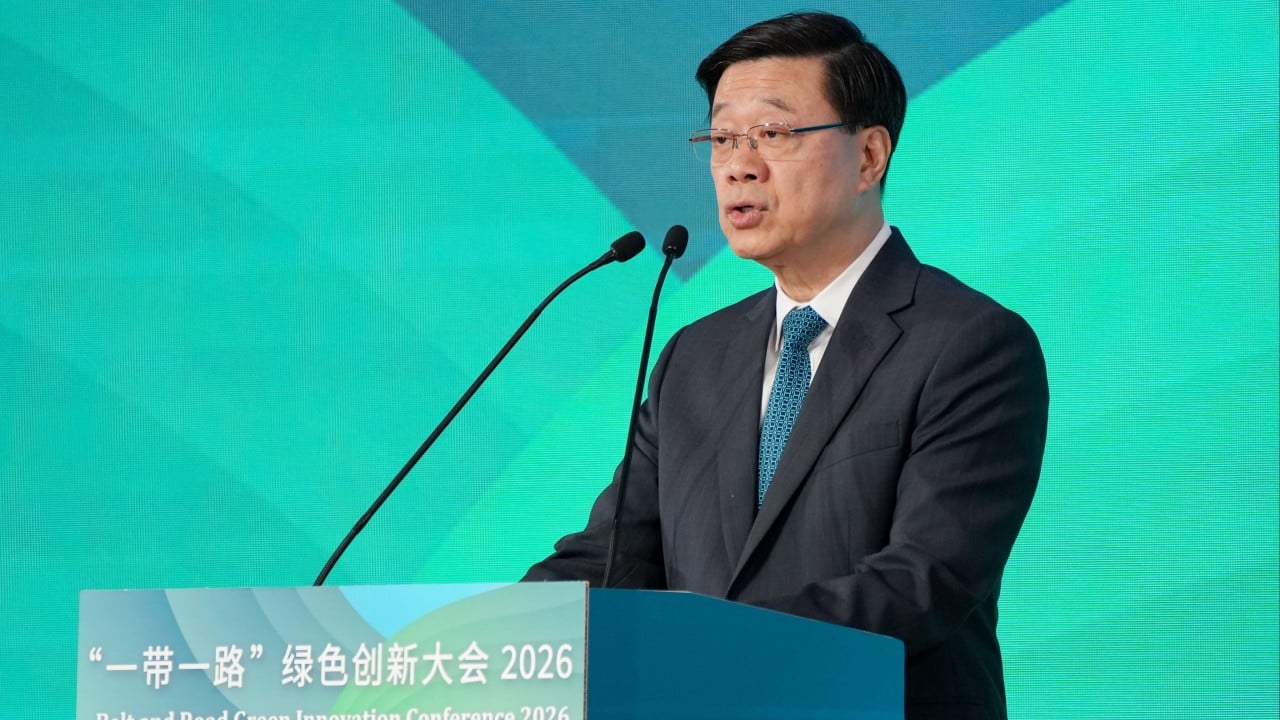
Hong Kong is making an aggressive play to become the indispensable financial and technological clearinghouse for sustainable infrastructure across the Belt and Road Initiative (BRI). Chief Executive John Lee Ka-chiu has spent the autumn of 2026 pitching the city as a multilateral bridge that connects mainland and overseas green technology firms with emerging markets while standardizing environmental rules. Behind the polished summit speeches lies a massive structural pivot. Beijing is actively retreating from billion-dollar, state-backed megaprojects in favor of smaller, cleaner investments, and Hong Kong is betting its post-pandemic economic relevance on capturing the capital flows, legal arbitration, and verification fees that this transition requires.
The pitch sounds straightforward on paper. China produces the world's cheapest solar panels, wind turbines, and electric vehicle supply chains, yet its domestic banks face mounting scrutiny over sovereign debt distress in developing nations. By routing green projects through Hong Kong, mainland enterprises gain access to international capital pools, common law contract enforcement, and globally recognized sustainability certifications.
Why Beijing Needs a Financial Buffer
For over a decade, the Belt and Road Initiative operated on a blunt instrument. State-owned policy banks extended massive bilateral loans to developing nations, often paired with turnkey construction contracts executed by Chinese state enterprises. That model hit a wall. Sovereign debt restructurings in countries like Zambia and Ethiopia exposed the financial fragility of lending billions into high-risk jurisdictions without rigorous commercial underwriting.
Beijing's answer has been a deliberate shift toward what policymakers call "small and beautiful" projects. Instead of coal-fired power plants and sprawling rail networks that take decades to turn a profit, the focus has narrowed to distributed solar grids, wastewater treatment, electric transit, and green industrial parks. These projects require a fundamentally different financial architecture. State policy banks are no longer willing to carry the entire balance sheet risk alone.
Enter Hong Kong. When John Lee tells international audiences that the city can provide financing, project management, and risk management for Belt and Road green infrastructure, he is describing an outsourcing mechanism. Mainland firms need private institutional capital from the Middle East, Southeast Asia, and Europe to co-fund these ventures. Sovereign wealth funds in Riyadh or Abu Dhabi will not wire hundreds of millions of dollars directly into an opaque bilateral loan structure in Central Asia. They want English-language contracts, transparent escrow accounts, and dispute resolution mechanisms enforceable under common law.
Hong Kong possesses those exact institutions. In 2025, green and sustainable bond issuances arranged in the city accounted for roughly 40 percent of Asia's total volume, reaching US$76.5 billion across green and sustainable debt instruments. That liquidity gives Hong Kong a genuine structural advantage over rival regional hubs like Singapore when dealing with mainland-linked issuers. Furthermore, offshore renminbi lending in Hong Kong hit a record RMB 935 billion in 2025, alongside RMB 1 trillion in bond issuance. For Belt and Road borrowers looking to reduce their exposure to volatile US dollar interest rates, raising renminbi-denominated green debt in Hong Kong offers a practical alternative.
The Taxonomy Trap and the Greenwashing Problem
Money alone does not make a green gateway function. The hardest problem in cross-border sustainable finance is agreeing on what actually counts as green.
For years, international institutional investors avoided Chinese green bonds because mainland definitions permitted funding for projects involving "clean coal" efficiency upgrades. European pension funds and global asset managers operate under strict mandates that ban fossil fuel exposure entirely. If a mainland energy firm wants to raise capital in Hong Kong to build a hybrid power grid in Indonesia, it faces a regulatory collision between mainland standards and Western expectations.
To solve this, the Hong Kong Monetary Authority (HKMA) has spent the last two years constructing the Hong Kong Taxonomy for Sustainable Finance. Expanded through Phase 2A in early 2026 to cover six sectors and 25 distinct economic activities, the framework is explicitly engineered to bridge the gap between China's domestic green catalogue and the European Union's taxonomy.
It includes a crucial mechanism called the Transition Category. Rather than demanding that heavy industries achieve zero emissions overnight, the transition label covers granular technologies and upgrades that materially cut carbon output, provided they adhere to strict, time-bound sunset dates. Consider a hypothetical example of a regional shipping operator retrofitting older vessels with dual-fuel engines to run on green methanol across Southeast Asian trade routes. Under rigid European rules, the company might struggle to secure pure green financing. Under Hong Kong's transition framework, that retrofit qualifies for dedicated capital, provided the operator hits verified emissions reduction milestones before the sunset deadline expires.
Yet a voluntary taxonomy has limits. Right now, adoption of the Hong Kong framework remains largely non-mandatory for market participants. Until regulators tie tax incentives, preferential capital reserve weights, or mandatory listing disclosures directly to taxonomy compliance, skeptical global investors will still hire their own third-party auditors to verify that Belt and Road projects are not simply repackaged brown infrastructure.
Exporting Green Tech Without Triggering Tariffs
The second pillar of John Lee's strategy targets the real economy rather than the bond market. Mainland green technology firms are drowning in domestic overcapacity. Price wars in solar modules, lithium batteries, and grid storage have crushed profit margins inside China, forcing manufacturers to look abroad for survival.
At the same time, Western markets are throwing up aggressive tariff barriers against Chinese clean tech. Expanding into Belt and Road economies across ASEAN, the Middle East, and Latin America is no longer optional for these companies. It is an existential necessity.
However, a mid-sized Shenzhen battery manufacturer or a Jiangsu water-treatment engineering firm rarely knows how to navigate foreign regulatory regimes, local labor laws, or political risk insurance in emerging markets. Hong Kong is positioning itself as the corporate launchpad to fix that knowledge gap. Through initiatives like the government's Go Global Task Force and specialized green innovation schemes, the city aims to bundle mainland engineering hardware with Hong Kong legal, accounting, and engineering consultancy services.
The commercial logic is sound, particularly in the Middle East. Following high-profile trade delegations to Saudi Arabia and the United Arab Emirates, Hong Kong has seen a surge in bilateral memoranda of understanding covering renewable energy and sustainable construction. Gulf sovereign funds have massive capital reserves and ambitious decarbonization targets, while mainland firms have the engineering capacity to build utility-scale solar farms in the desert at record speed. Hong Kong provides the neutral corporate domicile where joint ventures can be structured, intellectual property protected, and cross-border profits repatriated without running into mainland capital controls.
Where the Gateway Pitch Hits Friction
Despite the upbeat rhetoric from government podiums, three structural headwinds threaten to slow Hong Kong's ambitions.
First is the bankability deficit in emerging markets. You can build the cleanest regulatory taxonomy and the deepest bond market in Asia, but institutional investors will not fund a wind farm in a frontier economy if the local state utility is effectively insolvent and cannot guarantee power purchase payments. Hong Kong's financial sector excels at structuring deals, yet it cannot magically eliminate currency devaluation risk or political instability in host countries. Without blended finance guarantees from multilateral development banks—institutions where Western influence remains strong—private capital will continue to cherry-pick only the safest Belt and Road jurisdictions, such as the Gulf states or Malaysia, leaving poorer nations behind.
Second is fierce regional competition. Singapore is not sitting idle while Hong Kong courts green capital. The city-state commands deep pools of private wealth, hosts the regional headquarters of most Western multinational corporations, and has aggressively built out its own carbon credit trading exchanges and transition finance frameworks. While Hong Kong holds an unmatched advantage as the primary offshore window for mainland Chinese state enterprises, international asset managers deciding where to base their Asian sustainability teams often weigh lifestyle factors, geopolitical perceptions, and regulatory predictability in Singapore's favor.
Third is the geopolitical tightrope. Hong Kong's value proposition relies entirely on its ability to remain credible to both Beijing and global capital markets simultaneously. As geopolitical friction between Washington and Beijing persists, Western institutional investors face growing compliance pressures and reputational scrutiny over exposure to Chinese-linked entities. Some North American pension funds have already pulled back from Hong Kong-listed assets or ring-fenced their emerging market mandates. Hong Kong has compensated by courting Middle Eastern and ASEAN capital, which brings substantial liquidity, though it alters the composition of the city's investor base from truly global to predominantly regional.
The Real Test Ahead
Strip away the diplomatic phrasing, and Hong Kong's green Belt and Road strategy is a pragmatic survival play. Traditional initial public offerings from mainland tech giants are no longer enough to sustain the city's massive financial and professional services sector on their own. Green transition finance, cross-border renminbi settlement, and corporate treasury management for expanding mainland manufacturers represent the next viable growth engine.
Success will not be measured by the number of summits hosted at the convention center or the volume of non-binding agreements signed during ministerial tours. It will be measured in secondary market liquidity for transition bonds, the speed at which Hong Kong courts or arbitration centers resolve cross-border green infrastructure disputes, and whether private institutional money actually flows into riskier emerging markets alongside state-backed capital.
If Hong Kong can enforce strict, verifiable environmental standards without suffocating deal flow, it will earn its place as the indispensable financial engine of Asia's energy transition. If its taxonomy remains a voluntary rubber stamp for state-directed lending, international capital will simply price the risk accordingly and look elsewhere.