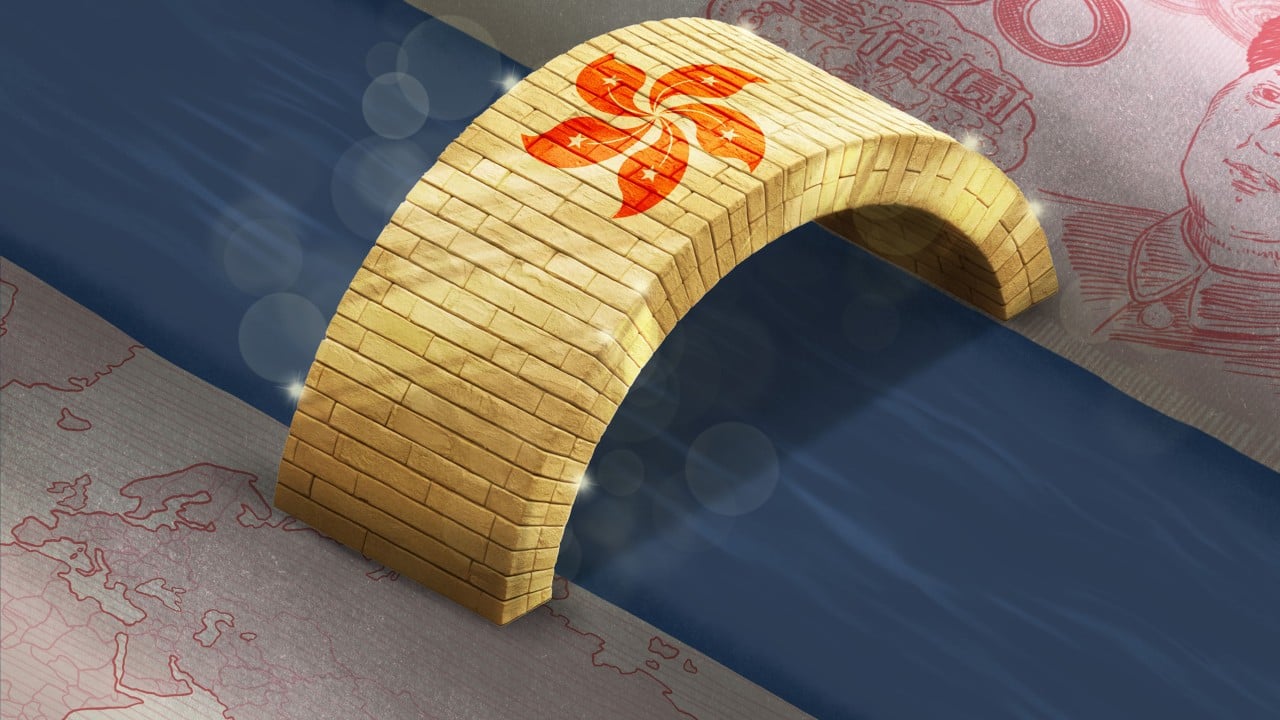
For years, skeptics argued that Beijing could never truly internationalize its currency. Capital controls stayed tight, convertibility remained managed, and global investors hesitated to hold vast sums of a currency they could not freely move. But strategy shifts quietly. By turning Hong Kong into an offshore gold vault and trading powerhouse, China is building an institutional bridge that bypasses traditional Western plumbing.
If you want to understand how the global financial architecture is splitting at the seams, you have to look past the headlines about interest rates and watch the physical bullion moving into Asian vaults. You might also find this related article useful: How Ford Deployed a Bird of Prey to Solve a Million Dollar Plant Problem.
The Mechanics Behind the Gold and Yuan Nexus
Hong Kong handles roughly three-quarters of all global offshore yuan payments. That fact alone gives it massive gravity. Now, add a massive push to expand local gold storage capacity—targeting up to 2,000 tonnes over the coming years—and you get something entirely different from a standard commodity market.
This is about creating a trusted settlement layer. Historically, if an international entity accepted yuan for trade, they faced a frustrating reality: what do you actually do with it next? Re-investing back into mainland onshore assets meant running a gauntlet of red tape. Holding it offshore offered limited yield options. As discussed in detailed articles by Harvard Business Review, the implications are significant.
By tying yuan liquidity directly to physical gold delivery linked with Shanghai, Beijing gives foreign holders a hard asset anchor. You can trade in yuan, settle in gold, and keep your holdings within a common legal and financial framework. It solves the trust deficit that usually plagues non-dollar currencies.
Sidestepping the Dollar and Stablecoin Dominance
Digital dollar stablecoins grew rapidly because cross-border business needed speed that old banking rails could not match. Yet, reliance on dollar-pegged tokens leaves market participants exposed to US regulatory jurisdiction.
Hong Kong's dual push into offshore yuan bonds and gold-backed settlement offers a distinct alternative. Financial secretaries and market regulators in the city have rolled out continuous trading approvals and indices tracking hundreds of offshore yuan bonds.
This infrastructure does not try to conquer Wall Street on its home turf. Instead, it creates an independent loop for trade partners across Asia, the Middle East, and parts of Africa who want to trade without touching US clearing systems.
What This Means for Global Markets
You do not need to manage a sovereign wealth fund to feel these shifts. Commodity pricing is slowly fracturing. For decades, London and New York set the rules for bullion and credit. As Asian hubs scale up their storage and clearing capacity, pricing power begins to drift eastward.
Bigger liquidity pools mean lower friction for businesses operating across borders. If you run a supply chain that touches mainland factories, holding dim sum bonds or settling through Hong Kong vaults cuts out unnecessary currency conversion steps.
Of course, challenges remain. Strict capital controls on the mainland mean Hong Kong must operate as a controlled valve rather than an open floodgate. Trust takes decades to build, and matching the deep liquidity of Western markets requires sustained operational consistency.
Watch the vault expansion numbers and offshore bond issuance volumes over the next twenty-four months. That data will show you whether this financial bridge becomes a permanent fixture of global trade.