Seoul has finally stepped across a threshold it spent years pretending it could bypass. The inaugural flight test of a domestically engineered hypersonic glide vehicle marks a stark turning point in East Asian defense strategy. For decades, the Republic of Korea relied heavily on conventional ballistic deterrence and layered missile defense shields, watching from the sidelines as regional rivals tested systems designed to mock traditional radar architectures. That era of strategic restraint is over. The recent flight, observed directly by the presidential office, is not merely a technical milestone for the Agency for Defense Development. It is a loud acknowledgment that regional security dynamics have deteriorated to a point where defensive parity is no longer enough.
To understand why this test matters, one must discard the antiseptic language of press releases and look at the physics. Traditional ballistic missiles follow predictable, arc-shaped trajectories that high-altitude tracking systems can calculate with cold mathematical precision. Hypersonic glide vehicles operate under an entirely different set of rules. Boosted into the upper atmosphere by a rocket stack, the payload separates and skips along the edge of space at speeds exceeding Mach 5 while executing erratic aerodynamic maneuvers. This low-altitude irregular flight compresses warning times from tens of minutes to mere seconds. Traditional interceptors, optimized for ballistic parabolas, find themselves outmatched by a warhead that can change its vector mid-flight.
The timing of the announcement carries its own heavy subtext. It arrived on the heels of Pyongyang trumpeting its own advanced missile tests, creating a volatile action-reaction cycle that is rapidly militarizing the skies above the peninsula. For Seoul, the imperative was born out of a stark strategic vulnerability. When an adversary fields maneuverable high-speed weapons, maintaining a purely defensive posture is a recipe for strategic paralysis. By developing an indigenous hypersonic capability, the South Korean military is attempting to restore a measure of mutual vulnerability. The goal is to ensure that any preemptive calculus by an adversary accounts for an incoming strike that cannot be reliably stopped by current regional defense batteries.
Yet, moving from a successful initial flight test to an operationally deployable weapon is an engineering gauntlet filled with severe physical hurdles. Maintaining structural integrity at Mach 5 and above requires advanced thermal protection systems capable of withstanding skin temperatures that can melt conventional aerospace alloys. Guidance systems must function inside a envelope of ionized plasma, which typically blocks standard radio frequency communications during the peak heating phase of flight. South Korean defense contractors have made strides in solid-fuel propulsion and scramjet technology, as evidenced by recent propulsion testbed expansions, but translating bench achievements into a reliable weapon system deployed in the field requires years of grueling flight testing.
Beyond the engineering hurdles lies a thorny strategic paradox. The introduction of fast-reacting, maneuverable delivery systems on both sides of the 38th parallel drastically shortens decision-making windows for military commanders and political leaders alike. When warning times shrink to moments, the pressure to adopt launch-on-warning postures intensifies significantly. This compression of time increases the risk of catastrophic miscalculation, where a routine training exercise or a radar anomaly could be misconstrued as an incoming first strike. Seoul’s entry into the hypersonic club may bolster its immediate deterrence posture, but it also locks the peninsula into a tighter, more nervous security spiral where the margin for human error grows dangerously thin.
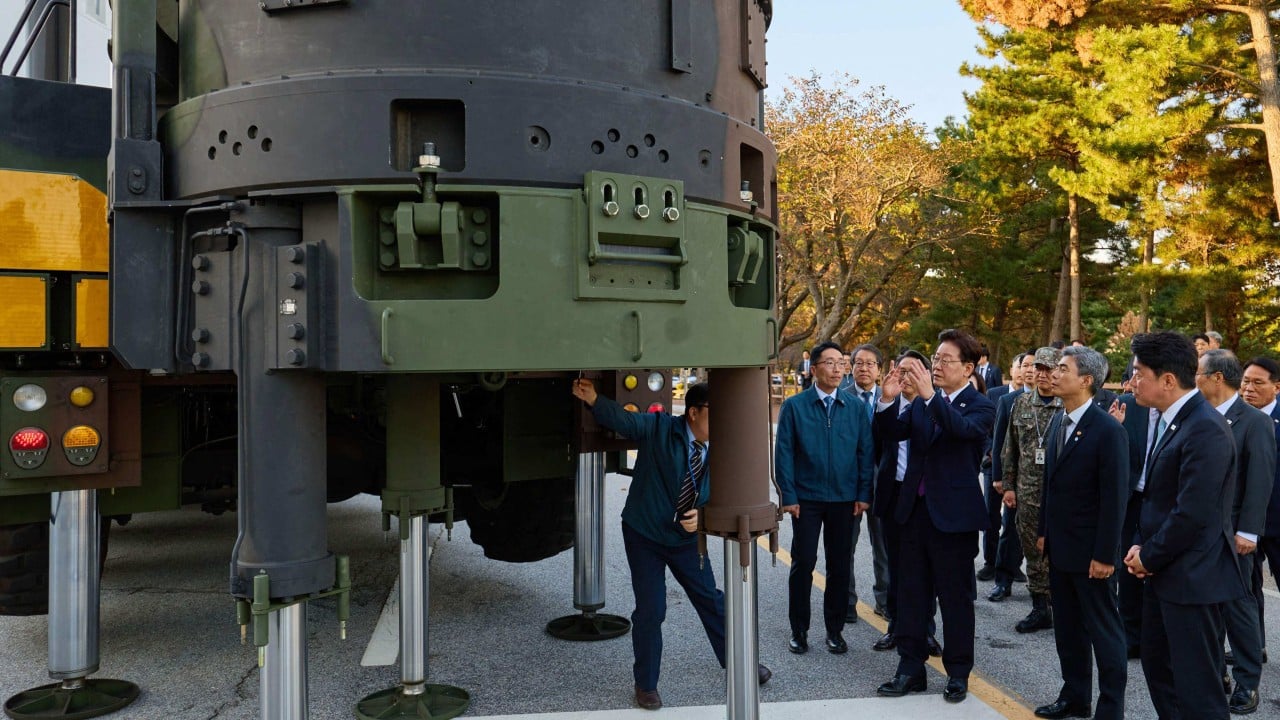
S. Korea successfully conducts first test launch of homegrown hypersonic glide vehicle
This video provides footage and broadcast coverage of South Korea's first successful test launch of its domestically developed hypersonic glide vehicle.