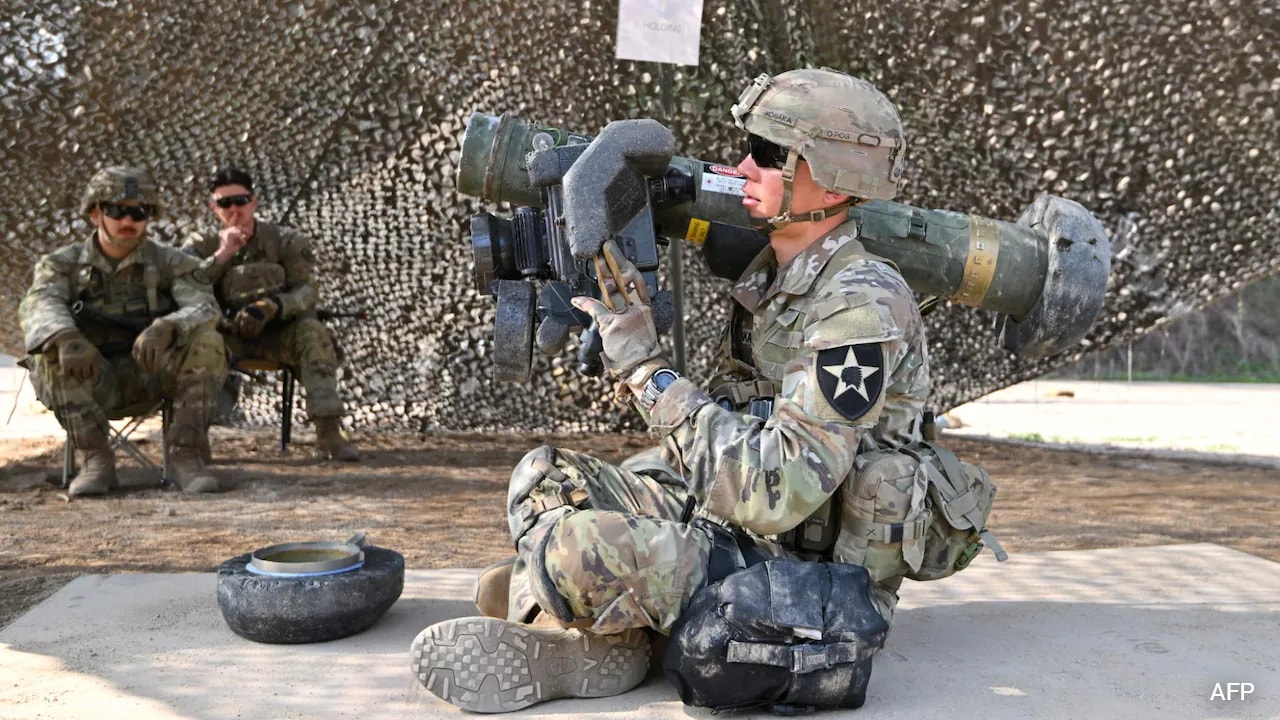
Every defense blogger in New Delhi is popping champagne over reports that India is eyeing the US-made Javelin anti-tank missile system. The headline writes itself: major defense boost, strategic alignment with Washington, a giant middle finger to armor columns massing across contested borders.
It is lazy analysis at its absolute finest.
I have watched defense procurement bureaucrats blow billions on shiny foreign badges for decades while ignoring the actual physics of modern attrition. Buying the Javelin right now is not a masterstroke of modern military acquisition. It is an expensive nostalgic trip for generals fighting the last war, ignoring the fundamental reality of how mechanized conflict has evolved.
Let us dismantle the illusion piece by piece.
The Fetishization of the Portable Missile
The lazy consensus says that infantry need man-portable fire-and-forget missiles to stop tanks. The logic feels intuitive. Hand a soldier a tube, let them lock onto a thermal signature, and watch a multi-million-dollar armored vehicle turn into scrap metal from miles away.
Except the battlefield has changed underneath our feet, and the Javelin belongs in a museum of 2000s counter-insurgency tech, not on the high-intensity frontier.
First, let us talk about unit economics. A single Javelin launcher and its associated missiles cost an absolute fortune. When you buy foreign platforms off the shelf, you are not just paying for hardware; you are paying for markup, foreign military sales bureaucracy, and a logistics tail tethered entirely to a foreign capital. If you get into a protracted peer conflict, your supply chain for high-tech microprocessors and specialized guidance systems runs through Washington D.C., subject to the political whims of changing administrations.
Second, the infantryman’s burden has crossed a breaking point. A Javelin system is heavy, awkward, and demands rigorous, continuous training to maintain proficiency. In high-stakes terrain like the high-altitude Himalayan sectors or dense northern plains, adding complex foreign electro-optical gear to an already overloaded infantry squad trades mobility for a marginal firepower spike.
The Drone Revolution Blew Up the Javelin Math
Imagine a scenario where a mechanized brigade pushes across an open sector. The traditional defense playbook says you need heavy anti-tank guided missiles deployed at the platoon level to blunt the advance.
That playbook died in Eastern Europe.
The modern antitank game is no longer about single-shot, six-figure missiles fired by infantrymen. It is about mass, cheap automation, and loitering munitions. For the cost of a handful of Javelin units and their replenishment rounds, a military can procure thousands of first-person view drones rigged with shaped charges.
Let me be brutally honest about what I have seen on evaluation ranges and tactical data feeds: a squad equipped with cheap, domestically sourced loitering munitions and network-linked reconnaissance drones achieves a wider kill radius and better area denial than a squad weighed down with three Javelin launchers.
The Javelin uses a top-attack flight profile to punch through thin turret armor. It is brilliant technology. But it is brilliant technology designed for an era before widespread electronic warfare and drone swarms redefined tactical depth. If the electronic warfare environment is heavily jammed—and any conflict against a peer adversary will be saturated with GPS spoofing and frequency denial—the sophisticated guidance systems on high-end western missiles face severe degradation.
Meanwhile, optical-guided or fiber-optic tethered drones keep flying right through the static.
The Domestic Manufacturing Fallacy
The worst part of the Javelin obsession is how it kneecaps indigenous defense R&D. India has spent decades trying to build a self-reliant defense industrial base. The DRDO and domestic private sector have poured immense capital into developing indigenous systems like the Nag missile and various platforms under the Mission Mode projects.
Every time New Delhi reaches for an off-the-shelf foreign system to solve an immediate itch, it steals oxygen from local engineers. When you import a marquee western weapon system, you signal to your own domestic defense ecosystem that you do not trust them to build the next generation. This creates a vicious cycle: domestic programs starve for lack of institutional backing, fail to achieve economies of scale, and remain perpetually stuck in development hell.
Defense autonomy is not a nice-to-have moral victory. It is a mathematical requirement for survival. If a war lasts longer than three weeks, you fight with what you can build in your own factories. If your factories only know how to maintain imported kits, you run out of bullets the moment your foreign supplier decides to stay neutral.
The Right Question Is Not Who We Buy From
People ask: "Can the Javelin integrate smoothly with existing Indian infantry structures?"
That is the wrong question entirely.
The right question is: "Why are we still organizing our infantry around heavy, legacy anti-tank concepts when the future belongs to distributed, drone-saturated, software-defined warfare?"
If you want to modernize India's defense posture, stop shopping for premium Western hardware that plays well on evening news broadcasts. Redirect that capital toward mass-producing domestic loitering munitions, hardening tactical communication networks against electronic jamming, and empowering local startups building cheap, autonomous kinetic systems.
Warfare does not care about brand names. It cares about math, logistics, and scale. The Javelin is yesterday's weapon wrapped in tomorrow's marketing budget.
Leave it on the shelf.