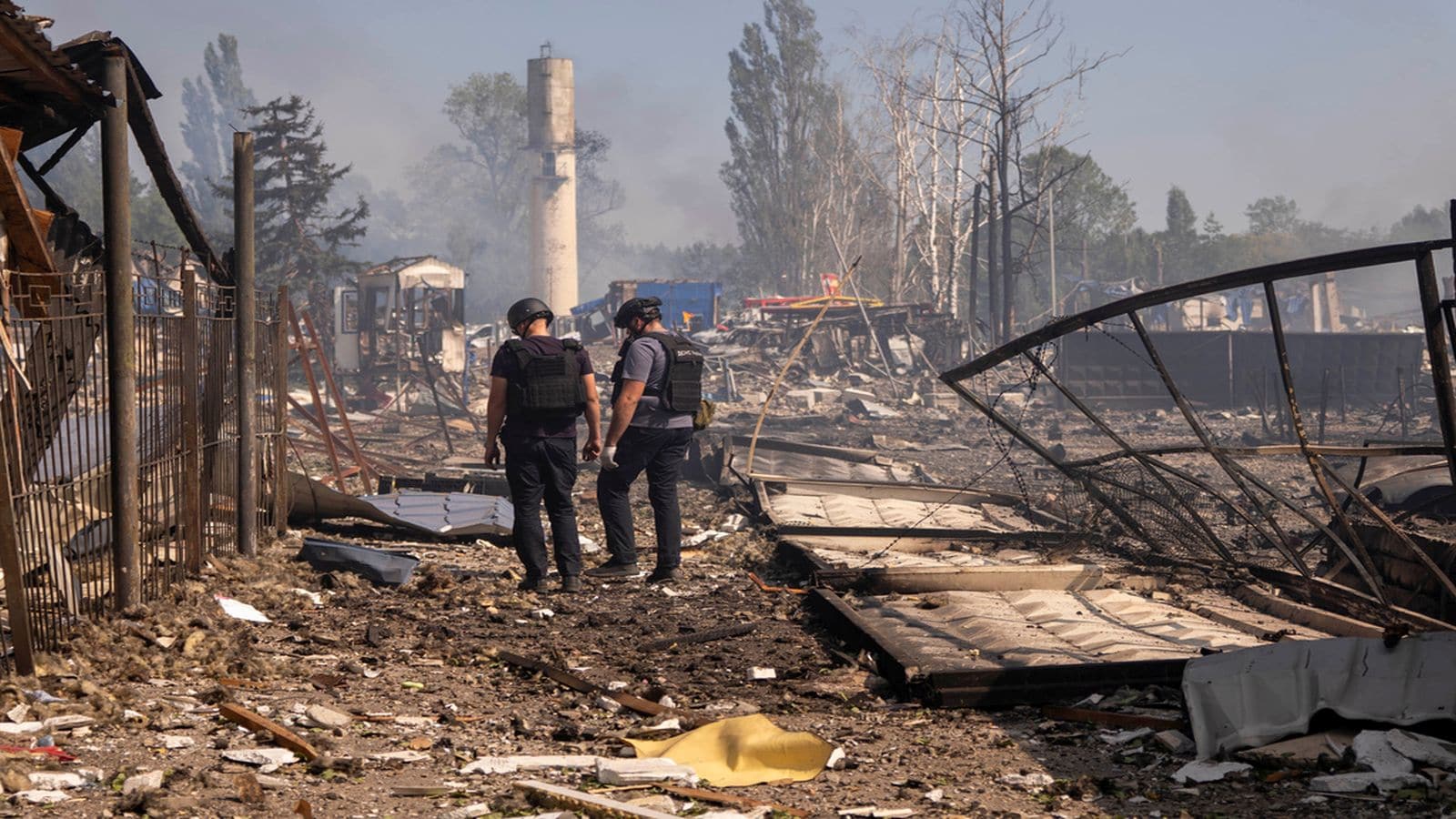
Twelve combatants dead after an ambush on a logistics convoy returning from the Reko Diq copper and gold development in Chagai district is the kind of headline that flashes across international tickers and disappears within hours. State media frames the outcome as a tactical triumph for Pakistan security forces operating in restive Balochistan. Local officials point to the two-hour firefight as proof that intelligence-based operations are working. Yet, looking only at the body count misses the structural pathology rotting Pakistan's largest and most resource-rich province from the inside out.
This is not merely a localized law-and-order problem. It is a chronic geopolitical hemorrhage driven by structural economic grievances, strategic overextension, and a heavy reliance on kinetic state suppression that has failed to stabilize the region for decades. You might also find this connected story useful: Why Nepal Fresh Flood Alerts Keep Missing the Real Danger.
The Logistics Vulnerability of Mega-Projects
To understand why a convoy of empty vehicles coming back from a mining site becomes a magnet for insurgent violence, one must look at the geography of extraction in southwestern Pakistan. The Reko Diq project, anchored by Canada-based Barrick Mining alongside federal and provincial stakeholders, represents a multi-billion-dollar bet on mineral exports. Islamabad desperately needs these foreign-backed ventures to shore up a chronically broken macroeconomic balance sheet.
However, the infrastructure required to move heavy equipment and extract resources cuts straight through unforgiving, desolate terrain where state writ is thin and fragile. When insurgents from groups like the Balochistan Liberation Army (BLA) launch coordinated ambushes along critical transport corridors, they are exploiting a fundamental weakness. The state can deploy heavily armed escorts for individual supply lines, but it cannot garrison every mile of sand and rock indefinitely. As discussed in recent articles by BBC News, the results are worth noting.
The mechanics of the recent Chagai ambush follow a well-worn playbook. Attackers melt into the landscape, open fire with automatic weapons from elevated positions, and force security details into protracted defensive engagements. Even when the military response is swift enough to neutralize a dozen assailants, the underlying vulnerability remains unchanged. The transit routes themselves are open veins.
Beyond the Body Count
The public relations apparatus of the military establishment frequently highlights high militant death tolls as proof of degradation within insurgent command structures. Following sweeping operations earlier in the year—such as the multi-district crackdowns during the January and July flare-ups—officials reported hundreds of neutralizations.
Yet, counting dead fighters tells us very little about the institutional health of the insurgency. In a disenfranchised region where decades of alienation have poisoned relations with Islamabad, recruitment pools are remarkably resilient. When a local youth sees no economic future outside of state-backed patronage networks or underground rebellion, the ideological and financial pull of separatist factions remains potent.
Militant networks have evolved from crude bands of tribal dissidents into adaptive, decentralized cells capable of striking complex administrative, financial, and military targets simultaneously. Their operational capacity relies on a mix of stolen materiel, local intelligence networks, and external hardware. Kinetic crackdowns destroy hardware and eliminate foot soldiers, but they do nothing to address the socio-economic drivers that replenish insurgent ranks faster than security forces can clear them.
The CPEC Paradox and Foreign Stakes
Balochistan sits at the crossroads of ambitious transnational connectivity projects, most notably the China-Pakistan Economic Corridor (CPEC), which links Gwadar port to western China. For Beijing, the province is the crown jewel of its overland trade ambitions. For local Baloch nationalists, it is viewed as an external colonial enterprise designed to siphon local wealth out of the province while leaving local populations impoverished and politically marginalized.
This dynamic creates a vicious cycle of security militarization. As economic corridors expand, the state increases its military footprint to protect foreign engineers, Chinese workers, and extraction sites. This heavy footprint leads to increased friction points with local civilians, frequent highway checkpoints, and allegations of systemic human rights abuses, including forced disappearances. These very abuses act as powerful recruitment drivers for the BLA and allied organizations.
Foreign investors face a grim reality check. While corporate press releases emphasize enhanced security protocols and long-term economic dividends, the ground truth is defined by constant threat assessments, convoy delays, and structural instability. No amount of military reinforcement can completely sanitize a hostile operating environment where the local population views the project as an act of theft.
The Limits of Coercive Governance
Pakistan's security architecture in the southwest is trapped in a reactive loop. Intelligence agencies excel at launching disruptive sweeps after major attacks occur, but proactive political engagement is virtually nonexistent. Islamabad treats Balochistan primarily as a security frontier to be managed rather than a political constituency to be integrated through genuine federal power-sharing and resource-control concessions.
Until the central government shifts its paradigm from iron-fisted pacification to equitable economic distribution and serious political dialogue with alienated regional leaders, these tactical victories will remain temporary band-aids. Killing twelve attackers on a desert highway stops that specific ambush, but it does nothing to stop the thirteenth. As long as the root causes of the rebellion are met with more barracks instead of better governance, the bleeding across the province will continue unabated.