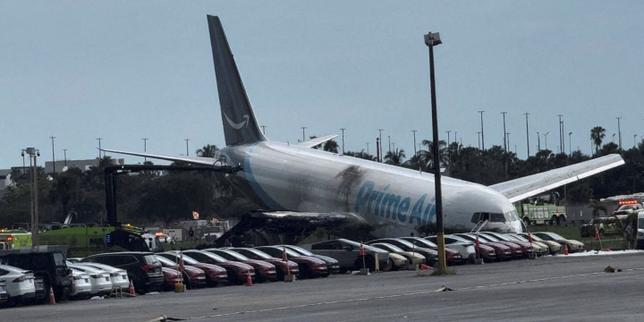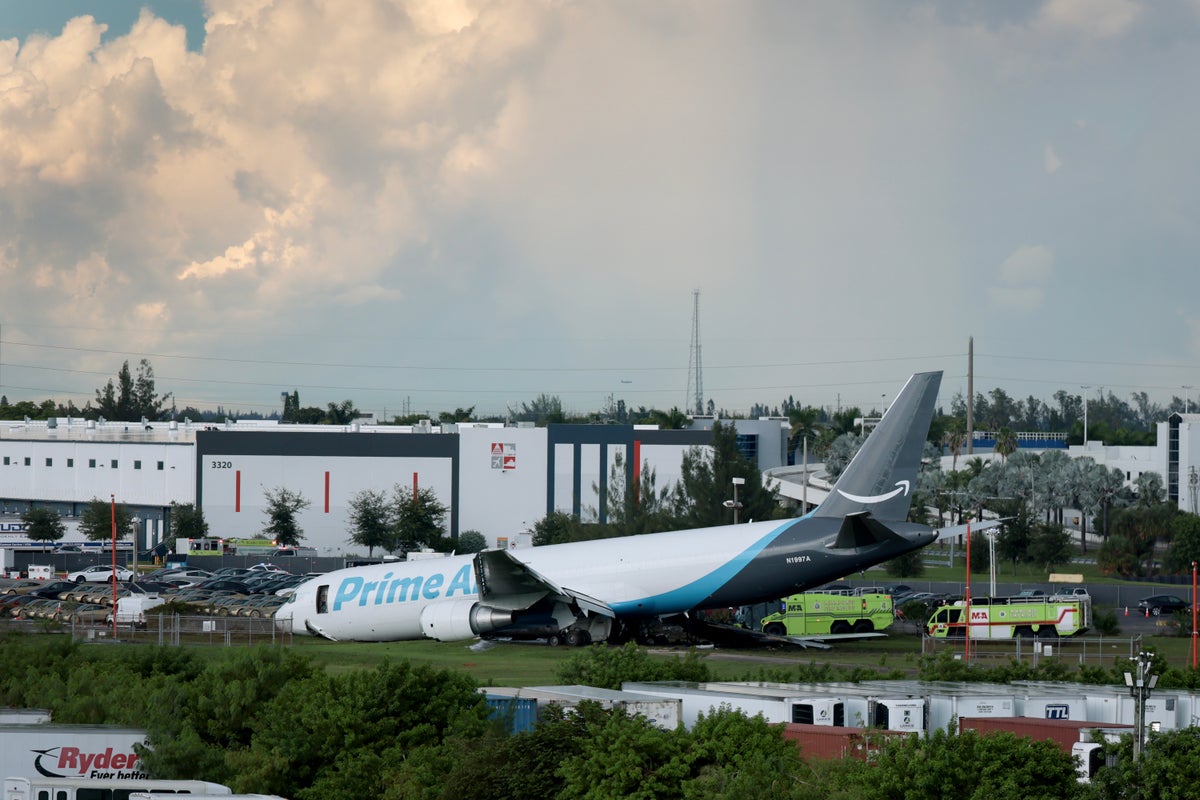
Five people are dead following a catastrophic runway overrun at Miami International Airport, where a 32-year-old Boeing 767 cargo aircraft operated by 21 Air on behalf of Amazon Prime Air plowed through a perimeter fence and struck ground vehicles. The incident, which unfolded on a Sunday afternoon amid local thunderstorms and gusting winds, instantly transformed a routine commercial landing into a complex multi-agency mass casualty response. Miami-Dade Fire Rescue units arrived to find the wide-body freighter engulfed in heavy flames, its fuselage resting on its belly near a roadway while vehicle occupants and the flight deck crew remained trapped inside the wreckage.
The disaster has laid bare the mounting risks associated with high-frequency cargo operations squeezed into densely populated urban airport corridors. While initial reporting fixates on the dramatic extrication efforts led by Fire Chief Ray Jadallah's technical rescue teams, a deeper investigation reveals systemic vulnerabilities in how aging passenger-to-freighter conversions are integrated into domestic logistics networks.
The Mechanics of a Runway Excursion
Flight tracking data indicates that the aircraft was traveling at approximately 112 knots when it failed to decelerate within the usable bounds of the diagonal runway. Heavy precipitation and crosswinds compound stopping distances exponentially, particularly for older heavy jets touching down on slick asphalt. When a commercial transport exceeds the runway safety area, the margin between a minor excursion and a catastrophic urban collision shrinks to seconds.
This specific Boeing 767-300 was manufactured three decades ago. Originally built as a passenger carrier, it spent over twenty years flying commercial routes before undergoing a freighter conversion. While converted freighters undergo rigorous certification, the structural aging of airframes subjected to the rigorous cycle demands of modern e-commerce logistics introduces variables that federal overseers constantly monitor. Cargo configurations shift weight distributions, and the intensive daily utilization rates required by corporate logistics fleets push mechanical components hard.
The Perimeter Threat
Airports are traditionally designed with safety buffer zones meant to contain aircraft that misjudge landings. However, metropolitan hubs like Miami International are hemmed in by major roadways, industrial parks, and dense commercial warehouses. When Prime Air Flight 7598 breached the airport boundary, it did not hit empty grass. It struck active surface traffic.
Vehicles driving along perimeter service roads and adjacent thoroughfares are entirely vulnerable to overrunning aircraft. Urban planners and aviation safety advocates have long debated the adequacy of engineered materials arresting systems, known as EMAS beds, at constrained airports. Installing these crushable concrete beds at the end of every high-risk runway absorbs kinetic energy and halts runaway planes before they cross property lines. Yet, retrofitting constrained urban facilities remains an expensive, politically fraught engineering challenge.
Emergency Response Realities
When nearly two hundred firefighters descend on a live crash site involving an active fuel leak, the logistical nightmare goes far beyond dousing flames. Aviation fuel creates an invisible, highly volatile hazard zone that restricts immediate medical triage.
Chief Jadallah noted the extreme difficulty of extracting the flight crew from a compromised cockpit while simultaneously deploying heavy technical rescue teams to cut civilians out of crushed automobiles on the ground. The juxtaposition of heavy freight traffic and urban commuters creates an emergency response matrix that tests the absolute limits of municipal resources. First responders must balance structural fire suppression, hazardous materials containment for thousands of gallons of Jet-A fuel, and patient extrication under unstable structural conditions.
The Regulatory Horizon
The National Transportation Safety Board, led by a deployed investigative team, faces a painstaking reconstruction of the final minutes of flight. Investigators will scrutinize cockpit voice recorders, flight data modules, maintenance logs, and dispatch decisions made under marginal weather conditions.
As e-commerce giants continue to expand their proprietary air networks to meet consumer delivery expectations, the volume of cargo movements at commercial passenger airports will only intensify. Balancing speed with absolute safety margins requires a hard look at infrastructure limits, runway condition reporting standards, and the operational oversight of third-party charter carriers. The tragedy in Miami serves as a stark reminder that the physical boundaries separating high-speed aviation from everyday urban life are dangerously thin.