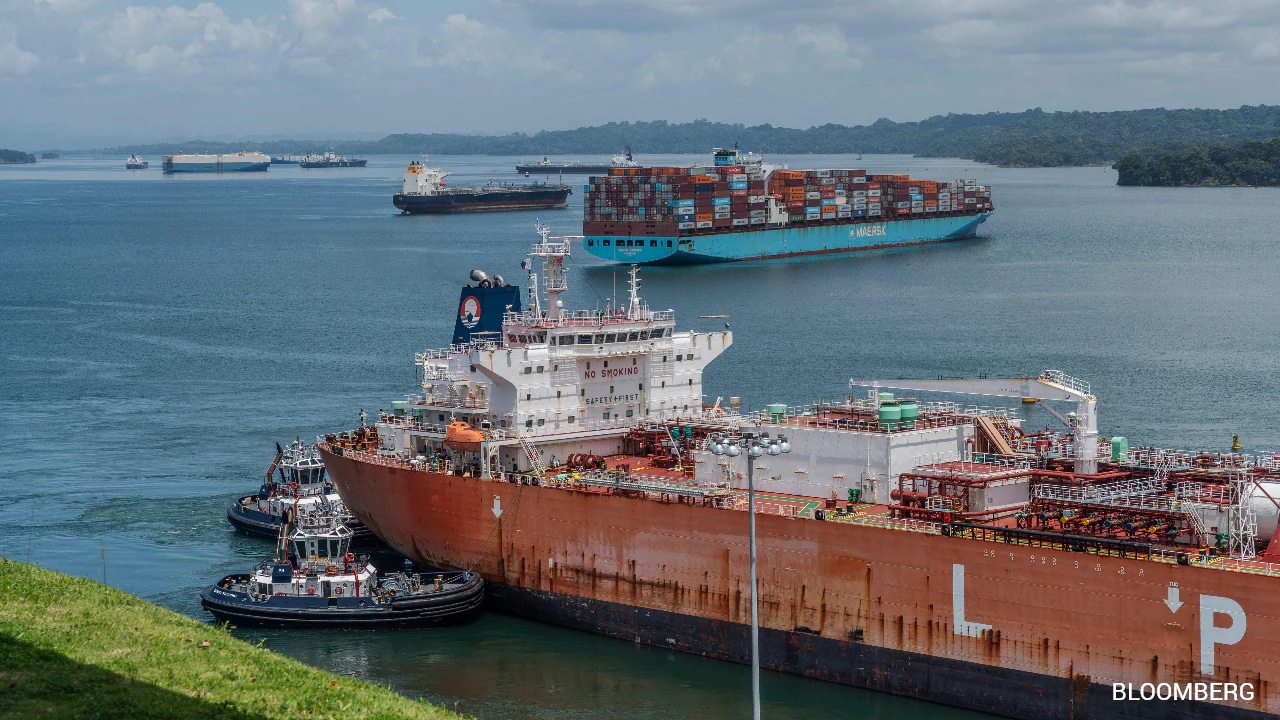
Shipping lines are paying up to $4 million in emergency slot auction fees to bypass the Panama Canal queue, a direct consequence of the Middle East conflict and the effective paralysis of the Strait of Hormuz. Standard passage fees typically hover between $300,000 and $400,000 depending on vessel classification. When the Persian Gulf chokepoint effectively shut down under military escalation, desperate energy and cargo operators began treating multi-million dollar auction premiums as a necessary cost of doing business.
The Panama Canal Authority manages daily transits through a structured booking calendar alongside a secondary auction mechanism. Vessels lacking advance reservations can bid for high-priority slots to avoid sitting idle in open water. Under normal operational environments, winning bids clear at modest margins above standard tolls. The current geopolitical shockwave transformed these auctions into high-stakes financial battlegrounds.
The Anatomy of a Maritime Chokepoint
Global logistics networks rely on redundancy. When a primary artery fails, the pressure immediately transfers to secondary pathways. The Persian Gulf handles roughly one-fifth of global crude petroleum movements. Armed conflict, mine-laying operations, and naval engagements in and around the Strait of Hormuz forced risk-averse charterers to halt voyages through the Middle East.
Vessels carrying liquefied petroleum gas, refined fuels, and containerized cargo from U.S. Gulf ports altered destinations to serve Asian markets starved of Persian Gulf supplies. This massive tonnage shift converged on Central America. The sudden surge overwhelmed the operational capacity of the locks, creating multi-day vessel backlogs off both the Pacific and Atlantic approaches.
Corporations calculated that losing millions of dollars in a single slot auction was preferable to incurring demurrage charges, missing delivery windows, or exposing crews to active conflict zones. A multi-million dollar toll is a rounding error when a single cargo of energy products commands record spot market prices in destination ports.
Market Mechanics Behind the Bids
The Panama Canal Authority maintains that its standard toll structure remains fixed, attributing high auction outcomes to transient supply-and-demand volatility. Yet these spikes reveal deep structural vulnerabilities in global maritime transit.
The Cost of Urgency
- Fixed Tolls: Standard rates based on vessel size and capacity, booked months in advance.
- Auction Premiums: Dynamic bidding systems where commercial urgency dictates final clearing prices.
- Opportunity Losses: Daily vessel operating costs and delayed cargo liabilities that dwarf the auction fee itself.
When charterers calculate the financial burden of idling a massive gas carrier offshore for days, bidding an extra $3 or $4 million ceases to look reckless. It becomes an act of financial self-preservation. Logistics directors operate under strict internal performance metrics where failing to deliver a shipment on time triggers heavy contractual penalties.
Geopolitical Fallout and Flag Security
The crisis extends far beyond commercial pricing models. Panama finds itself diplomatically entangled in a theater far from its shores. Operating the world's largest open registry by vessel count means numerous ships flying the Panamanian flag transit volatile global waters.
Incidents involving the seizure of Panama-flagged tonnage in Middle Eastern waters elevated diplomatic anxieties. Maritime security is no longer an abstract legal concept for regional authorities; it is an active economic variable. Insurers rapidly adjusted war-risk premiums for vessels transiting the Middle East, rendering those lanes economically unviable for standard commercial operators.
Consequently, the Western Hemisphere water corridor became the primary alternative. The canal authority expanded operational capacity where possible, pushing daily transits past historical averages, but water resource management constraints and lock maintenance cycles limit infinite scaling.
The Broader Economic Ripple
Higher transit costs ripple down the supply chain with predictable velocity. Consumer goods, industrial chemicals, and energy products moving between hemispheres absorb these input spikes. When a fuel tanker or container vessel absorbs a $4 million transit penalty, that expense embeds itself into the final landed cost of industrial inputs.
Global trade pathways remain highly sensitive to regional military friction. The willingness of a single commercial entity to spend millions of dollars merely to skip a multi-day queue illustrates the fragility of modern logistics, where decades of optimization yielded zero tolerance for friction, and every geopolitical shock instantly converts into exorbitant financial tolls