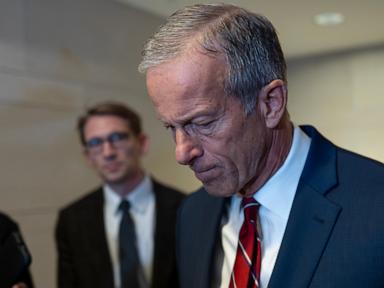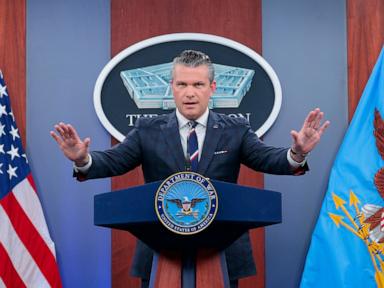
Defense Secretary Pete Hegseth dismissed the November 2026 effort to impeach him as a "political spectacle" and a "personal manifesto driven by ego and resentment," but that framing obscures a far deeper constitutional collision. The impeachment push was not launched by Democratic adversaries looking for a partisan trophy; it was forced onto the House floor by Republican Representative Thomas Massie of Kentucky. While House Republicans ultimately voted 211 to 204 to refer the resolution to committee and stall the immediate threat, the underlying legal questions surrounding unauthorized military campaigns in Iran, Yemen, and Venezuela remain unresolved.
To understand why a sitting defense secretary is facing articles of impeachment from within his own party, you have to look past the cable news soundbites. Surface-level coverage treats this as a personality clash between an outspoken Pentagon chief and a libertarian-leaning outgoing congressman. The reality on Capitol Hill is much sharper. It is a stress test of whether the legislative branch still possesses the will, or the procedural tools, to stop an executive branch from waging undeclared wars across three separate theaters.
The Anatomy of Massie’s Eight Articles
When Representative Thomas Massie introduced his 34-page privileged resolution on November 9, 2026, he bypassed the standard committee bottleneck that usually kills controversial legislation in its crib. Under House rules, an impeachment resolution raised as a question of the privileges of the House forces leadership to take action within two legislative days. That procedural maneuver backed Speaker Mike Johnson and the Republican conference into an uncomfortable corner just days after the midterm elections.
The resolution itself does not read like typical political theater. It lays out eight distinct articles of impeachment targeting Peter Brian Hegseth's conduct as Secretary of Defense. Rather than focusing on personal scandals or administrative missteps, the document targets the core constitutional question of war powers.
- Unauthorized War in Iran: The primary thrust of the resolution accuses Hegseth of orchestrating and sustaining large-scale offensive military operations against Iran without a congressional declaration of war or a specific Authorization for Use of Military Force (AUMF). Massie explicitly cites violations of Section 2(c) of the War Powers Resolution of 1973, which restricts the introduction of United States Armed Forces into hostilities absent a declaration of war, specific statutory authorization, or a national emergency created by an attack upon the United States.
- Escalation in Yemen: The articles detail ongoing strike campaigns against Iranian-backed Houthi forces in Yemen. While successive administrations have stretched the 2001 and 2002 AUMFs to justify counterterrorism operations across the Middle East, critics argue that sustained naval and air engagements in the Red Sea corridor have crossed the threshold into an unauthorized regional conflict.
- Military Operations in Venezuela: Perhaps the most overlooked element of the resolution involves United States military actions directed at Venezuela. Massie’s filing contends that the Pentagon deployed assets and executed kinetic operations in the Western Hemisphere without briefing Congress adequately or securing legal authority.
- Evasion of Congressional Oversight: Beyond the kinetic strikes themselves, the resolution charges Hegseth with systematically ignoring statutory reporting requirements, withholding operational details from the House and Senate Armed Services Committees, and misleading lawmakers regarding the scope and duration of troop deployments.
By anchoring the charges in the War Powers Resolution of 1973 and Article I, Section 8 of the Constitution, Massie deliberately constructed a legal trap. Any member of Congress who voted to table or refer the resolution had to implicitly endorse the idea that the executive branch can initiate multi-front military campaigns without legislative approval.
How Hegseth Turned Defense Into Offense
Hegseth did not retreat behind Pentagon spokespeople when the resolution dropped. Stepping before the cameras on November 10, he deployed a communications strategy honed over years in television media. He did not engage with the statutory text of the War Powers Resolution or parse the legal definitions of hostilities. Instead, he reframed the entire constitutional dispute as an attack on the military itself.
"It puts a target on the backs" of American troops, Hegseth declared, arguing that congressional impeachment efforts signal to adversaries in Tehran and beyond that Washington will punish its own commanders and civilian leaders for executing successful military operations. He went further, directly tying his political survival to President Donald Trump’s own impeachment history. Calling the resolution a sequel to the two failed impeachments of Trump, Hegseth told reporters that his critics could not stomach military success because they hated the president more than they loved the country.
"They impeached President Trump over a perfect phone call. They impeached him again in his final week in office. Both times they failed. Now they're trying a third time. This time against a member of his cabinet. They will fail again."
This rhetorical pivot is textbook crisis management in modern Washington, and it works for a specific reason. By conflating legal oversight of a cabinet official with disloyalty to uniformed service members, Hegseth raised the political cost of a "yes" vote for moderate Republicans and vulnerable Democrats alike. Lawmakers rarely want to explain to constituents why they voted to impeach a defense secretary in the middle of active military operations abroad, especially when the White House is actively touting the degradation of Iranian air and naval capabilities as a major strategic victory.
The historical precedent Hegseth leaned on is also factually accurate, even if it leaves out critical context. Only one cabinet secretary in American history has ever been impeached by the House: Secretary of War William Belknap in 1876, over a kickback scheme involving trading posts in Indian Territory. Belknap resigned minutes before the House vote and was later acquitted by the Senate because several senators believed they lacked jurisdiction over a private citizen. No defense secretary has ever been impeached over the conduct of foreign military operations. Hegseth used that historical rarity as proof of illegitimate political targeting.
The 211 to 204 Vote Was Procedural Survival Not Vindication
When the House convened to address Massie’s privileged resolution on November 10, leadership did not hold a clean up-or-down vote on the merits of the eight articles. Instead, they moved to refer the resolution to the House Judiciary Committee. In congressional parlance, referral is a polite burial. Once a bill or resolution enters the Judiciary Committee without leadership backing, it sits indefinitely without hearings or a markup.
The final tally—211 in favor of referral, 204 opposed—reveals just how fragile Hegseth’s position actually is. A seven-vote margin in a chamber where Republicans hold the gavel indicates deep discomfort beneath the surface. While the vast majority of the GOP conference fell in line to protect the administration's cabinet and avoid handing Democrats a political weapon, the vote count proves that the opposition is not confined to a single outgoing lawmaker from Kentucky.
Consider the structural reality facing the Pentagon heading into 2027. The November 2026 midterm elections shifted the balance of power in the incoming 120th Congress. Analysts and lawmakers on both sides of the aisle have already noted that while the current House leadership shielded Hegseth through procedural maneuvers, an incoming Democratic majority in January possesses unilateral subpoena power and control over committee dockets.
Furthermore, surviving a referral vote does nothing to resolve the statutory violations alleged in the articles. It is a procedural pause, not an exoneration. Every day that United States forces remain engaged in kinetic operations in Iran, Yemen, or Venezuela without an explicit congressional authorization, the legal vulnerability documented in Massie’s resolution compounds.
The Deeper Constitutional Erosion Behind the Headlines
Stripping away the personalities of Pete Hegseth and Thomas Massie exposes a structural failure in Washington that spans decades and crosses party lines. The framers of the Constitution deliberately divided the war powers to prevent a single executive from dragging the nation into foreign conflicts on a whim. Article I grants Congress the sole power to declare war, raise and support armies, and provide and maintain a navy. Article II names the president Commander in Chief of those forces once authorized.
Over the last seventy-five years, that balance has collapsed. From the Korean War—which President Harry Truman labeled a "police action"—through Vietnam, Libya, Syria, and now the multi-theater engagements of 2026, the executive branch has steadily expanded its claim to unilateral military authority.
Congress attempted to claw back its constitutional role in 1973 by passing the War Powers Resolution over President Richard Nixon’s veto. The law requires the president to notify Congress within 48 hours of committing armed forces to military action and forbids armed forces from remaining for more than 60 days—with a 30-day withdrawal period—without a congressional authorization or a declaration of war.
In practice, the 1973 law has functioned less as a brake and more as a loophole. Administrations of both parties have routinely argued either that specific air and naval strikes do not rise to the level of "hostilities" under the act, or that the law itself is an unconstitutional infringement on the president's Commander in Chief powers. Congress, terrified of being blamed if a military operation goes sideways—or equally terrified of voting against a successful strike—has largely abdicated its responsibility to force the issue.
This is why Massie’s impeachment push, regardless of its immediate failure on the floor, represents a rare institutional disruption. By using impeachment rather than a standard War Powers concurrent resolution, Massie targeted the cabinet official directly responsible for executing the orders. Unlike a president, who commands a massive political apparatus and sits at the top of the constitutional hierarchy, a cabinet secretary is an officer appointed to uphold the law and answer to congressional oversight.
The Overlooked Risks of the Impeachment Gambit
While constitutional purists applauded Massie for forcing a debate on war powers, seasoned political strategists point out that impeachment is a blunt instrument with severe unintended consequences. Even among lawmakers who fiercely oppose the administration’s military interventions in the Middle East and South America, there is sharp disagreement over whether impeaching Hegseth is the right remedy.
First, impeachment hearings consume immense institutional bandwidth. If the incoming House prioritizes impeaching the Defense Secretary in early 2027, every other legislative priority—from defense appropriations to oversight of procurement failures—gets pushed to the sidelines.
Second, a failed impeachment often strengthens the target. Under the Constitution, a simple majority in the House is required to impeach, but a two-thirds supermajority in the Senate—67 votes—is required to convict and remove an official from office. Given the political math in the Senate, there is virtually zero chance that two-thirds of senators would vote to remove Hegseth over military operations that the president himself ordered and praised. A predictable Senate acquittal would hand Hegseth and the White House a powerful talking point: that Congress formally reviewed the war effort and cleared the Pentagon of wrongdoing.
Third, targeting the Secretary of Defense sidesteps the Commander in Chief. Under the chain of command, Hegseth does not initiate wars independently; he executes the directives of the President of the United States. Critics of the resolution argue that impeaching a cabinet secretary for carrying out presidential orders establishes a dangerous precedent where cabinet officials become political proxies for attacking the White House, rather than holding the chief executive directly accountable.
Yet those counter-arguments leave a glaring question unanswered. If Congress refuses to cut off funding through the power of the purse, if presidents routinely ignore the 60-day clock of the War Powers Resolution, and if impeachment is deemed too politically risky because the Senate will not convict, what actual mechanism remains to stop an unauthorized war?
What Happens Inside the Pentagon Now
Inside the E-Ring of the Pentagon, the immediate relief following the November 10 vote was tempered by the reality of what comes next. Hegseth’s public bravado—calling the effort a stunt and daring critics to litigate the administration's military record—plays well with the administration's base. Behind closed doors, however, Pentagon lawyers and legislative affairs officials are preparing for a protracted trench war with Capitol Hill.
The 34-page resolution introduced by Massie serves as a ready-made roadmap for future congressional investigations. Every classified briefing withheld, every deployment order issued without statutory citation, and every discrepancy between public statements and operational realities in Iran, Yemen, and Venezuela is now cataloged in the Congressional Record.
When the new Congress convenes in January, committee chairs will not need to start from scratch. They already have the timeline, the statutory citations, and the witness lists. Subpoenas for Pentagon legal memos—specifically the Office of Legal Counsel opinions used to justify strikes in Iran and Venezuela without congressional authorization—will likely be among the first documents demanded.
Hegseth is betting that battlefield results will continue to outweigh constitutional process in the court of public opinion. In Washington, military momentum often silences legal objections, at least temporarily. Once the headlines fade and the long-term costs of multi-front engagements begin to mount, however, the constitutional questions buried in a 211 to 204 procedural vote have a habit of resurfacing with far sharper teeth.