When the Frontline Breaks
Chaos has a specific sound. It is not a cinematic roar or a unified battle cry. Up close, civil unrest sounds like breaking glass, the rhythmic thud of frozen masonry hitting riot shields, and the shrill, electronic shriek of police radios pushed past their bandwidth limits.
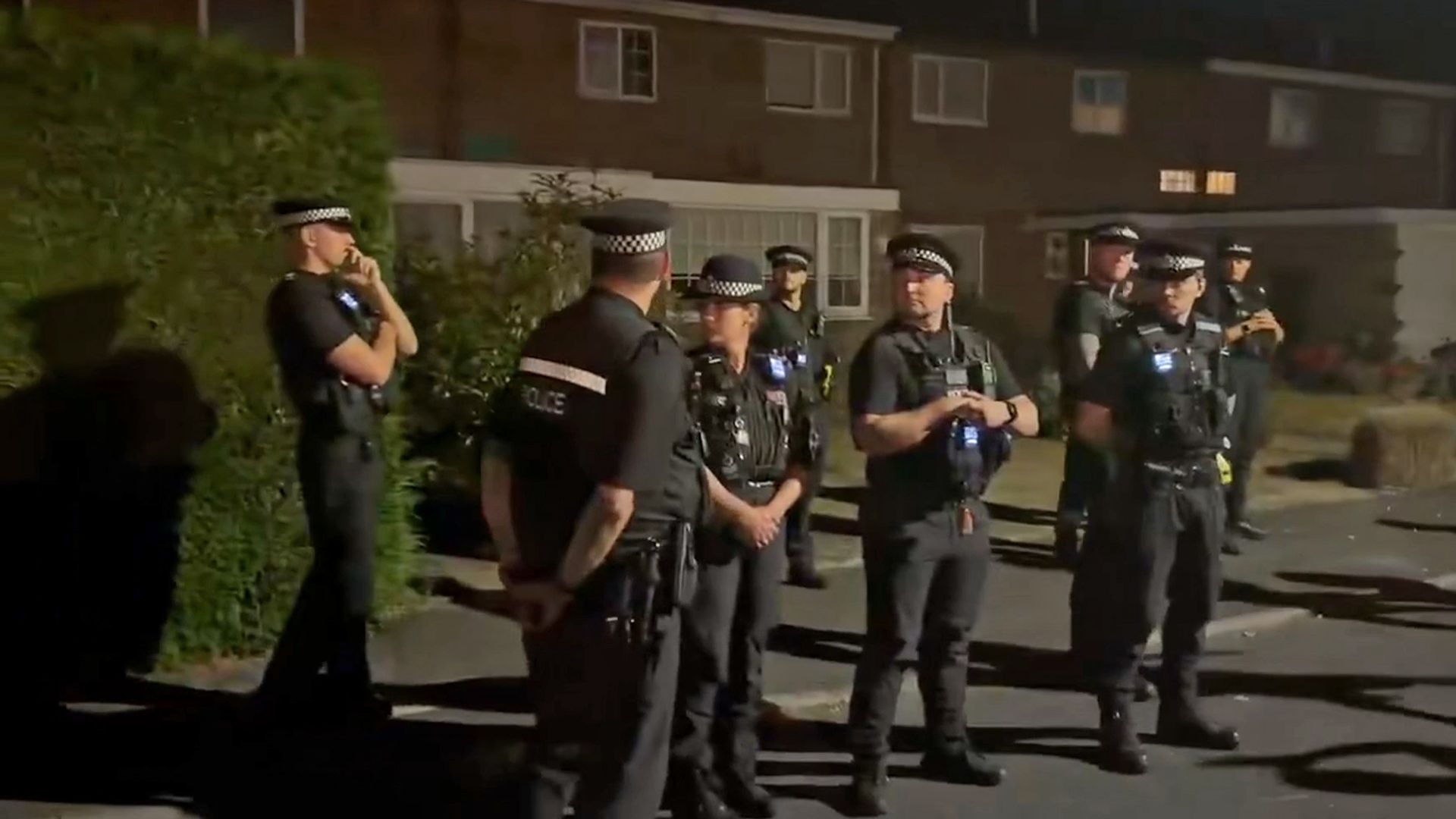
During the violent anti-migrant riots that swept through parts of the United Kingdom, a female police officer sustained serious bite injuries while trying to hold a crumbling perimeter against an angry crowd. The headline was shocking, distributed instantly across news aggregates and social media feeds. A policewoman bitten. A visceral symbol of a state apparatus under siege.
Yet, treating that singular, gruesome injury as an isolated anomaly misses the entire structural collapse happening beneath the surface of modern public order policing.
Look past the graphic video clips. Examine the operational reality of what happens when urban frustration, organized extremism, and years of institutional neglect collide on a tarmac street. The injury sustained by that officer was not just an act of individual aggression. It was a symptom of a chronically overextended force expected to manage ideological explosions with dwindling resources, outdated tactics, and zero political margin for error.
Anatomy of a Flashpoint
To understand how a routine public demonstration degenerates into urban warfare, one must discard the comforting narrative that these riots materialize out of thin air. They are manufactured in digital echo chambers and executed by opportunistic actors who thrive on institutional paralysis.
Anti-migrant sentiment has shifted from fringe internet forums into physical neighborhoods, accelerated by high-profile crimes, sensationalized reporting, and legitimate economic anxieties that politicians have spent decades mismanaging. When a community feels ignored by municipal authorities, grievances morph into volatility.
On the ground, police find themselves caught in an untenable crossfire. They are deployed not as mediators, but as human barricades.
When a crowd surges, the physics of crowd control take over. A police line is only as strong as its flanks and its reinforcements. When cuts to public services hollow out precinct numbers, those lines become dangerously thin. An officer on the front line does not have the luxury of strategic retreat when backup is twenty minutes away across gridlocked, hostile streets.
That is when the physical proximity turns intimate and brutal. Riot gear is designed to deflect blunt force trauma from bricks and bottles. It is rarely designed to protect against close-quarters grappling, improvised weapons, or direct physical assaults like biting.
The Resourcing Myth
For years, government briefings have insisted that forces maintain the capacity to handle public disorder. This is bureaucratic fiction.
The attrition rate within frontline policing is staggering. Experienced officers are leaving for the private sector or medical retirements, burnt out by relentless shift work, rising administrative burdens, and the psychological toll of policing a society growing increasingly hostile to authority. Their replacements are younger, less seasoned, and thrust into high-intensity riots with minimal practical experience in crowd dynamics.
When hundreds of hostile individuals converge on a hotel housing asylum seekers or a town center square, the math dictates the outcome.
- Ratio Imbalance: A tactical unit often faces crowds outnumbering them ten to one.
- Logistical Delays: Transporting reserve units requires clear routes, which are frequently blocked by counter-protesters or burning debris.
- Communication Silos: Radio interference and overwhelmed dispatchers create dangerous blind spots for commanders trying to read the field.
When these factors combine, the doctrine of containment fails. Officers are forced to improvise. Improvisation in a riot leads directly to injuries, hospitalizations, and tactical retreats that embolden the aggressors.
The Political Trap
Politicians love to stand on the steps of government buildings and declare zero tolerance for violence against emergency workers. They promise harsher sentences, expanded police powers, and swift justice.
These soundbites accomplish nothing on a Tuesday night when a brick is flying toward an officer's head.
The political class has weaponized policing without funding its consequences. Law enforcement is expected to maintain order in a fractured society while absorbing the blowback of policy failures enacted in Westminster or town halls. If officers use decisive force to clear a hostile crowd, they face immediate suspension, internal investigations, and public scrutiny over human rights. If they hold back and absorb the violence to avoid escalation, they risk being overrun and sustaining severe injuries, as seen in the biting incident that captured national attention.
There is no middle ground left in the doctrine of public order. Officers are damned if they act aggressively and battered if they do not.
This creates a pervasive demoralization. Why stand the line when the political umbrella will fold the moment a controversial video circulates online?
The Escalation Pipeline
The mechanics of these riots follow a predictable blueprint, yet the state is perpetually caught flat-footed.
First, rumors circulate online, often amplified by bad-faith actors or foreign bot networks designed to deepen social fractures. Second, local populations, fueled by genuine fears of demographic shifts and economic precarity, mobilize. Third, extremist factions hijack the gathering, transforming peaceful or grievance-led assemblies into violent confrontations with law enforcement.
The police are the designated shock absorbers for this entire pipeline. They do not set immigration policy. They do not manage housing shortages. They do not fix local economic decay. Yet they are the ones left standing in the rain, absorbing the physical rage of citizens who have nowhere else to direct their fury.
When a crowd breaches a police line, it is not simply a tactical failure. It is the visible rupture of the social contract.
Beyond the Headlines
The officer who was seriously bitten during the anti-migrant clashes will heal, return to duty, or quietly exit the force with a pension and chronic pain. The news cycle will move on to the next political scandal, the next protest, the next viral video of urban decay.
The structural vulnerabilities, however, remain untouched.
As long as economic desperation is permitted to fester, as long as political leaders use public safety as a theatrical prop rather than a foundational necessity, and as long as frontline officers are treated as expendable instruments of state management, these riots will return.
Next time, the injuries might be worse. The line will be thinner. And the silence from those who built the system will be deafening.