Every autumn inside the United Nations General Assembly, diplomats gather to stage one of international politics' most predictable rituals. According to United Nations records, member states overwhelmingly vote to demand that the United States end its decades-old economic, commercial, and financial embargo against Cuba, while Washington and a tiny handful of allies reject the measure. The vote is non-binding. Nothing in Havana or Washington changes the next morning. Yet behind the routine tally lies a fierce geopolitical struggle over extraterritorial sanctions, domestic American electoral math, human rights accountability, and shifting alliances across Latin America and Europe.
The resolution itself carries no legal teeth under the UN Charter. Unlike decisions from the Security Council, General Assembly resolutions serve as expressions of global diplomatic consensus rather than enforceable mandates. Still, Cuban officials treat the annual tally as a vital diplomatic shield, using the near-unanimous condemnation to frame the island's severe economic collapse as the direct result of foreign aggression rather than domestic mismanagement. American diplomats, meanwhile, use the floor debate to counter that narrative, arguing that Havana's state-controlled economy and political repression drive the island's poverty far more than U.S. trade restrictions.
The Architecture of a Six-Decade Blockade
To understand why a single General Assembly vote cannot dismantle the embargo, you have to look at how Washington built it. What began in 1960 under President Dwight D. Eisenhower as a partial restriction on exports to Cuba—following the nationalization of American-owned oil refineries and properties without compensation—has evolved into an interlocking web of executive orders and federal statutes.
The decisive shift occurred in the 1990s. Following the collapse of the Soviet Union, which had subsidized the Cuban economy for decades, Congress passed two major laws that stripped the White House of the unilateral authority to lift the sanctions.
- The Cuban Democracy Act of 1992 (Torricelli Act): Prohibited foreign subsidiaries of U.S. companies from trading with Cuba and barred ships that docked in Cuban ports from entering U.S. ports for 180 days.
- The Cuban Liberty and Democratic Solidarity Act of 1996 (Helms-Burton Act): Codified the entire embargo into federal law, meaning only an act of Congress—not a presidential signature—can formally end it.
Helms-Burton also introduced Title III, a provision allowing U.S. nationals, including naturalized Cuban Americans, to sue foreign companies in American courts if those firms "traffic" in property confiscated by the Cuban government after the 1959 revolution. For over two decades, every U.S. president, from Bill Clinton to Barack Obama, suspended Title III every six months to avoid trade wars with European and Canadian allies whose companies operate hotels, mines, and telecommunications networks in Cuba. In 2019, the Trump administration allowed Title III to take full effect, triggering dozens of lawsuits against international cruise lines, hotel chains, and energy firms.
Why the General Assembly Floor Turns Into a Battleground
On paper, the annual UN vote looks like a quiet formality. In practice, the debate leading up to the tally frequently erupts into sharp public confrontations between American, Cuban, and allied diplomats.
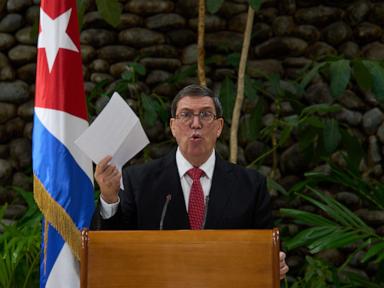
Cuban foreign ministers routinely present exhaustive financial estimates to the General Assembly, attributing billions of dollars in lost revenue, power grid failures, and shortages of medicine and food directly to U.S. financial restrictions. According to statements delivered by Cuban representatives at the UN, the embargo violates international law and constitutes an act of economic warfare designed to starve the population into political submission.
United States representatives reject that framing on the Assembly floor. American diplomats point out that U.S. law explicitly exempts food, medicine, and humanitarian goods from the embargo under the Trade Sanctions Reform and Export Enhancement Act of 2000. According to data tracked by the U.S.-Cuba Trade and Economic Council, the United States actually remains one of Cuba's top suppliers of agricultural products, particularly frozen chicken, paid for in cash upfront. U.S. officials also contend that the Cuban government uses the embargo as a convenient scapegoat to deflect blame for a centrally planned economy that suppresses private enterprise and restricts basic civil liberties.
The Extraterritorial Friction Point
What unites nearly every other nation in the General Assembly—including close U.S. allies like the United Kingdom, France, Germany, Canada, and Japan—is not an endorsement of Havana's political system. European diplomats regularly criticize Cuba's human rights record and its detention of political prisoners.
Instead, international opposition centers on extraterritoriality. Because the U.S. dollar dominates global finance, international banks risk massive fines from the U.S. Treasury Department's Office of Foreign Assets Control (OFAC) if they process transactions linked to Cuba. European banks routinely refuse to handle legitimate humanitarian or commercial transfers involving the island out of fear of losing access to the American financial system.
The European Union even maintains a "Blocking Statute" designed to prohibit EU companies from complying with U.S. extraterritorial sanctions, though few multinational corporations are willing to test Washington's enforcement power in court. When European ambassadors vote alongside Cuba at the UN, they are defending the principle that Washington cannot dictate the trade policies of sovereign third countries.
The Domestic Math Keeping the Embargo Intact
If the diplomatic isolation at the United Nations is nearly total, why does Washington refuse to budge? The answer sits far from Turtle Bay, in the electoral calculus of American domestic politics.
For decades, the Cuban American exile community in South Florida wielded outsized influence in a critical presidential swing state. While Florida has shifted reliably toward the Republican column in recent election cycles, the political risk of appearing soft on Havana remains high for lawmakers in both parties.
- Congressional Gridlock: Because Helms-Burton requires a majority vote in the House of Representatives and 60 votes in the Senate to repeal the embargo, any legislative effort faces an immediate filibuster threat from a bipartisan coalition of hawkish lawmakers, led prominently by Cuban American senators and representatives.
- Executive Whiplash: Presidents can loosen or tighten enforcement around the margins—adjusting rules on remittances, commercial flights, and family travel—but they cannot dismantle the core statutory framework. When the Obama administration restored diplomatic relations in 2015 and abstained from the UN embargo vote for the first and only time in 2016, critics argued Washington gave away leverage without securing democratic reforms in Havana. Subsequent administrations reversed course, re-designating Cuba as a State Sponsor of Terrorism—a label that severely restricts foreign investment and international banking access.
- The Geopolitical Ripple Effect: U.S. policymakers increasingly view Cuba not in isolation, but as part of a broader regional alignment. Washington points to Havana's close security and intelligence ties with Venezuela and Nicaragua, as well as reports of Russian and Chinese signals intelligence facilities operating on the island, as reasons to maintain maximum economic pressure.
What Critics and Defenders Get Wrong About the Sanctions
Both sides of the UN debate rely on talking points that obscure the messy economic reality on the ground in Cuba.
Defenders of the embargo often argue that cutting off hard currency starves the Cuban military conglomerate—known as GAESA (Grupo de Administración Empresarial S.A.)—which controls the vast majority of the island's tourism, retail, and financial sectors. By restricting U.S. travel and financial flows, proponents say, Washington prevents American dollars from funding state security forces. Yet critics counter that sixty years of isolation have failed to dislodge the ruling Communist Party, instead hollowing out the island's nascent private sector—known as mipymes—which struggles to import supplies, secure credit, or use international payment platforms because of U.S. financial restrictions.
Conversely, Havana's claim that the embargo explains every blackout and empty pharmacy shelf ignores decades of structural economic dysfunction. Cuba maintained a dual-currency system until 2021 that distorted prices and discouraged local production. State monopolies still restrict farmers from freely selling harvests, and chronic underinvestment in aging thermoelectric power plants has left the national electrical grid prone to island-wide collapses. Even if Congress repealed Helms-Burton tomorrow, Cuba would still lack the hard currency, creditworthiness, and domestic market reforms needed to rapidly rebuild its infrastructure.
The Human Cost Playing Out Beyond the UN Chamber
While diplomats trade prepared remarks in New York, the combination of U.S. sanctions and domestic economic stagnation has triggered the largest migration crisis in modern Cuban history.
According to U.S. Customs and Border Protection statistics, hundreds of thousands of Cubans have left the island since 2021, fleeing inflation, rolling blackouts, and political repression. Brain drain has hollowed out Cuba's celebrated healthcare and education sectors, as doctors, engineers, and teachers abandon state salaries worth a fraction of their pre-pandemic purchasing power.
For ordinary families in Havana or Santiago de Cuba, the annual General Assembly vote elicits little more than quiet cynicism. They know the resolution will pass by an overwhelming margin. They know the speeches will make headlines for twenty-four hours. And they know that when the cameras leave the UN chamber, the statutory walls erected in Washington and the economic controls enforced in Havana will remain firmly locked in place.