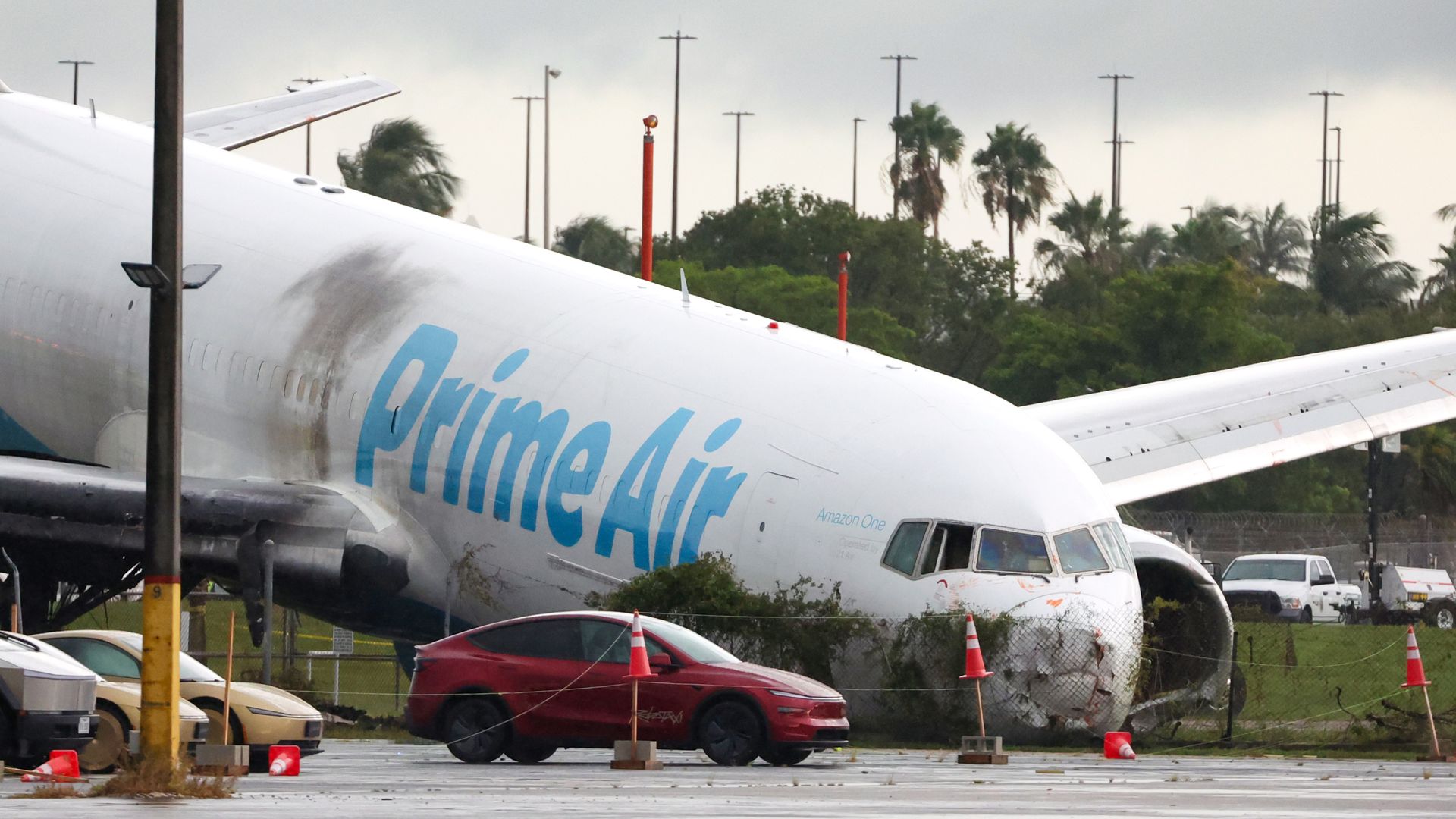
Federal investigators have officially recovered both the flight data recorder and the cockpit voice recorder from the Amazon Prime Air cargo plane that overran a runway at Miami International Airport. The crash, which involved a 32-year-old Boeing 767 operated by 21 Air LLC, bypassed the runway pavement by roughly 1,300 feet before smashing into vehicles on and around airport property. Five people lost their lives in the vehicles caught in the path of destruction.
National Transportation Safety Board chair Jennifer Homendy confirmed that the devices are heading to Washington for complete evaluation. While everyone wants immediate answers, extracting meaningful data from a severe accident scene takes time. The black boxes hold the physical proof of what went wrong during those final, terrifying seconds of Amazon Air Flight 7598.
Inside the Crash Investigation
The NTSB team on the ground faces a complex puzzle. The aircraft was on its third flight of the day, arriving from San Juan, Puerto Rico, after an earlier leg from Cincinnati. Video footage and early observations show the heavy cargo jet remaining airborne deep down the runway before touching down. Investigators are looking closely at whether the plane floated too far down the tarmac, leaving the pilots with insufficient distance to brake safely.
The recovery operation itself slowed down initial access to the aircraft fuselage. Crews had to safely clear massive amounts of jet fuel from the site before investigators could safely inspect the cockpit internals. The flight data recorder will provide objective numbers regarding air speed, engine performance, flap settings, and braking inputs. Meanwhile, the cockpit voice recorder will reveal the actual dialogue between the pilot and copilot, exposing whether they communicated mechanical struggles, misjudged their landing distance, or dealt with unexpected system anomalies.
The Danger Zones Beyond the Tarmac
This tragedy highlights a terrifying reality of modern aviation infrastructure. Runways aren't endless. When heavy commercial aircraft fail to stop within designated pavement boundaries, the consequences spill onto perimeter roads and surrounding businesses.
In this case, the Boeing 767 plowed through an airport perimeter fence, tearing apart a van carrying an airline cleaning crew, before crossing a public roadway and hitting another fence line near a staging area for robotaxis. The NTSB is actively examining the absence of specialized engineered material arresting systems (EMAS) that are specifically designed to safely crush under the weight of an overrunning plane and bring it to a halt. Airports handling massive cargo fleets face intense pressure to evaluate these safety zones, especially as urban expansion pushes public roads closer to airport boundaries.
What Happens Next for the Fleet
Cargo operations operate under grueling schedules to meet consumer delivery expectations. Fleet safety audits will intensify as regulatory bodies scrutinize 21 Air and similar contract operators flying aging widebody airframes for major retail giants. The Boeing 767 involved was manufactured decades ago, though age alone rarely points to a single root cause without mechanical failure or operational error factored into the equation.
Investigators are scheduling interviews with surviving crew members and reviewing maintenance logs to build a complete timeline. Expect preliminary data points regarding aircraft speed to drop once the NTSB finishes initial laboratory downloads from the recovered black boxes. Until then, aviation safety experts will watch closely to see if runway safety margins require mandatory nationwide upgrades.