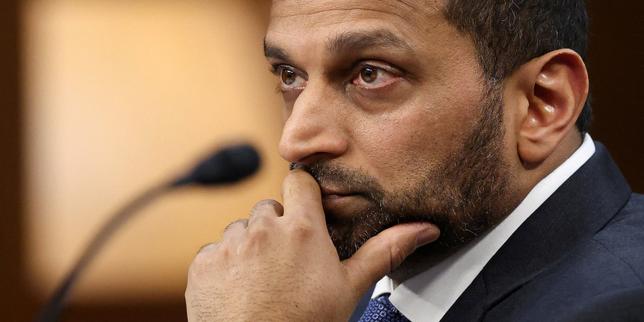
Kash Patel just flipped the table on one of the most prominent media outlets in America. The FBI Director isn't just annoyed by a recent profile in The Atlantic—he's asking for $250 million in a defamation lawsuit that could change how we view the relationship between high-ranking government officials and the press. It’s a bold, aggressive move that signals exactly how the new leadership at the FBI plans to handle its public image.
Patel claims the magazine's reporting wasn't just critical. He argues it was a calculated attempt to damage his reputation through falsehoods. When an FBI Director sues a major publication for a quarter of a billion dollars, it isn't just about money. It’s a power play. It tells every journalist in Washington that the days of "business as usual" reporting on the bureau's leadership are over. Discover more on a connected issue: this related article.
The core of the 250 million dollar grievance
The lawsuit centers on an investigation published by The Atlantic that dug into Patel’s history, his rise through the ranks of the Trump administration, and his eventually successful path to the top of the FBI. Patel’s legal team argues the article relied on "malicious" interpretations of his past work and private dealings. They aren't just saying the magazine got a few dates wrong. They’re saying the entire narrative was built to paint him as a threat to democratic institutions.
Legal experts look at that $250 million figure and see a message. That amount of money would bankrupt almost any media organization. By aiming that high, Patel is framing the article as an existential threat to his career, which justifies an existential threat to the magazine’s treasury. It’s the kind of litigation that makes editors sweat. Additional analysis by BBC News highlights comparable perspectives on the subject.
You have to look at the timing here. Patel has been a polarizing figure since his days on the House Intelligence Committee. He’s used to being in the crosshairs. But as the sitting Director of the FBI, his legal standing is different. He has more to lose, and arguably, more resources to fight back.
Why this isn't your typical defamation case
Proving defamation in the United States is notoriously difficult, especially for public figures. Thanks to the New York Times Co. v. Sullivan standard, Patel doesn't just have to prove the information was false. He has to prove "actual malice." That means he needs to show the writers at The Atlantic knew the information was wrong or acted with a reckless disregard for the truth.
Most politicians shy away from these cases because the discovery process is a nightmare. To win, Patel might have to open up his own records, emails, and internal communications to the magazine’s lawyers. It’s a double-edged sword. If he’s willing to go through that, he’s either incredibly confident that his record is clean, or he’s betting that the magazine will fold before it gets to that stage.
The Atlantic has a long history of deep-dive longform journalism. They don't usually back down. Their legal team is likely already digging into their notes, recordings, and primary sources to build a "truth" defense. In defamation law, truth is the ultimate shield. If they can prove even the most stinging parts of their report were factually grounded, Patel’s case falls apart.
The political fallout of a litigious FBI Director
We’ve never really seen an FBI Director go after a press outlet like this while in office. Usually, the bureau prefers to stay in the shadows or handle PR through official spokespeople and carefully timed leaks. Patel is throwing that playbook in the trash. He’s leaning into his role as a disruptor.
Critics say this is an attempt to chill free speech. They worry that if a government official can successfully sue a magazine into oblivion, other journalists will stop investigating the powerful. Supporters, on the other hand, see it as a necessary correction. They’re tired of what they perceive as "hit pieces" designed to derail careers based on anonymous sources and thin evidence.
The FBI itself is in a weird spot. Rank-and-file agents usually want a leader who keeps the agency out of the headlines for the wrong reasons. Having the boss in a high-profile legal spat with a prestigious magazine keeps the bureau front and center in the culture wars. It’s a distraction, but for Patel, it might be a necessary one to cement his authority.
The Atlantic stands its ground
So far, the magazine hasn't blinked. They’ve stood by their reporting, which is the standard move in these situations. Retracting a story of this magnitude would be a death blow to their credibility. They’re essentially betting the house on their editorial process.
The investigation in question wasn't a quick blog post. It was a multi-month effort involving dozens of interviews. For Patel to win, he has to dismantle that entire process. He has to show that the editors purposefully ignored evidence that contradicted their "villain" narrative. It’s a high bar, but Patel has spent his career clearing high bars that his critics set for him.
What happens next in the legal battle
This case won't be settled next week. We’re looking at years of motions, depositions, and legal maneuvering. The first big hurdle is the motion to dismiss. The Atlantic will try to get a judge to throw the case out before it even reaches a jury. They’ll argue that Patel is a public official and the article is protected opinion or reported fact.
If a judge lets the case move forward, things get spicy. We’ll see a level of transparency into both the FBI Director’s life and the magazine’s editorial room that we rarely get to witness.
Watch the venue of the lawsuit closely. Where this is tried matters as much as what is being said. Legal teams fight tooth and nail over jurisdictions because some courts are historically more friendly to "freedom of the press" than others. Patel is likely looking for a venue that isn't impressed by the cultural cachet of a DC-based magazine.
Real world impact on investigative journalism
Even if Patel doesn't see a dime of that $250 million, he might still win. The goal of "strategic lawsuits against public participation" (SLAPP) is often to drain the defendant's resources and discourage others from following suit. While some states have anti-SLAPP laws to prevent this, the federal system is a different beast.
Journalists across the country are watching this. If The Atlantic is forced to spend millions defending a story that was thoroughly fact-checked, it sends a shiver through every newsroom. It makes the "safe" stories look a lot more attractive than the "risky" investigations into the people running the country.
You should keep an eye on whether other news organizations join the fray. Often, media groups will file "amicus briefs" in support of their peers to protect the broader First Amendment rights that allow them to function. If the industry sees this as a coordinated attack on the press, expect a massive legal counter-offensive.
How to track the case and why you should care
Don't just read the headlines. If you want to know what’s actually happening, you need to look at the court filings. That’s where the real evidence comes out, away from the PR spin of both sides. This case is a litmus test for the future of the First Amendment in an era where the lines between "government official" and "public personality" have blurred into nothingness.
The FBI is the most powerful law enforcement agency on earth. The people who lead it must be subject to scrutiny. If that scrutiny is silenced by massive lawsuits, the balance of power shifts even further toward the state. On the flip side, if the media is truly printing lies to destroy people they don't like, they shouldn't be protected by their press badges.
The outcome of Patel v. The Atlantic will tell us which way the scales are tipping. For now, grab your popcorn. This is going to be a long, ugly, and incredibly expensive fight.
Check the court dockets in the coming months for the initial response from the magazine’s lawyers. That will give you the first real glimpse into their defense strategy. If they move for a quick summary judgment, you’ll know they think the case is legally thin. If they start preparing for a long haul, expect a trial that dominates the news cycle for months. This isn't just about one man and one magazine anymore. It's about the rules of engagement for the next decade of American politics.