A man stands on his porch in a quiet neighborhood outside Richmond, Virginia. He has lived here for thirty years. He knows which neighbor’s dog barks at the mailman and which tree will lose its leaves first when October chills the air. To him, this is home. But to a group of mathematicians, lawyers, and politicians hundreds of miles away, this porch is a coordinate in a high-stakes game of geometric warfare.
Every ten years, we redraw the maps of our lives. We take a pen to the state and decide who belongs with whom. We group the farmers with the farmers, the city dwellers with the city dwellers, or—if the pen is held by someone with a specific agenda—we slice through communities like a hot knife through butter. This is the art of redistricting. It sounds like a clerical task, a bit of dry administrative upkeep. In reality, it is the most visceral exercise of power in a democracy. It determines whose voice is a roar and whose is a whisper.
Currently, Virginia is the theater for a legal drama that has reached the steps of the United States Supreme Court. At the heart of the dispute is a simple, terrifying question: If a map is found to be flawed, who gets to fix it, and how fast must they move?
The Ghost in the Map
To understand the urgency of the Democrats’ recent plea to the High Court, you have to understand what it feels like to vote in a district that doesn't make sense. Imagine a congressional district shaped like a dying pterodactyl, stretching across three counties just to pick up specific pockets of voters while avoiding others. When lines are drawn this way, the outcome of an election is often decided before a single ballot is cast.
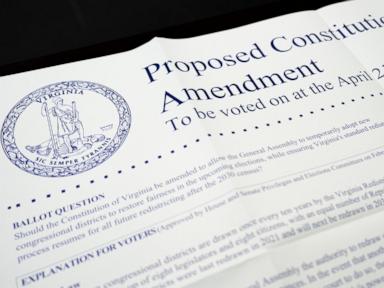
Virginia has been wrestling with this ghost for years. The state recently moved toward a bipartisan commission to handle redistricting, an attempt to take the "partisan" out of the "partition." But the transition has been anything but smooth. A lower court ruling recently threw a wrench into the gears, blocking the implementation of new congressional districts that many argued were essential for fair representation.
The Democrats didn't just disagree with the ruling; they panicked. They saw a clock ticking toward the next election cycle with a map they believed was a relic of an unfair past. They took their case to the Supreme Court, asking for an emergency stay. They aren't just asking for a legal correction. They are asking for the right to exist in a political geography that reflects the reality of the people living within it.
The Weight of a Single Zip Code
Consider a hypothetical voter named Elena. Elena lives in a district that was "packed." In political terms, packing is the practice of shoving as many like-minded voters into one district as possible to waste their surplus votes. Elena goes to the polls every year, but she feels the weight of the math against her. Her candidate wins by 80%, meaning her vote, while counted, feels statistically redundant. Meanwhile, in the neighboring districts, the "cracked" populations are spread so thin they can never reach a majority.
The legal battle over Virginia’s lines is about Elena. It is about whether her zip code is a community or a tool. When the lower court blocked the new districts, it effectively told Virginia that the old, disputed lines would have to suffice for now. For the people on the ground, this feels like being told to wear a suit that no longer fits while being expected to run a race.
The Supreme Court is often viewed as a cold, intellectual vacuum where nine people in robes debate Latin phrases. But their decision on this stay will ripple through the grocery stores and church basements of Virginia. If the Court refuses to halt the ruling, the state may go into its next major election cycle using maps that a significant portion of the population believes are illegitimate. That is how cynicism grows. It starts with a line on a map and ends with a citizen deciding it’s not worth the drive to the polling station.
The Friction of Justice
Justice is rarely fast. It is a slow, grinding process that prioritizes "due process" over "immediate fairness." The lower court’s decision to block the new districts likely came from a place of procedural caution. They wanted to ensure every legal t-point was crossed. But in the world of elections, delay is its own form of verdict.
An election is a train that does not stop. Candidates have to file paperwork. Donors have to write checks. Volunteers have to knock on doors. All of this requires knowing exactly where the district starts and ends. When the maps are in limbo, the entire democratic process enters a state of suspended animation.
The Democrats’ argument to the Supreme Court is built on this friction. They contend that the "status quo" is actually a state of active harm. By keeping the old lines, the state is forced to operate under a framework that has already been deemed problematic. It is like forcing a pilot to fly a plane with a known engine flicker just because the mechanics haven't finished the paperwork for the replacement.
The Invisible Stakes
Why does this matter to someone who doesn't live in Virginia? Because Virginia is a laboratory. What happens there—the way the Court handles these emergency "shadow docket" requests—sets the tone for the rest of the country. We are entering an era where the drawing of lines is becoming more precise, powered by algorithms that can predict your voting behavior based on your browsing history and the brand of coffee you buy.
The pen is getting sharper. The math is getting better. And the human element is being squeezed out.
If the Supreme Court allows the block to stand, it sends a message that procedural delay outweighs the immediate need for representative accuracy. If they grant the stay, they are signaling that the integrity of the upcoming election cycle is the highest priority. There is no neutral ground here. Every direction leads to a different version of democracy.
The man on the porch doesn't care about the "stay" or the "lower court's jurisdiction." He cares about whether his representative will answer his email about the pothole on 4th Street. He cares about whether his daughter’s school gets the funding it was promised. He cares about the things that happen within the lines.
We treat these maps as if they are static, permanent things, like mountains or rivers. They aren't. They are living, breathing contracts between the governed and the governors. When those contracts are torn up or put on hold, the trust that holds a community together begins to fray at the edges.
The lawyers will continue to file their briefs. The Justices will continue to deliberate in their high-ceilinged rooms. But down on the street level, the stakes aren't academic. They are the difference between being heard and being ignored. They are the difference between a map that guides us and a map that traps us.
The ink is still wet. The lines are still shifting. And somewhere in Virginia, a voter is waiting to find out which side of history they’ve been drawn into.