Maps in geography textbooks look neat. Blue oceans, yellow landmasses, dark ink lines defining where one nation stops and another begins. But anyone who has ever stood at a border crossing knows the truth. Lines on paper are just ink. Real borders are made of paperless anxieties, quiet telephone calls at midnight, and the heavy weight of expectations carried by people whose names never make the evening news.
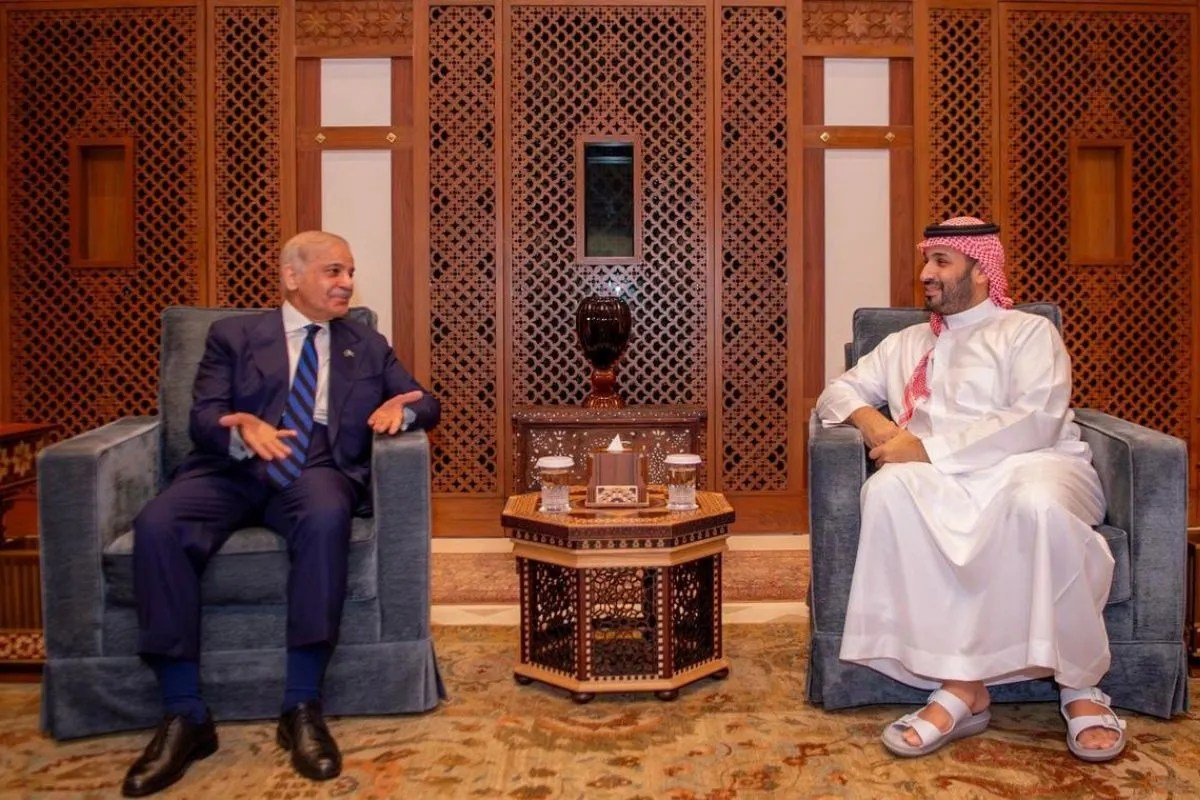
Consider a room in Riyadh. Marble floors reflect the glare of crystal chandeliers. Outside, the desert heat shimmers against glass facades, turning the horizon into a mirage. Inside, two men sit across a polished wooden table. They do not raise their voices. They do not need to. Every word they speak carries the invisible gravity of millions of lives—workers building skyscrapers under the blinding sun, traders waiting for cargo ships to clear narrow straits, families separated by oceans yet tethered by remittance envelopes sent home month after month.
External politics often feels distant. We read headlines about bilateral meetings and diplomatic handshakes as if they were events happening on another planet. Yet, the conversation between India’s External Affairs Minister, S. Jaishankar, and Saudi Arabia’s Foreign Minister, Prince Faisal bin Farhan, reaches far beyond administrative chambers. It touches the very air people breathe in two distinct corners of the globe.
Think about what happens when two regional heavyweights decide to talk instead of posture.
For decades, the relationship between New Delhi and Riyadh was transactional. Oil for labor. Energy security traded for human capital. A simple equation written in crude oil and paychecks. But the world shifted beneath our feet. Energy markets transformed. Supply chains fractured and reformed under the pressure of global shocks. Security dynamics in West Asia grew increasingly fragile, demanding steady hands and clear communication.
When Jaishankar sat down with Saudi leadership to dissect regional and global developments, they were not merely exchanging diplomatic pleasantries. They were knitting safety nets.
Picture a young engineer in a bustling coastal city in southern India. Her brother works on a massive infrastructure project in the heart of the Arabian Peninsula. Every Sunday, their mother calls them both on a flickering video screen, bridging thousands of miles with fiber optics and Wi-Fi signals. That family's stability relies entirely on the political weather between these two nations. When trade agreements hold, when security frameworks remain robust, when visa policies ease and maritime routes stay open, that family sleeps a little easier.
Diplomacy is fundamentally human. It is the art of preventing ordinary people from paying the price for extraordinary friction.
Global developments today move at a dizzying pace. Inflation ripples through supermarkets from Mumbai to Jeddah. Technological revolutions demand new partnerships in artificial intelligence, green energy, and digital infrastructure. Neither nation can afford to navigate these turbulent waters alone. Saudi Arabia is reshaping its economy away from total petroleum dependence through ambitious visions for the future. India is racing to power its surging industrial growth while lifting millions into prosperity.
When ministers review regional stability, they are calculating risk. They are asking whether the shipping lanes remain safe for commercial tankers. They are discussing how to insulate their populations from external economic shocks. They are mapping out a shared future where cooperation replaces vulnerability.
We often forget that nations are just collections of human stories bound by geography and necessity. Behind every trade pact lies the quiet hope of a better livelihood. Behind every security dialogue lies the desire for peace in neighborhoods that have known too much turmoil.
The meeting in Riyadh ended with handshakes, official photographs, and polite statements released to wire services. The cameras clicked, the diplomats departed, and the room grew quiet once more. But the work continued. Across thousands of miles of desert and sea, the invisible threads tightened, holding steady against the wind.