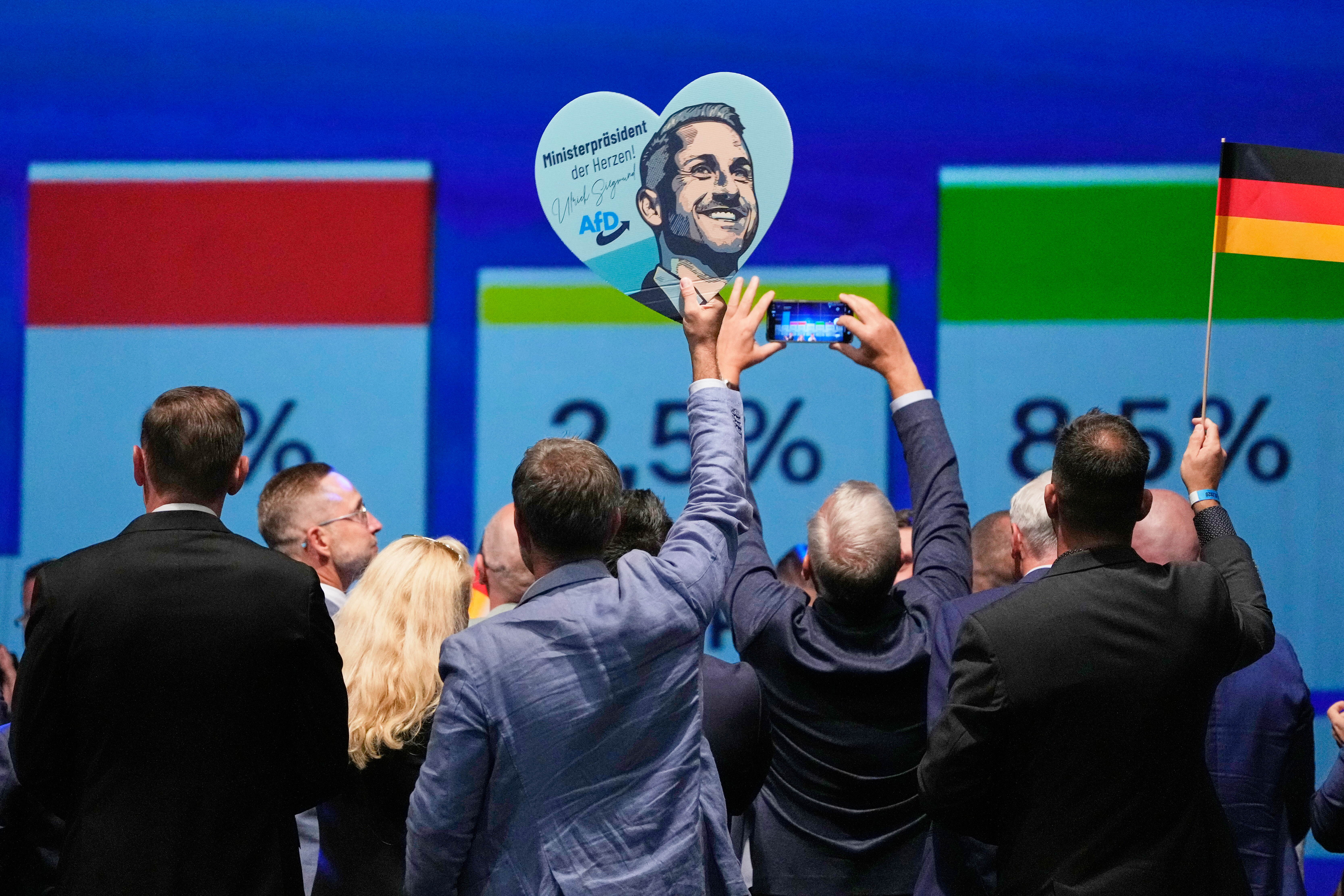
The coffee at the corner kiosk in Dresden had gone cold ten minutes ago, but Karl did not care. He stared at the small screen of his phone, watching the digital numbers tick upward with the inexorable rhythm of a metronome. The blue bars representing the established parties shrank. The brown bars grew. By midnight, the arithmetic of the German state legislature had shifted into a shape that political scientists spent decades warning against and politicians pretended could never happen.
An electoral breakthrough had arrived. Not with the roar of a sudden revolution, but with the quiet, devastating click of ballots sliding into plastic boxes across Saxony and Thuringia.
For months, the polling had flickered like a warning light on an aging dashboard. Everyone saw it. Few believed it would actually happen. Yet here it was: the Alternative for Germany party, the AfD, capturing unprecedented vote shares in key regional elections, rewriting the political geography of Central Europe. To understand why this matters, you have to step away from the television studios in Berlin, where pundits adjust their ties and speak in soothing abstractions, and walk down the cobbled streets where the social fabric has been quietly fraying for thirty years.
Consider a hypothetical resident named Stefan, a fifty-four-year-old machinist whose hands carry the permanent, dark grease of an industrial lathe he has operated since the reunification of Germany. Stefan is not a monster. He does not march through the streets in jackboots. He is simply tired. He remembers the promises made in 1990—the gleaming horizon of western prosperity, the soaring rhetoric of a unified nation marching hand in hand into a golden future.
Instead, Stefan watched his hometown's hospital close because it lacked economic efficiency. He watched the young people—the daughters and sons with sharp minds and degrees—pack their bags for Frankfurt, Munich, or Zurich, leaving behind an aging population cared for by overworked nurses from Eastern Europe. He watched the cost of heating his modest apartment double while politicians in distant capitals lectured him about carbon taxes.
When people like Stefan pull the lever for an insurgent far-right party, they are not always endorsing a coherent ideological manifesto. They are pulling the emergency brake. They are shouting into a void, demanding that someone—anyone—acknowledge that their world is slipping away.
The mechanics of this breakthrough are rooted in a deep, structural alienation. Post-war Germany built its entire democratic legitimacy on a promise: stability in exchange for compliance, growth in exchange for quietude. For decades, this bargain held. The center held. The Christian Democrats and the Social Democrats traded places in orderly succession, managing the machinery of the state with the dull, reassuring competence of accountants.
But the world changed, and the machinery broke.
Global supply chain shocks, the energy crisis triggered by the severing of Russian gas pipelines, and the influx of asylum seekers straining municipal budgets collided all at once. For the voter in the east, who never quite achieved parity with the western half of the country in wages, pensions, or corporate ownership, these crises felt personal. They felt like abandonment.
The AfD understood this grievance long before the mainstream parties did. While traditional politicians spoke in measured bureaucratic prose about inflation indices and geopolitical positioning, the far-right spoke the language of raw emotion. They pointed to the empty storefronts. They pointed to the rising rents. They offered a simple, toxic, yet intoxicating narrative: You are being forgotten, and we are the only ones who remember you.
It is a familiar script, pulled straight from the darkest chapters of the twentieth century. That is what makes the current moment so terrifying to historians who know how this story usually ends. When democratic institutions fail to deliver basic security and dignity, the populist appeal grows teeth.
Yet, reducing this election entirely to a surge of neo-fascism misses the more complex, agonizing reality. A significant portion of these voters are not ideological extremists. They are protest voters. They are mothers, teachers, small business owners, and mechanics who know precisely who the AfD is, but hate the status quo more. They are gambling with democracy because they feel they have nothing left to lose.
This is the invisible stakes of the ballot box. Democracy is not a self-sustaining perpetual motion machine. It requires fuel. That fuel is trust—the quiet, everyday belief that the system works for you, that your children will have a better life, that the people in power hear your voice before you have to scream.
When that trust evaporates, the map redraws itself overnight.
The morning after the election, the sun rose over Dresden just as it always had. The trams clanked down the tracks. The bakers laid out their pretzels. But the air felt different. The firewall that German politics relied upon for eighty years—the absolute, unwritten taboo against mainstream cooperation with the radical right—began to crack under the weight of sheer numbers.
Governments now face a paralyzing arithmetic. To form a ruling coalition in these eastern states, the traditional parties must either build awkward, ideologically incoherent mega-coalitions just to keep the far-right out of power, or they must confront the reality that a third of their fellow citizens have chosen a path that leads away from the European project.
There are no easy fixes here. Pious lectures from Berlin will not win back Stefan. Condemnation will only drive him deeper into the fold, turning a political disagreement into a tribal identity.
The remedy, if one exists, requires something much harder than a better campaign strategy. It requires rebuilding the physical and economic bones of forgotten regions. It requires hospitals that stay open, trains that run on time, and an economy that rewards honest work with genuine security rather than precarious survival.
Until that happens, the digital numbers on the screen will keep ticking upward. The metronome will keep beating. And in the quiet hours before dawn, the old ghosts of Europe will continue to circle, waiting for their moment to step back into the light.