The Aerodynamic Cost Function of Particulate Dispersion
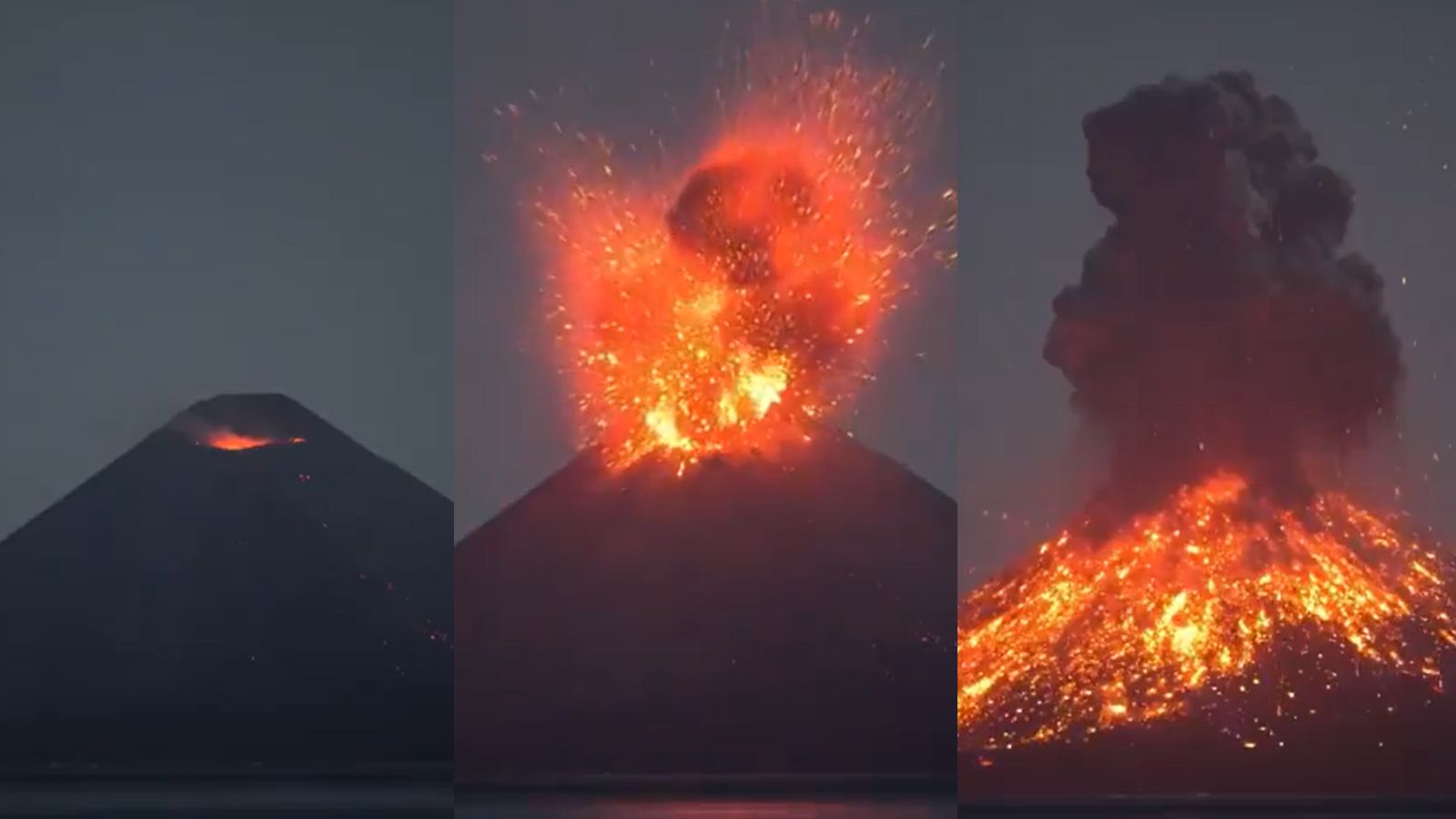
When a subduction zone stratovolcano like Anak Krakatau or Lewotobi Laki-Laki transitions from effusive tremor to explosive pyroclastic ejection, the immediate operational crisis is rarely misunderstood. Plumes reaching altitudes in excess of fifty thousand feet introduce acute mechanical failure vectors to commercial turbofan engines. Silicate glass particles, suspended in high-altitude jet streams, possess melting points significantly lower than the internal operating temperatures of modern combustion chambers. Upon ingestion, these microscopic shards liquefy within the turbine core, subsequently coating stator vanes and turbine blades as the air stream cools. This thermodynamic phase change induces catastrophic compressor stalls, thermal efficiency degradation, and total thrust loss.
Yet, treating a volcanic crisis as a localized meteorological event constitutes a fundamental diagnostic error. Air traffic management agencies do not close primary international hubs—such as Soekarno-Hatta International Airport or regional gateways across the Sunda and Banda arcs—out of an abundance of caution; they act in response to a strict aerodynamic cost function where the probability of multi-engine flameout outweighs the economic utility of continued slot allocations. The physical footprint of an ash cloud is dynamic, dictated by vector physics, stratospheric wind shear, and particulate density gradients. Consequently, standard delay tracking metrics fail. A hundred canceled flights do not merely represent a scheduling inconvenience; they represent a system-wide capacity freeze driven by the velocity of airborne particulates.
The Structural Mechanics of Network Paralysis
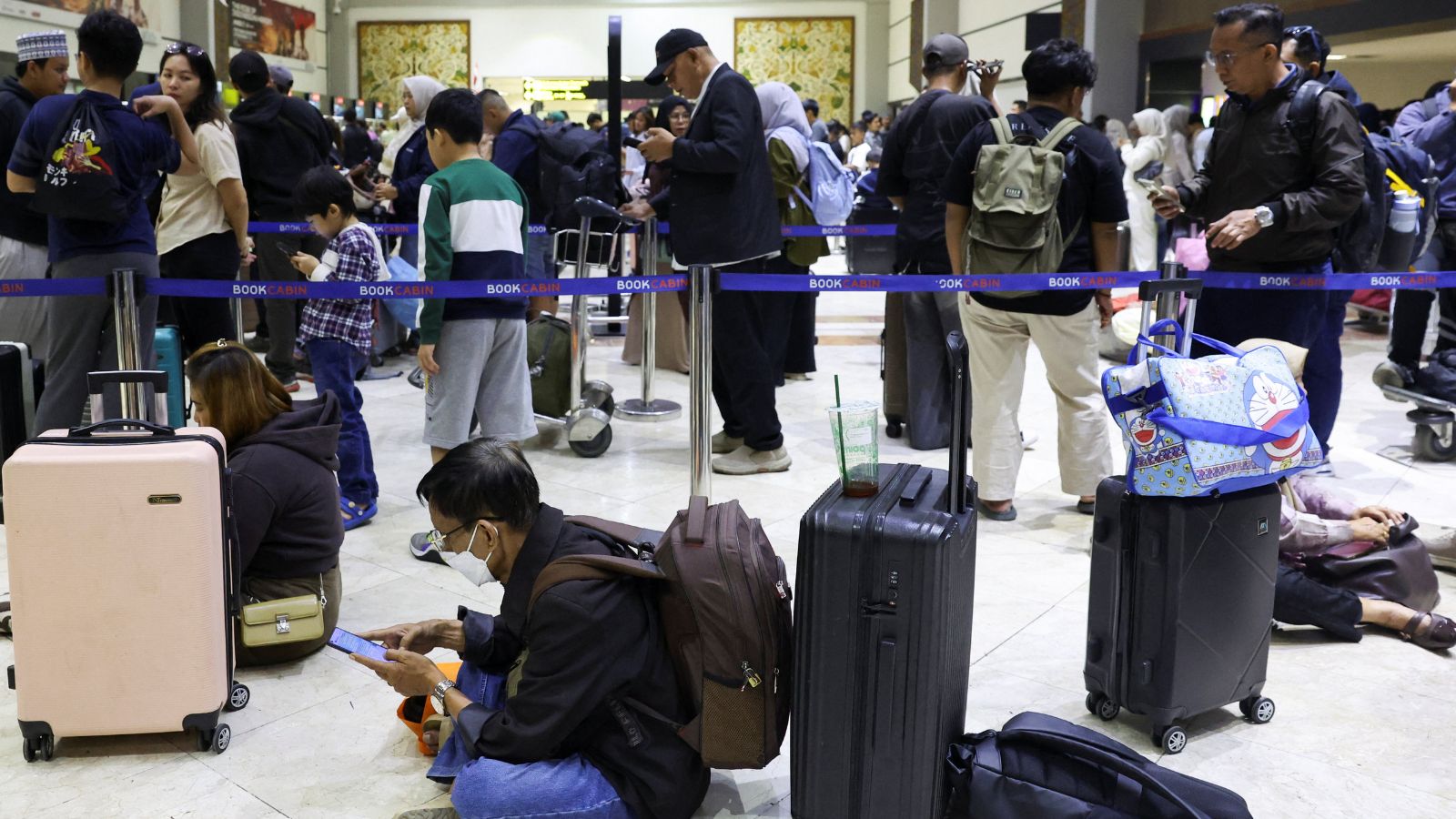
The closure of primary operational nodes triggers cascading failures across localized and international networks. Understanding how a localized geophysical hazard paralyzes hundreds of thousands of travelers requires examining the topology of modern airline scheduling. Carriers operate under strict asset utilization models where aircraft rotations, crew legalities, and terminal turnaround times are optimized to the minute. When an airspace closure forces sudden ground stops across eight regional airports, the operational equilibrium collapses.
Geophysical Eruption
  │
  ├──► Particulate Ingestion Vector (Turbine Core Failure)
  │     └──► Mandatory Airspace Ground Stop (AirNav Authority)
  │
  ├──► Fleet Dislocation (Displaced Aircraft Rotations)
  │     └──► Terminal Saturation & Passenger Stagnation
  │
  └──► Crew Duty Limit Expiry (Regulatory Rest Violations)
        └──► Secondary Wave Cancellations (72-hour propagation)
The propagation of this disruption follows a predictable, quantifiable sequence:
- Asset Dislocation: Aircraft scheduled to fly outbound from affected hubs are trapped on remote tarmacs or diverted to secondary fields, stripping capacity from connecting nodes thousands of miles away.
- Crew Duty Time Expiration: Commercial aviation regulations strictly govern pilot and cabin crew duty periods. Stranded crews exceeding maximum allowable working hours cannot operate repositioning flights without mandatory rest cycles, creating secondary wave cancellations long after the ash cloud dissipates.
- Terminal Saturation: Passenger processing capacity is finite. When thousands of travelers are grounded simultaneously, ticket counters and transit hotels reach absolute saturation, forcing ground handlers to pivot from logistics management to crowd control.
- Schedule Ripple Effects: Recovery phase management requires balancing slot availability, maintenance checks for ash accumulation on parked airframes, and prioritized reaccommodation queues. This expands the disruption window far beyond the active eruption timeline.
Evaluating Mitigation Frameworks and Structural Limits
Governments and transport ministries deploy standardized emergency response protocols to absorb these demand-capacity shocks. In the Indonesian archipelago, surface transportation contingencies—such as redeploying large roll-on/roll-off ferries and activating commercial speedboats—serve as the primary mechanical workaround to bypass closed airspace between islands like Java, Bali, and Flores. Simultaneously, meteorological agencies utilize satellite telemetry and the Darwin Volcanic Ash Advisory Centre data to map plume dispersion, allowing authorities to dynamically reopen specific flight corridors once particulate concentrations drop below critical safety thresholds.
However, these mitigation measures expose severe systemic limitations. Maritime evacuation alternatives are bottlenecked by geographical distances and harbor capacities, rendering them ineffective for high-volume international transit. Cloud-seeding operations and weather modification techniques deployed by disaster mitigation agencies to accelerate ash fallout depend entirely on preexisting meteorological conditions; they cannot force precipitation in dry atmospheric blocks. Furthermore, airline refund policies and rebooking algorithms frequently experience severe latency during high-density cancellations, exacerbating traveler congestion at terminal nodes and straining consumer protection frameworks.
Strategic Deployment for Operational Resilience
Mitigating the economic and logistical fallout of volcanic disruptions requires a decisive shift from reactive crisis management to predictive asset hedging. Airline network planners must build dynamic routing buffers into Southeast Asian flight corridors, prioritizing rapid fleet decoupling when Volcanic Ash Advisory Centers raise aviation color codes to red. Ground operations teams need automated reaccommodation engines that bypass congested terminal service desks by executing digital mass-rebooking via decentralized APIs. For corporate mobility managers and regional logistics directors, the strategic imperative is clear: eliminate reliance on single-hub transit dependencies across volcanic subduction zones, maintaining pre-cleared maritime and overland continuity protocols before the next subterranean pulse forces airspace liquidation.
Anak Krakatau Eruption Volcanic Ash Disruption Analysis
This video provides on-the-ground context regarding how sudden volcanic eruptions in Indonesia trigger immediate flight cancellations and operational chaos for regional travelers.
http://googleusercontent.com/youtube_content/1