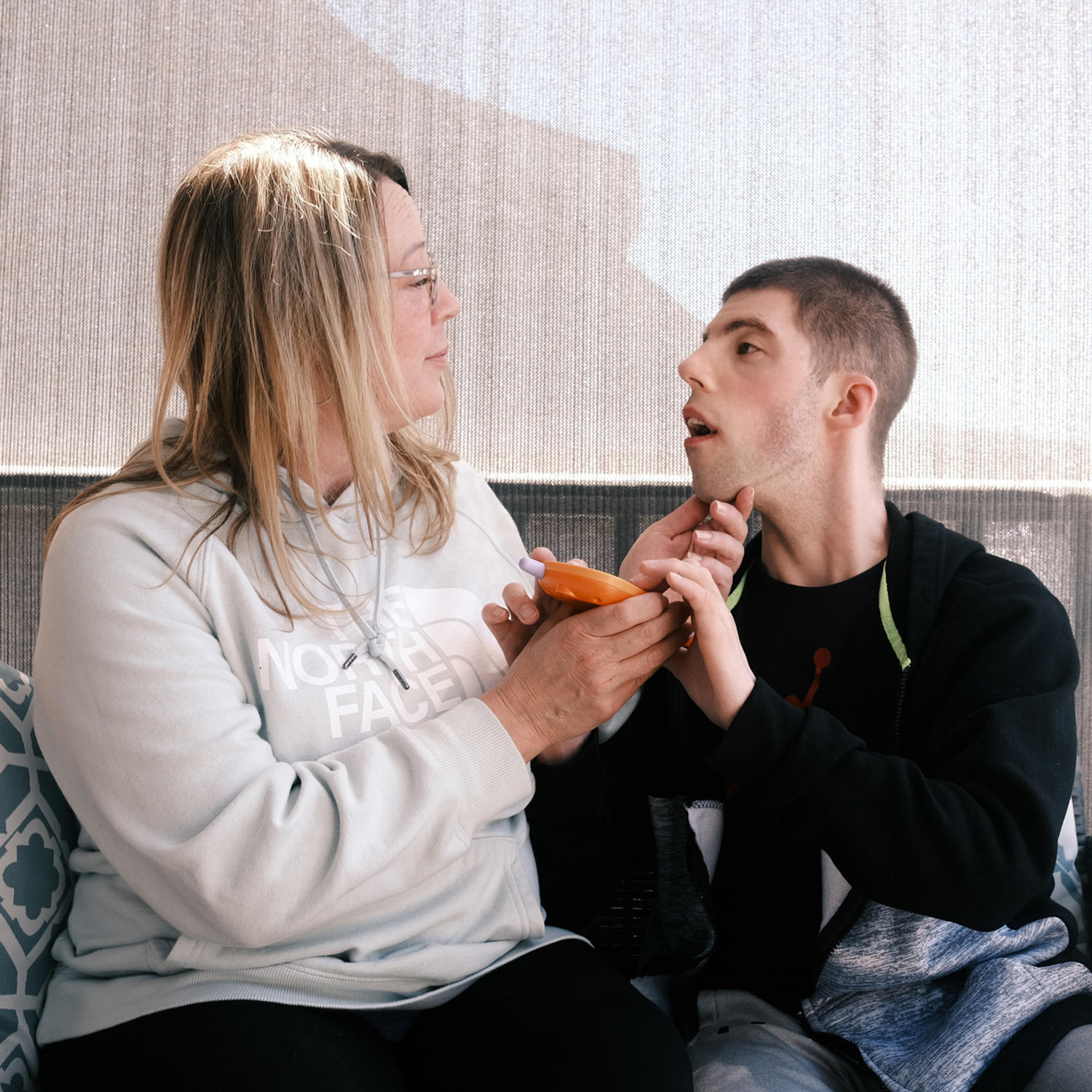
The safety net isn’t just fraying. For thousands of families across the country, it’s being shredded while they’re still standing on it. If you’re caring for a relative with a profound disability, you don’t have the luxury of debating policy in the abstract. You’re too busy trying to figure out if you’ll have to quit your job or put your child in a state institution because a budget line item shifted three states away.
We’re seeing a massive wave of Medicaid "unwinding" and state-level budget tightening that targets Home and Community-Based Services (HCBS). These are the specific programs that pay for in-home caregivers, medical equipment, and respite care. Without them, the math of daily life simply stops working.
It’s a brutal reality. Parents are staying awake 22 hours a day to monitor ventilators. Siblings are giving up college dreams to act as unpaid nurses. This isn't just about "adjusting" to less. It’s about the total collapse of the family unit because the system decided their survival was too expensive.
The Hidden Reality of HCBS Waivers
Most people think Medicaid is just health insurance for the poor. It’s not. For the disability community, it’s the only entity that covers long-term supports. Private insurance doesn't pay for someone to help your adult son get out of bed or use the bathroom.
States use "waivers" to provide these services. The problem? These waivers aren't entitlements. In many states, the waiting lists are decades long. Texas and Florida have tens of thousands of people sitting in a digital line, waiting for help that might never come. When a state decides to cut its Medicaid budget, those lists grow longer, and the people already receiving help see their hours slashed.
I’ve seen families go from forty hours of weekly support down to ten with almost no notice. Think about that. That’s thirty hours of specialized medical care that a mother or father now has to perform while also trying to keep a roof over their heads. It's an impossible weight.
Why the Direct Care Workforce Crisis Makes Everything Worse
Cuts to Medicaid don't just affect the families. They hit the workers. We’re currently in the middle of a catastrophic shortage of direct support professionals (DSPs). These are the people who do the hard, physical, and emotional work of caregiving.
When Medicaid reimbursement rates are low—which they are, because states keep hacking at the budget—agencies can’t pay a living wage. In many cities, a DSP can make more money flipping burgers or folding shirts at a retail store than they can providing life-sustaining care.
- Low Wages: Most DSPs earn near poverty-level pay.
- High Turnover: Burnout is a guarantee when you're underpaid and overworked.
- Agency Closures: Smaller home-care agencies are literally going out of business because they can't balance the books on state rates.
When an agency closes, the family doesn't just get a new provider. They get a "sorry, we can't staff your case" phone call. That’s the moment the "unthinkable choice" happens. Do you leave your disabled daughter home alone so you can go to work? Of course not. So you quit. Then you lose your income. Then you lose your house.
The Institutionalization Trap
Here’s the part that makes zero sense from a financial or human perspective. It's actually more expensive for the taxpayer to put someone in a nursing home or a state institution than it is to keep them at home with support.
Institutional care can cost upwards of $100,000 to $200,000 per year per person. Providing robust home care usually costs a fraction of that. Yet, because of how Medicaid laws are structured, states are legally required to pay for the institution, but home care is "optional."
Policy makers are choosing the more expensive, less humane option because it fits into a different accounting bucket. It’s bureaucratic madness. Families are essentially being told that if they can’t handle the care alone, their only option is to hand their loved one over to a facility where they lose their independence and their connection to the community.
When the Choice is Work or Care
We talk a lot about "work-life balance" in this country. For a caregiver of a person with a disability, that phrase is a joke. If your child requires suctioning every twenty minutes or has unpredictable seizures, you can't work a 9-to-5.
Many states have programs that allow family members to be paid as the caregiver. This was a lifeline during the pandemic. It kept people safe and provided a tiny bit of financial stability. But as "emergency" funding expires, states are clawing this back. They’re telling parents that they can no longer be the paid provider, but simultaneously admitting there are no other providers available to hire.
It’s a catch-22 that creates a cycle of poverty. You're forced to provide the care for free, which means you can't earn money, which means you eventually end up needing even more state assistance just to eat.
The Mental Health Toll Nobody Admits
The physical exhaustion is one thing. The mental load is something else entirely. Imagine spending every day fighting an insurance company, a school district, and a state Medicaid office just to get the basics.
Caregiver burnout isn't just "feeling tired." It’s a clinical state of exhaustion that leads to physical illness, depression, and social isolation. When the state cuts services, they're essentially betting that the family's love will bridge the gap. They rely on the fact that a parent won't just walk away. They exploit that devotion to save a few bucks on the balance sheet.
Specific Policy Failures to Watch
You need to know which specific mechanisms are being used to trim the fat. It’s rarely a headline-grabbing "We are cutting all care." It’s subtle.
- Electronic Visit Verification (EVV) Hurdles: States use complex tracking systems that are so glitchy they result in caregivers not getting paid, causing them to quit.
- Asset Limit Freezes: Keeping the amount of money a person can own at $2,000 (a limit set decades ago) ensures that disabled people and their families stay in a state of perpetual financial fragility.
- Redetermination Paperwork: Making the renewal process so convoluted that families miss a deadline and lose coverage, forcing them to start from scratch.
These are administrative hurdles designed to reduce the number of people on the rolls. It’s "death by a thousand papercuts" for a family that’s already drowning.
Moving Toward a Solution
If we want to stop these unthinkable choices, the federal government has to step up. We need a permanent, high-level reimbursement rate for home and community services. We need to stop treating HCBS as an "optional" part of Medicaid.
- Fund the Workers: Raise the floor for DSP wages so it's a viable career, not a temporary gig.
- End the Waiting Lists: Make home care an entitlement, just like nursing home care.
- Support Family Caregivers: Expand programs that pay family members for their labor.
If you’re a family member facing these cuts right now, start by contacting your state’s Protection and Advocacy (P&A) system. Every state has one. They provide legal help for people with disabilities and can often help you appeal a reduction in hours.
Don't wait for the hours to be cut. Get involved with local advocacy groups like The Arc or ADAPT. These organizations are on the front lines of the budget battles. Your story is the only thing that actually moves the needle with legislators. They need to hear that a $10 million cut to the "waiver program" actually means ten thousand families are one week away from total disaster.
The choices being forced on these families aren't just "unthinkable." They’re a failure of our social contract. We can do better than forcing parents to choose between a paycheck and their child's safety.
Find your local representatives. Call them. Tell them that Medicaid isn't a line item; it's the difference between a life in the community and a life behind the walls of an institution. Families are doing their part by providing the love and daily care. It’s time for the government to do its part by providing the resources to make that life possible.