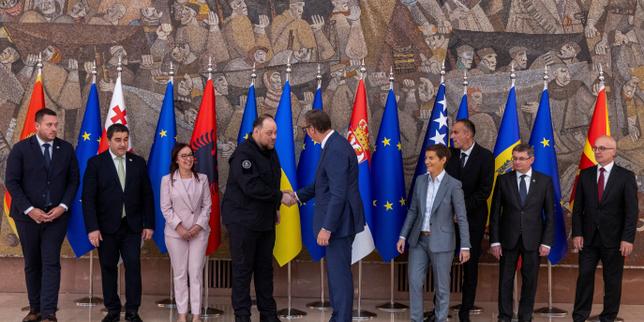
The international press corps loves a predictable script. When a titan of Gulf politics steps back or passes the torch, the media serves up a heavy dose of breathless reverence. We see the photos of heads of state landing on tarmac, the somber handshakes, and the stiff state television broadcasts. The headlines write themselves: world leaders unite to honor a legacy.
It is a beautiful narrative. It is also entirely wrong.
When global power brokers descend on Qatar to pay respects to the Father Emir, they are not participating in a sentimental exercise in historical appreciation. They are not there out of abstract respect for past governance. To view this gathering through the lens of pure tribute is to misunderstand the brutal, transactional reality of modern geopolitics.
This is not a funeral or an anniversary. It is a live-fire trading floor.
The Flawed Premise of Diplomatic Respect
Mainstream analysis treats royal transitions and commemorations in the Gulf as cultural artifacts. Commentators focus on the optics of regional reconciliation, the placement of dignitaries in the reception hall, and the carefully worded press releases whispering about "enduring bonds of friendship."
Let’s dismantle that premise entirely.
In realpolitik, respect is a lagging indicator. No president, prime minister, or foreign secretary boards a private jet and disrupts their legislative calendar simply to say thank you to a retired ruler. They do it because the state that ruler built sits on top of the world’s most critical energy reserves and commands a sovereign wealth fund capable of moving global markets by a fraction of a percent.
When a leader shakes hands in Doha, they are asking three unwritten questions:
- Who actually holds the pen on the next multi-billion-dollar liquid natural gas (LNG) contract?
- How stable is the sovereign wealth distribution strategy for the next fiscal quarter?
- Where is the backdoor channel for the regional conflicts that Western state departments cannot openly touch?
The gathering of world leaders is a stress test disguised as a ceremony. It is an opportunity for global capitals to audit the continuity of Qatari influence. If you believe they are there for the history books, you are missing the chessboard for the pawns.
The Sovereign Wealth Illusion
The common consensus insists that Western nations dominate these diplomatic interactions through structural leverage. The assumption is that established global powers hold the cards, and Gulf states seek validation through these high-profile visits.
I have spent years analyzing capital flows and cross-border energy infrastructure. I can tell you that the power dynamic flipped more than a decade ago. The people who think Washington or London are doing Doha a favor by showing up are living in 1995.
Consider the sheer scale of the capital deployment we are discussing. We are looking at a financial apparatus that owns massive stakes in Western banking institutions, strategic real estate portfolios in European capitals, and critical infrastructure assets worldwide. When a European head of state stands in a receiving line in Qatar, they are not granting prestige. They are managed suitors. They are protecting their domestic pension funds, their national grid stability, and their corporate liquidity.
Admitting this truth is uncomfortable for Western electorates. It requires acknowledging that the domestic industrial policies of major economies are deeply intertwined with the capital allocation strategies of a single peninsula in the Arabian Gulf. The pilgrimage to honor the Father Emir is, in reality, a public demonstration of financial interdependency.
The Double-Edged Sword of Neutral Mediatorship
Qatar’s modern brand is built on being the indispensable intermediary. It is the place where adversaries who cannot be seen in the same room together send their intelligence chiefs and back-channel diplomats. This policy of deliberate neutrality was a cornerstone of the Father Emir’s strategic architecture.
But the media treats this neutrality as a universally praised achievement. It isn't. It is an incredibly high-stakes gamble that carries severe systemic liabilities.
+------------------------------------+------------------------------------+
| The Manufactured Narrative         | The Realpolitik Reality            |
+------------------------------------+------------------------------------+
| Universal acclaim for peaceful     | Deep underlying friction with      |
| mediation and regional stability.  | regional neighbors over access.    |
+------------------------------------+------------------------------------+
| Altruistic diplomatic hosting      | Strategic leverage used to secure  |
| for global security interests.     | sovereign immunity from pressure.  |
+------------------------------------+------------------------------------+
Hosting the political offices of controversial factions and acting as the western world's emergency telephone line creates immense friction. The world leaders who travel to Doha to celebrate this legacy are often the exact same leaders who complain privately about the leverage this mediation network grants to Qatar. They show up because they cannot afford to be locked out of the room where the real deals happen.
Dismantling the "People Also Ask" Delusions
If you look at public queries regarding Gulf successions and state visits, the questions reflect a fundamental misunderstanding of how autocratic modernization works.
Does a change in generational leadership signal a shift in foreign policy?
The conventional wisdom says yes, expecting new rulers to radically realign their nations toward Western or Eastern blocs. This is a complete misreading of institutional memory. In highly centralized states, foreign policy is not a matter of personal whim; it is a calculation of survival. The strategic imperative to remain balanced between global superpowers remains identical whether the father or the son holds the official title. The faces change; the geography and the geology do not.
Why do Western democracies overlook ideological differences during these state events?
The premise of the question is naive. Ideological alignment is a luxury of domestic rhetoric. In international relations, supply chains and capital distribution dictate behavior. A state that provides a significant percentage of the world’s cooling infrastructure and energy baseline will always receive state visits, regardless of the domestic political philosophies of the visitors. To expect otherwise is to confuse statecraft with activism.
The Cost of the Counter-Intuitive Approach
Operating with this cynical, clear-eyed view of international diplomacy has its downsides. It alienates the public relations firms that manage these grand state events. It strips away the comforting narrative of international community and shared global values.
But looking at the mechanics of power without the filter of diplomatic decorum allows you to predict where capital will move next. While the rest of the market reads the commemorative poetry and analyzes the official state portraits, the real analysts are looking at the flight manifests of the corporate executives who hitched a ride on those government transport planes.
The real story of the gathering in Doha is not who is being honored. It is the frantic, behind-closed-doors recalibration of the global energy and financial order that takes place while the cameras are focused on the ceremony.
Stop analyzing the choreography of the handshakes. Start tracking the balance sheets of the men making them.