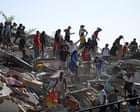
The ground does not care about sanctions. It does not read diplomatic cables, it does not honor embargoes, and it possesses no memory of who voted against whom at the United Nations. When the fault lines beneath Sucre province zipped open at 11:42 PM, the tectonic plates did what they have done for three billion years. They released energy.
In Caracas, three hundred miles from the epicenter, the chandeliers swung like heavy brass pendulums. In Cumaná, closer to the rupture, the world simply fell apart. Also making news in this space: Why the Venezuela Earthquake Disaster Fractured More Than Just Buildings.
Imagine—no, don't imagine a grand abstraction. Look at Luis. He is a forty-two-year-old schoolteacher in Carúpano, a coastal town where the air usually smells of salt and drying cacao. When the 7.2 magnitude earthquake struck, the concrete lintel above his front door became a guillotine. He survived because he threw his body over his daughter, Sofia. For four hours, Luis listened to the groan of twisted rebar and the desperate, high-pitched whistling of his neighbors trying to clear dust from their lungs.
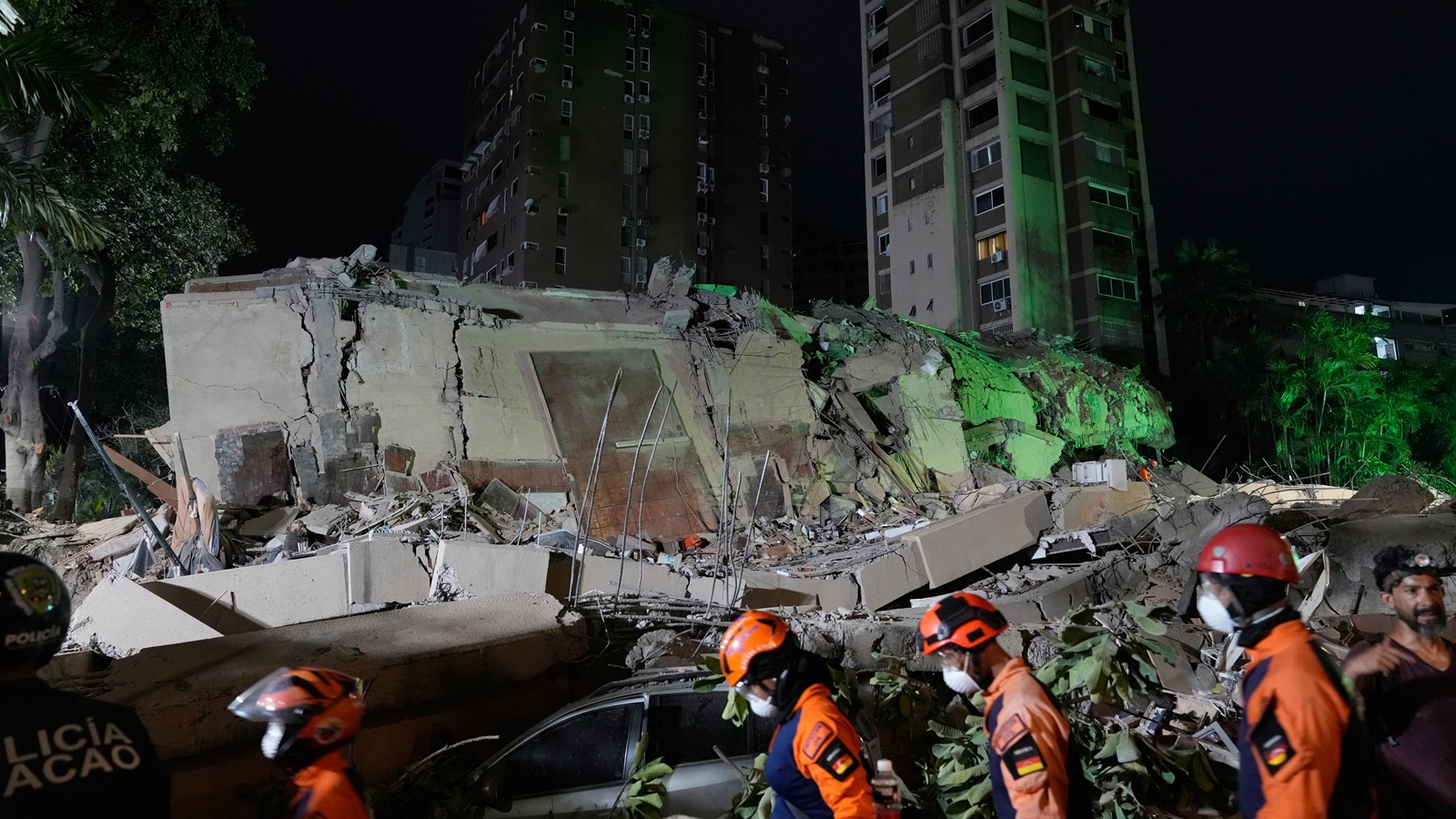
When the sun rose, the true scale of the disaster became clear. A string of shallow earthquakes had shattered Venezuela’s northeastern coast. Hospitals, already starved of basic medical supplies due to years of economic strangulation and domestic mismanagement, were overwhelmed within minutes. Generators failed. The water mains were severed, bleeding precious gallons into the cracked asphalt. More details regarding the matter are explored by BBC News.
This is the point where the story usually follows a predictable, tragic script. A broken nation suffers in isolation while the geopolitical titans glare at each other from across the hemispheric divide.
Then, the planes started landing.
The Impossible Tarmac
To understand the absurdity of what happened at Simon Bolívar International Airport in the days following the disaster, you have to understand the geography of modern hatred.
For decades, the diplomatic relations between Washington, Tehran, Havana, and Caracas have been defined by ice and fire. Sanctions. Threats. Expelled diplomats. Axis of evil speeches. Yet, forty-eight hours after the dust settled over Sucre, a Boeing C-17 Globemaster bearing the American flag sat on the tarmac less than two hundred yards from an Iranian cargo transport and a Cuban medical charter.
The airmen unloading pallets of surgical kits, water purification units, and heavy lifting gear did not exchange fraternal hugs. They did not sit down to discuss ideological alignment. They smoked cigarettes in the shade of their respective wings, watched each other through polarized sunglasses, and got back to work.
It was a friction so thick you could feel it in the humidity. But the cargo was moving.
The United States government, operating through USAID, bypassed its standard diplomatic restrictions to funnel millions of dollars in emergency hardware directly to local non-governmental organizations on the ground. Simultaneously, Havana dispatched three hundred doctors from its specialized Henry Reeve International Medical Brigade—men and women trained to operate under the absolute worst conditions with nothing but a stethoscope and a scalpel. From the east, Tehran sent specialized search-and-rescue teams equipped with acoustic listening devices that could detect a human heartbeat through ten feet of compacted debris.
Chaos has a strange way of enforcing pragmatism.
The Algebra of Survival
Why did they come? The cynical answer is public relations. Every nation wants to look like the savior on the global stage.
But cynicism is too easy. It requires no intellectual heavy lifting. The deeper truth is that disasters create a temporary vacuum where the normal rules of political gravity cease to apply. The stakes became too high for anyone to look away without looking monstrous.
Consider the logistics of a disaster zone. When a six-story apartment building collapses, there is a ninety-six-hour window to find survivors. After that, the math turns cruel. You need heavy machinery to lift the slabs, but if you use the machinery too early, you crush the air pockets where people are still breathing. You need dogs. You need thermal imaging. You need people who know how to amputate a limb in a crawlspace three feet wide.
Venezuela had none of these things in sufficient quantities. The international community knew it.
In Carúpano, the Iranian team deployed their sensors over the ruins of a collapsed municipal building. They didn’t speak Spanish. The local civil defense volunteers didn’t speak Farsi. But everyone understands the universal language of a digital screen showing a spike in rhythmic audio frequencies.
Thump. Thump. Thump.
A live heartbeat.
An Iranian technician pointed to the screen. A Venezuelan volunteer grabbed a shovel. A US-supplied hydraulic jack, delivered down the road by an international relief convoy, was brought over to stabilize the concrete header. For three hours, men who would be forbidden from entering each other’s countries by law worked in a human chain, passing buckets of broken brick from hand to hand.
When they finally pulled eight-year-old Gabriel out of the gap, his face gray with pulverized drywall but his eyes wide with life, nobody checked the passport of the man who held the IV bag. It was a Cuban saline solution, hooked to an American line, administered under the supervision of an international crew.
The Fractured Normal
The temptation here is to write a fairy tale. It would be beautiful to declare that this moment of shared humanity broke the geopolitical logjam forever, that the politicians in Washington and Caracas saw the error of their ways, threw down their sanctions, and embraced.
That is not what happened.
Even as the aid flowed, the rhetoric remained sharp. The state television networks carefully framed the Cuban and Iranian assistance as a triumph of anti-imperialist solidarity, while minimizing the massive volume of American supplies clearing the ports. In Washington, press secretaries assured voters that the aid was being delivered with strict oversight to ensure it didn’t enrich the ruling regime.
The machinery of statecraft is heavy, rusted, and incredibly slow to turn. It does not pivot just because a few hundred people were saved from the rubble.
But the macro-level stubbornness misses the micro-level transformation. The real shift happened in the minds of the people who stood in the dust.
For the average Venezuelan, who had spent the last decade hearing that the world had abandoned them or that their neighbors were their mortal enemies, the sight of foreign aid workers sweating in the tropical sun was a profound shock to the system. It broke the narrative of total isolation. It proved that when the earth truly opens up, the human instinct to reach down and pull someone out of the dark is still stronger than the collective fiction of national borders.
The Sound of Shovels
The tremors have stopped now. The aftershocks, which terrified the population for weeks, have subsided into the quiet background noise of reconstruction.
The foreign planes have departed. The C-17s flew back to their bases in the American South; the Iranian technicians returned to Tehran; the Cuban doctors moved into rural clinics, their white coats stained with the persistent red dirt of the Venezuelan coast. The geopolitical freeze has returned, mostly. The sanctions remain. The speeches are still angry.
But if you walk through the streets of Carúpano today, you will see something that wasn't there before the earthquake.
You will see a retaining wall built from the rubble of the old school. Written across it in crude, white masonry paint are the names of the volunteers who cleared the site. The names are a messy mix of Spanish, English, and Arabic script, scratched into the concrete before it had time to dry.
Luis and his daughter Sofia still live nearby. Their house has a new roof now, patched together with blue corrugated plastic tarps that bear the stamps of three different international relief agencies. When the wind blows hard from the Caribbean, the plastic rattles against the timber, a sharp, rhythmic sound that echoes down the valley.
It sounds exactly like a shovel hitting stone.