The rain in Stuttgart always smells faintly of industrial grease and wet asphalt. For a century, this city has fallen asleep to a familiar lullaby. It is the low, rhythmic thrum of internal combustion. It is the sound of pistons firing in perfect, mechanical harmony. Generations of engineers have walked out of the Mercedes-Benz and Porsche factories at dusk, their overalls stained with the holy water of the German economic miracle: motor oil.
To these workers, and to the executives occupying the top-floor corner offices overlooking the Neckar Valley, the automobile is not just transportation. It is a secular religion. The engineering is the gospel. The premium price tag is the tithe. For decades, the global automotive hierarchy was simple, rigid, and seemingly eternal. Germany built the best machines. The rest of the world tried, and failed, to copy them.
Then came the plug-in hybrid.
For a long time, the boardrooms in Munich, Stuttgart, and Wolfsburg viewed the hybrid as a compromise. It was a half-measure for drivers who lacked the courage to go fully electric but felt too guilty to stick with pure gasoline. German automakers built them, of course, but they treated them like compliance exercises. They slapped a battery into an existing gas-powered chassis, slapped a premium badge on the trunk, and assumed the logo alone would guarantee dominance.
They were wrong.
While the giants slept, a quiet coup was underway. It did not originate in Detroit or Tokyo. It came from Shenzhen. BYD, a company that started its life making lithium-ion batteries for cell phones, has just done the unthinkable. It has claimed the plug-in hybrid crown right out of Germany’s hands, disrupting the home market of the world’s most iconic automotive empires.
To understand how this happened, you have to look past the spreadsheets and the registration data. You have to look at the people buying the cars.
The Kitchen Table Calculus
Consider a hypothetical driver named Lukas. Lukas is a forty-two-year-old mid-level manager living just outside Frankfurt. He is precisely the kind of customer German automakers have relied on for fifty years. He is pragmatic, slightly risk-averse, and fiercely proud of German engineering. His father drove a Volkswagen Passat; his grandfather swore by his Mercedes W123.
For the past year, Lukas has sat at his kitchen table every Sunday night with a calculator, trying to make the math of modern life work. The cost of living in Germany has soared. Electricity rates are volatile. Gasoline is a luxury. Lukas wants to do the right thing for the environment, but he also needs to drive three hundred kilometers to visit his aging parents every other weekend. A pure battery-electric vehicle scares him. The charging infrastructure along the Autobahn is improving, but it still requires planning, waiting, and anxiety.
Lukas looked at the German plug-in hybrids. They were beautiful. They were also staggeringly expensive, and when the battery ran out after a measly forty kilometers, the heavy gasoline engine took over, guzzling fuel at an alarming rate.
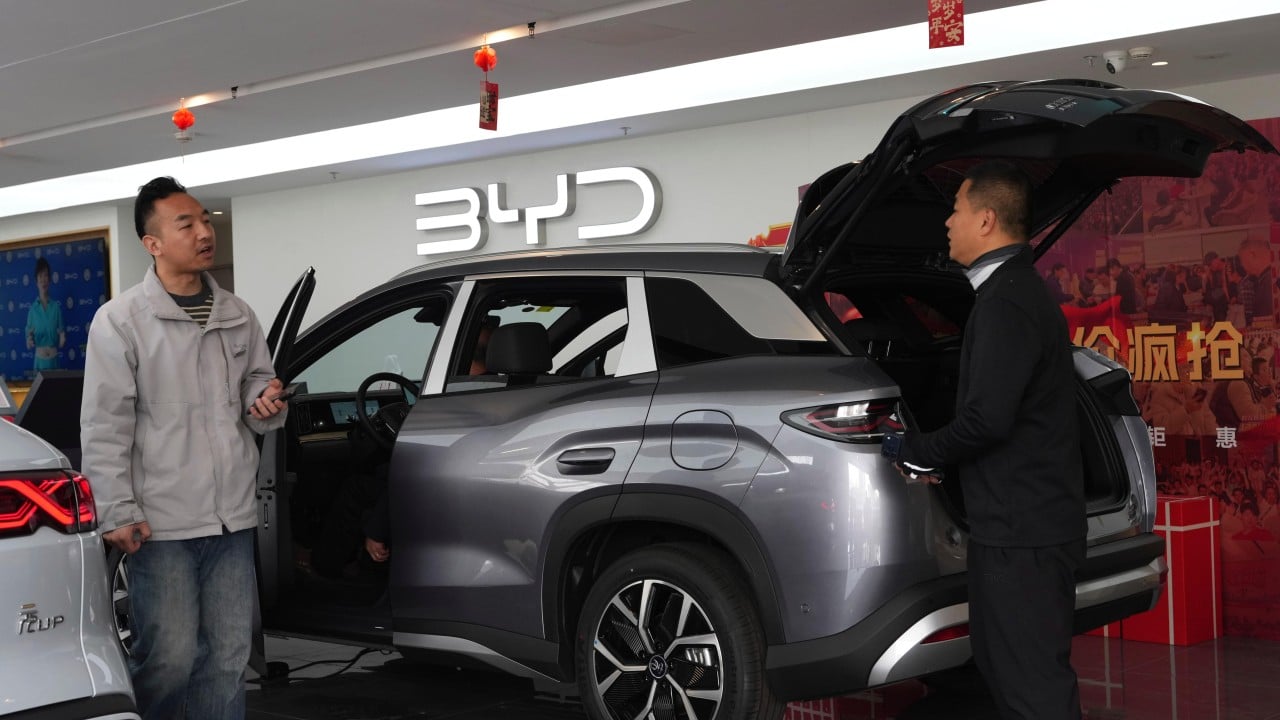
Then Lukas visited a showroom featuring the BYD Seal U DM-i, a plug-in hybrid SUV utilizing the company’s proprietary Dual Mode technology.
He didn't see a cheap knockoff. He saw a vehicle built from the battery upward, not the engine down. The battery didn't feel like an afterthought stuffed under the rear seats; it was the spine of the car. It offered an electric-only range that could handle his entire daily commute without burning a single drop of fuel. And the price? It wasn't just competitive. It was a provocation.
When Lukas chose the Chinese hybrid over the domestic option, a tiny fracture formed in the foundation of the European auto industry. Multiply Lukas by tens of thousands across Europe, and that fracture becomes an earthquake.
The Reversal of the Teacher and the Student
The panic in the European automotive sector is palpable, even if it is cloaked in the polite language of corporate press releases. For decades, Western automakers traveled to China as teachers. They formed joint ventures, shared technology, and showed Chinese engineers how to build cars to global standards.
The student has skipped a grade.
The fundamental misunderstanding of the German auto giants lay in their definition of luxury and performance. To a traditional German engineer, performance means a complex, multi-speed transmission that shifts with the crispness of a military parade. It means an engine block machined to tolerances measured in microns.
But the modern consumer defines performance differently. They care about software integration. They care about how quickly the infotainment system boots up. Most importantly, they care about thermal efficiency.
BYD’s secret weapon is not cheap labor; it is vertical integration. Because the company began as a battery manufacturer, it owns its entire supply chain. It does not buy batteries from a supplier, pay a markup, and try to fit them into a car. It builds the car around the battery. This allows for an efficiency of scale that Western legacy automakers simply cannot match.
Think of it like cooking. The German automakers are master chefs who have to buy their ingredients from an expensive specialty market down the street. BYD owns the farm, the greenhouse, and the delivery truck.
When you sit inside these new-generation hybrids, the shift in power becomes clear. The interior does not feel like a budget alternative. The screens are responsive. The driver-assistance systems are sharp. The transition between the electric motor and the combustion engine is so smooth it is nearly imperceptible. It feels, dare we say it, precisely like the refined engineering Germany used to monopolize.
The Invisible Stakes of the Autobahn
This shift is about more than just corporate profits or market share percentages. The automobile is the cultural anchor of Germany. It is the country's largest industry, employing hundreds of thousands of people directly and millions more through a vast web of medium-sized suppliers—the Mittelstand.
These are the family-owned businesses in quiet villages that manufacture specific valves, specialized pistons, and custom exhaust hangers. If the world shifts to pure electric vehicles, these companies face existential dread. The plug-in hybrid was supposed to be their bridge. It was the technology that would buy them time, allowing them to slowly transition their manufacturing lines while still selling cars with traditional engines inside them.
If foreign competitors capture the hybrid market as well, that bridge collapses.
The emotional weight of this realization is beginning to settle over the factory floors. Walk into a tavern near a car plant in Lower Saxony or Baden-Württemberg today, and the conversation is different than it was five years ago. The cockiness is gone. The certainty has evaporated. Workers speak in hushed tones about shifting schedules, reduced shifts, and the strange, quiet vehicles arriving on car haulers from the ports of Rotterdam and Hamburg.
It is a terrifying realization for a society that has tied its collective identity to the roar of an engine. If Germany is no longer the undisputed king of the car, who is Germany?
The Myth of the Loyal Customer
For years, the defensive strategy of European brands relied on a single, comforting word: heritage. They believed that even if a competitor built a vehicle that was technically equivalent or slightly cheaper, the customer would remain loyal to the badge. The three-pointed star, the four interlocking rings, the blue-and-white roundel—these symbols carried an emotional currency that money couldn't buy.
That heritage is losing its purchasing power.
The younger generation of car buyers does not look at a brand history stretching back to 1926 with reverence. They look at it as baggage. They see companies that were slow to innovate, slow to embrace software, and arrogant in their treatment of customers.
To a twenty-five-year-old buying their first serious vehicle, BYD does not carry the stigma of being an outsider. It carries the aura of being a technology company that happens to make cars. It feels like an iPhone on wheels. The legacy brands, by contrast, feel like beautifully crafted mechanical typewriters in an era of word processors.
The disruption we are witnessing in the plug-in hybrid market is a warning shot. It proves that no market is safe, no heritage is ironclad, and no giant is too big to be knocked off its pedestal.
The New Dawn
The sun rises over the Autobahn, burning away the morning mist. A silver SUV cruises silently in the right lane, propelled entirely by electrons stored in a blade battery designed in Shenzhen. As the traffic thins, the driver presses the accelerator. The gasoline engine kicks in with a muted hum, providing the extra surge of power needed to merge into the fast lane.
It is a flawless piece of engineering. It runs beautifully. It is exactly the kind of car Germany should have built.
But they didn't.
The crown has moved. It didn't happen with a dramatic crash or a sudden, catastrophic bankruptcy. It happened quietly, registration by registration, kitchen table by kitchen table, until the old kings looked around and realized their kingdom was no longer theirs alone. The future of the automobile is being written right now, and for the first time in history, the language it is being written in is not German.