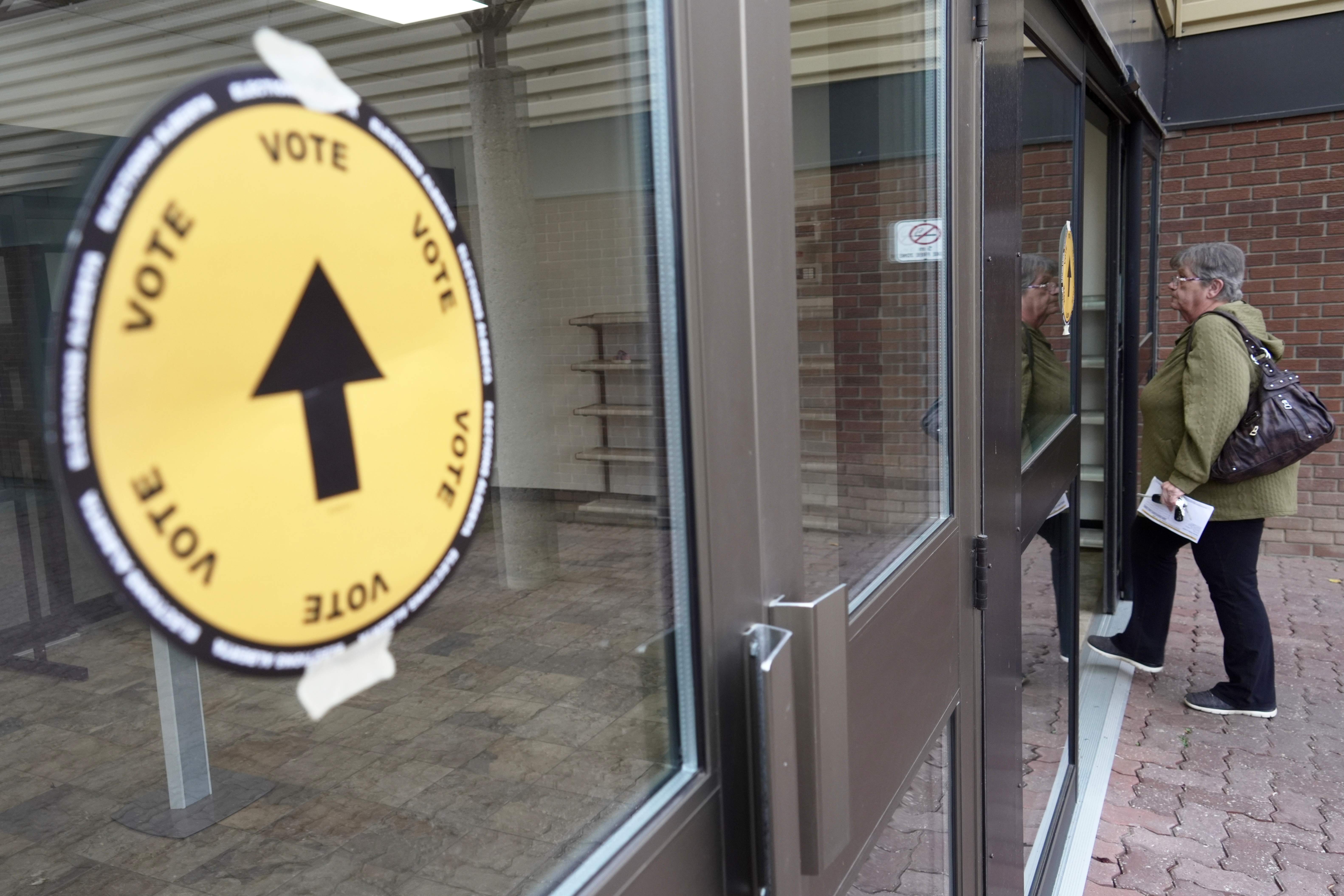
Cold. That is the first thing you notice when the wind comes off the Rockies in late autumn, biting through wool and reminding you that out here, survival has never been an abstraction. You feel it in your knuckles before you ever read it in a headline. You feel it when a truck engine turns over slowly in a gravel yard outside Red Deer, or when a kitchen table goes quiet after a bank statement lands with a thud.
A ballot box looks small from the outside. Just a slot in a cardboard carton or a sleek tabulator humming quietly inside a community hall. Yet inside that narrow opening sits an idea that has haunted Western Canada for decades, surfacing whenever frustration hardens into resolve: the question of whether Alberta should take a step toward separating from Canada.
For years, talk of Alberta independence felt like winter static—loud enough to crackle through coffee shops and talk radio, easy to dismiss once spring arrived. Voters rarely had to put a mark next to something so consequential at the ballot box. When a vote on a step toward separation arrives, the noise stops being theoretical. It becomes personal. It becomes a mirror held up to every grievance, every hope, every fear about what Canada owes Alberta and what Alberta owes itself.
I have spent enough winters watching families argue across Sunday roasts—one brother swearing Ottawa treats the province like a cash cow to be milked and ignored, a sister asking where a landlocked province thinks its pipelines, passports, and pensions will go—to know that this is never just a constitutional debate. It is a battle over belonging.
Where the Grievance Took Root
To understand why a voter might seriously weigh a move toward separation, you have to listen to the old ache. Alberta built much of its modern identity on boom and bust, on risk and grit, on pulling heavy iron out of the earth when other parts of the country were debating policy over espresso. When oil prices soared, Alberta carried a staggering share of national fiscal weight through equalization formulas, federal taxes, and economic spillovers. When prices crashed or pipeline approvals stalled for years in courts and boardrooms thousands of kilometers away, many Albertans felt they were left holding the bag alone.
Consider a hypothetical scenario to trace how a policy dispute becomes an existential wound. Imagine a mid-sized drilling contractor in Grande Prairie—let us call him Martin, though he is a composite of dozens of people I have met along Highway 43. Martin has spent twenty-five years financing rigs, hiring local welders, and paying taxes in good years so he could survive the lean ones. When regulatory uncertainty stretches on and capital flees to other jurisdictions, Martin does not experience a "macroeconomic shift." He experiences sleepless nights, laying off a crew member whose kids play hockey with his own, and watching a lifetime of sweat lose value because decisions made in Ottawa or coastal capitals feel blind to life on the lease road.
That frustration is real. Ignoring it is how movements grow.
At the same time, fairness in a federation is notoriously slippery. Equalization in Canada is calculated using formulas tied to fiscal capacity and tax rates, not simple cash transfers written by one province for another, and federal dollars also flow back into Alberta through transfers, infrastructure, and services. Yet numbers on a spreadsheet rarely win an argument when someone feels unheard. In politics, perception often carries the weight of law. When people believe the rules of the game are stacked against them, even a first step toward leaving starts to look like self-defense.
What a Step Toward Separation Actually Means
Here is where the conversation gets tangled, and where honesty matters most. Voting on a step toward separation is not the same thing as waking up the next morning in a brand-new country. Often, early ballot measures or referendums function as pressure valves, negotiating leverage, or preliminary steps in a long, labyrinthine legal and political process.
Still, every journey starts with a first footstep. And once you step off the porch, you have to reckon with the terrain ahead.
Think of a marriage where one partner threatens to pack a bag every time money gets tight. Sometimes the threat is a cry to be heard, a demand to renegotiate the terms of living together. Sometimes it is the beginning of a real exit. Either way, the moment the suitcase comes out of the closet, the room changes. Neighbors start talking. Joint accounts get scrutinized. Suddenly, neither person is talking about minor irritations anymore; they are talking about who gets the house, who pays the mortgage, and how everyone gets to work on Monday morning.
That metaphor captures the emotional jolt of a separation vote, though of course a province is not a household and Canada is not a spouse. A province is millions of people with mortgages, businesses, treaty obligations, pension plans, and deeply intertwined lives.
If Alberta ever moved seriously down the path of separation, the practical questions would multiply fast. Would a newly independent Alberta use its own currency or the Canadian dollar? How would trade flow across borders if Alberta is landlocked, surrounded by Canadian provinces and the United States? What happens to the Canada Pension Plan, federal crown lands, national parks like Banff and Jasper, and constitutional negotiations with Indigenous nations whose treaty rights are foundational to the land?
None of those questions have tidy, painless answers. Anyone telling you separation would be a smooth ribbon-cutting ceremony is selling fog. Anyone telling you Alberta has no grievances worth fixing is covering their ears.
The Invisible Stakes in Everyday Life
When headlines zoom out to constitutional theory or partisan maneuvering, they often miss the quietest stakes of all. They miss the person filling out the ballot while thinking about a parent in a care home, a university student wondering about tuition and grants, or a small business owner pricing out cross-border shipping.
Let us introduce another hypothetical character—say, Priya, an emergency room nurse in Calgary who grew up in Edmonton and has relatives in British Columbia and Ontario. For Priya, Canada is not an abstract flag on a flagpole. It is family dinners across time zones, portable healthcare rules she has relied on during moves, and a sense of national identity she never had to defend until suddenly everyone seemed to be taking sides.
When a vote brings separation into the open, people like Priya feel a strange split in the air. At work, colleagues who share twelve-hour shifts and hold each other together through exhausting trauma wards might suddenly harbor fierce, unspoken disagreements about the country they share. A community that prided itself on neighborliness discovers fault lines running right through its living room.
And what about uncertainty itself? Markets dislike ambiguity. Investors dislike ambiguity. Families planning five or ten years ahead dislike ambiguity. Even the prospect of prolonged constitutional standoff can cool investment, complicate hiring, and turn everyday civic life into a permanent argument.
Yet there is another side to that coin, and it is foolish to brush past it. For some voters, staying put under a status quo they view as chronically unfair feels like its own slow erosion. To them, voting for a step toward separation is not an act of recklessness; it is a refusal to stay quiet while their economic future and regional voice are sidelined. That tension—between the fear of breaking something irreplaceable and the anger of feeling trapped in a bad deal—is the exact pressure cooker sitting inside the voting booth.
Why This Moment Feels Different
Anger at Ottawa is as old as confederation. Western alienation has cycled through generations like prairie chinooks, blowing warm and fierce before cooling down.
So why does a vote on taking a step toward separation carry a sharper edge now?
Because trust feels thinner. Across Western democracies, faith in institutions—federal governments, courts, legacy media, long-standing political coalitions—has frayed. When people trust the referee, they accept bad calls grumblingly and show up next season. When they stop trusting the referee, they start questioning whether the field itself is fair.
Add economic anxiety into that mix—shifting energy markets, affordability pressures, housing costs, and debates over climate policy and industrial transition—and frustration finds a clear target. For a voter looking for a lever to pull, a step toward separation promises disruption. Disruption feels like agency when you feel powerless.
Still, agency comes with weight. Pulling a lever does not just move the object in front of you; it shifts everything connected to it. A vote is a choice between living with unresolved grievances inside a complicated country or stepping into the uncharted waters of constitutional rupture, lengthy negotiations, and economic unknown.
I do not pretend this choice is simple. If you ask ten people in Alberta what the right move is, you will hear ten different versions of pride, pragmatism, fear, and hope. Some will tell you Alberta has everything it needs to stand on its own, pointing to its resources, work ethic, and entrepreneurial spirit. Others will argue that strength comes from staying anchored within a larger federation, reforming the system from within rather than blowing up the foundation.
Both arguments tap into something real. That is why the debate refuses to die down.
The Weight of the Mark
Standing behind a privacy screen with a pen in hand is a surprisingly quiet moment. Outside, pundits shout, campaign signs flap in the wind, and social feeds churn with worst-case scenarios and triumphalist promises. Inside that small booth, it is just you, a piece of paper, and whatever story you believe about where you belong.
A vote on taking a step toward separation is really a question about faith. Faith in whether the ties that bind can be repaired and respected. Or faith that starting over—whatever the cost, whatever the unknowns—is the only way to be truly heard.
Out on the prairie, the wind keeps blowing, indifferent to borders on a map, sweeping across wheat fields, oil patches, and quiet towns under a sky big enough to swallow any argument whole.