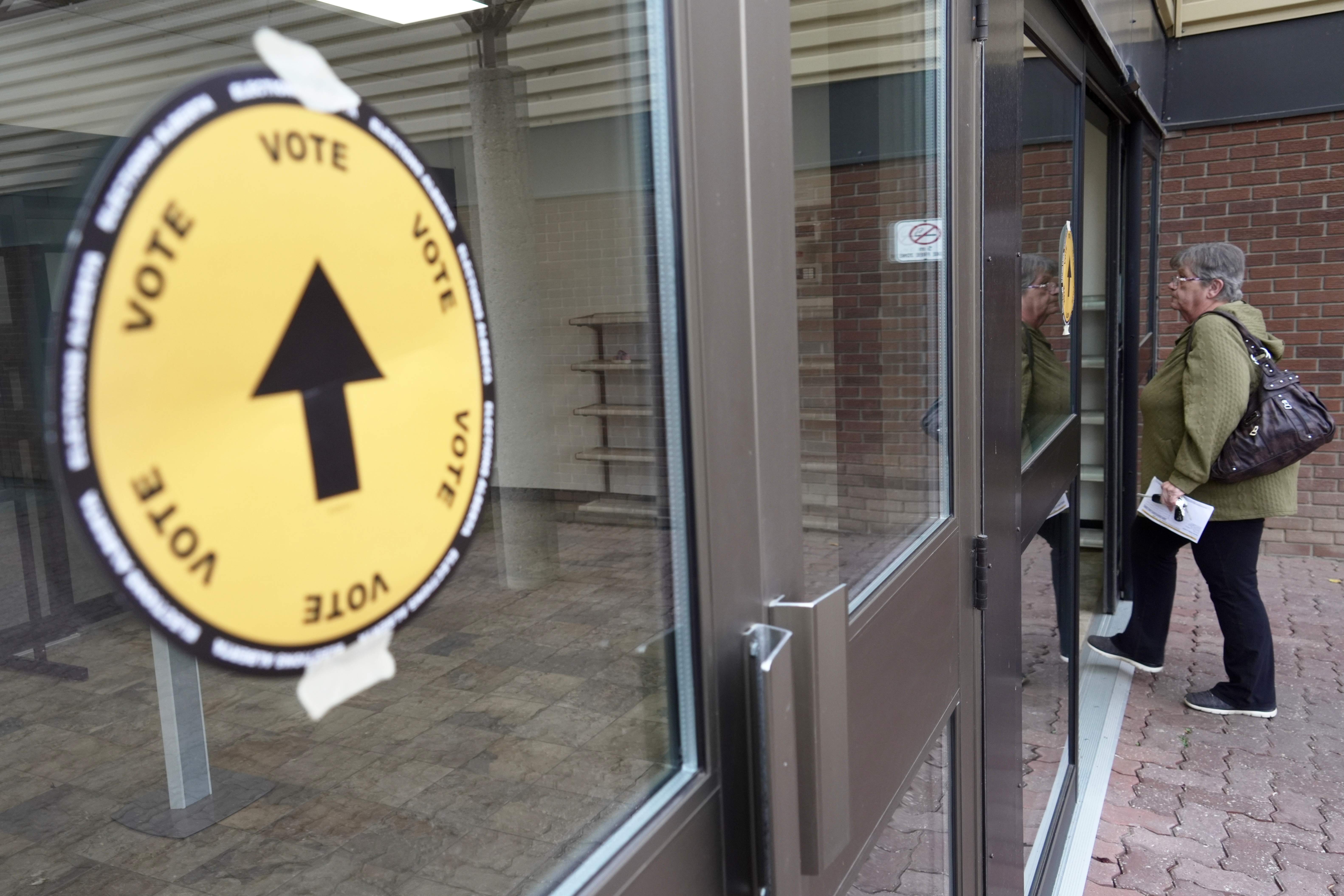
Electoral administration operates as a complex operational logistics network where timing integrity directly dictates public trust. When an election jurisdiction suffers from delayed poll openings, the resulting cascading delays invalidate standard assumptions about ballot tabulation schedules. The incident in Alberta involving extended voting hours due to late station openings provides a clear operational case study in system vulnerability, queue management failure, and cascading information bottlenecks.
Understanding why a delayed opening creates a disproportionate downstream impact requires deconstructing the election day timeline into three core variables: fixed capacity, arrival rate, and service duration.
The Core Operational Failure
An election polling station functions as a single-server or multi-server queueing system. When a location opens late, the system experiences an immediate capacity deficit. Citizens arrive according to a time-varying probability distribution, typically peaking before work hours, during lunch intervals, and immediately following standard business closures.
A late opening truncates the available window for the morning arrival wave. Because voter arrival rates exceed the processing capacity of check-in desks and ballot-marking booths during peak intervals, an artificial queue forms.
[Arrival Rate Peak] > [Processing Capacity] = Queue Accumulation
Once a queue reaches a critical mass, physical spatial constraints and human friction reduce the effective throughput per hour. Voters encounter longer wait times, which induces balking (voters leaving without casting ballots) or reneging (voters leaving after joining the queue due to excessive delay). To preserve franchise integrity, election administrators are forced to legally extend voting hours for the affected districts.
The Information Bottleneck and Tabulation Delay
The decision to extend voting hours introduces a critical synchronization problem across the entire jurisdiction. Electoral legislation universally mandates that preliminary results cannot be broadcast while polls remain open anywhere in the province or territory. This rule prevents early reporting from influencing voters still standing in active lines.
Consequently, the entire provincial tabulation pipeline halts at its terminal node. The cost function of this delay is non-linear. Even if only a fractional percentage of total polling stations experience extended hours, the aggregate reporting timeline for the entire jurisdiction stalls. Media organizations, financial markets, and political entities experience an information vacuum, increasing speculative volatility and public skepticism regarding administrative competence.
The delay is exacerbated by the physical custody chain of ballots. Once polls close at extended locations, election workers must reconcile poll books, secure spoiled ballots, seal ballot boxes, and transport materials to regional or central aggregation points under strict chain-of-custody protocols. This physical logistics tail extends proportionally to the length of the time extension, pushing final verification deep into secondary operational windows.
Systemic Vulnerabilities in Electoral Logistics
A rigorous post-mortem of delayed referendum or election results reveals three primary structural vulnerabilities that municipal and provincial bodies must address to eliminate future failures.
Personnel and Credentialing Friction
The primary driver of late poll openings is staffing attrition and administrative friction on the morning of the election. Polling station staff are frequently temporary workers subjected to limited training cycles. Credentialing, key distribution, electronic poll book synchronization, and physical setup require a strict sequence of dependent tasks. If any single precursor task fails—such as a network authentication failure on an electronic voter list tablet—the entire station opening is blocked.
Contingency Planning Deficits
Many jurisdictions rely on a static operational model that assumes zero failure rates across all distributed nodes. When a disruption occurs, management structures default to reactive intervention rather than automated failover protocols. For example, backup paper poll books are frequently underutilized or treated as secondary options, leading to manual verification bottlenecks when digital systems lag.
Geographic and Demographic Load Asymmetry
Polling stations do not experience uniform load distributions. Urban density and suburban commuter patterns create high-variance stress points. A standardized allocation of voting machines and staff per capita fails to account for localized arrival spikes. When a high-volume station opens late, the sheer volume of delayed voters overwhelms the localized infrastructure far more severely than it would in a low-density rural precinct.
Strategic Operational Recommendations
To transform electoral administration from a fragile manual process into a resilient institutional framework, election management bodies must implement structural reforms across three operational vectors.
Decouple administrative dependencies by establishing decentralized startup protocols. Electronic verification devices must operate on redundant local networks with automated synchronization upon connection, eliminating morning bottleneck dependencies on central server handshakes.
Redesign queueing models around dynamic load balancing. Rather than fixing voters to a single rigid geographical precinct with fixed table assignments, jurisdictions should implement flexible, zone-based check-in models that route voters to whichever station has the lowest current wait time.
Codify automated legal thresholds for extended hours. When a station experiences a delay exceeding a defined operational window, automatic legal extensions should trigger instantaneously without requiring manual judicial or administrative intervention, thereby standardizing the downstream reporting timeline adjustments.
The systemic friction observed in Alberta demonstrates that the reliability of a democratic outcome is inextricably bound to the operational rigor of its logistical framework. Treating election administration as a supply-chain challenge with strict latency tolerances is the only path toward eliminating avoidable administrative failures.


