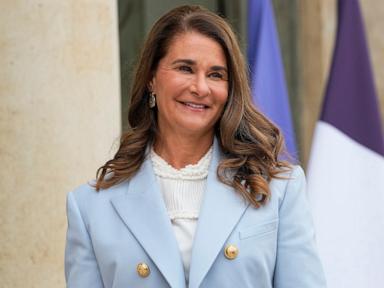
Melinda French Gates is buying a minority stake in the Seattle Kraken, but this deal has very little to do with hockey.
When One Roof Sports and Entertainment, the parent company overseeing the NHL franchise and Climate Pledge Arena, announced Monday that the billionaire philanthropist would join its ownership group, the public narrative focused heavily on civic pride and the power of sports. Beneath the predictable press release rhetoric, however, sits a highly strategic deployment of capital. French Gates is aligning herself with Samantha Holloway, One Roof’s majority owner, at a critical moment in the Pacific Northwest sports economy. This partnership places French Gates at the front of the line for a much larger prize: the return of the Seattle SuperSonics.
The transaction, which awaits formal approval from the NHL, represents French Gates' first direct investment in a major professional sports franchise. While terms remain undisclosed, her entry provides more than just cash. It grants a young, female-led sports empire the institutional credibility and local political muscle required to execute an aggressive multi-billion-dollar expansion strategy.
The SuperSonics Subtext
To understand why French Gates is putting money into a five-year-old hockey franchise that has missed the playoffs in four of its first five seasons, you have to look at the broader ambition of One Roof Sports and Entertainment. Earlier this year, Holloway publicly confirmed that the organization intends to aggressively pursue an NBA expansion franchise for Seattle the moment the league opens the bidding process.
The NBA has dropped heavy hints about expansion for years, with Seattle and Las Vegas universally regarded as the primary targets. The entry fee for a new NBA team is expected to easily clear $4 billion. By joining One Roof now, French Gates positions herself as an anchor investor for that bid.
Estimated Costs for Seattle Sports Expansion (2026–2027)
┌──────────────────────────────────────┬───────────────────────────┐
│ Project                              │ Estimated Cost            │
├──────────────────────────────────────┼───────────────────────────┤
│ NBA Expansion Franchise Fee          │ $4.0B – $5.0B             │
│ Seattle Center / Arena Revitalization│ $500M+                    │
│ NHL Franchise Valuation (Kraken)     │ $1.2B – $1.4B             │
└──────────────────────────────────────┴───────────────────────────┘
Climate Pledge Arena was built to be NBA-ready from day one. The physical infrastructure is already waiting. What the Seattle market lacks is a unified, hyper-capitalized ownership group capable of outbidding predatory outside private equity firms. French Gates, whose net worth hovers around $30 billion following her separation from the Gates Foundation's active management, changes the math entirely.
Local Control Over Private Equity
Professional sports team valuations have skyrocketed past the point where individual millionaires can compete. Increasingly, leagues are changing their bylaws to allow institutional private equity firms to buy passive stakes in franchises. While this injects liquidity into the leagues, it often alienates local fanbases and dilutes the civic focus of the teams.
By bringing French Gates into the fold, Holloway avoids the necessity of selling chunks of the enterprise to institutional funds based out of New York or Miami. The Kraken ownership group already features high-profile local figures like Amazon CEO Andy Jassy and longtime executive David Wright. Adding French Gates solidifies a fortress of local capital.
There is an ongoing political battle over the future of the Seattle Center, the campus where Climate Pledge Arena sits. Just last month, local officials announced a push to secure funding for massive infrastructure repairs ahead of a proposed 2027 bond measure. Having a beloved local philanthropist with deep ties to regional politicians as part-owner of the arena’s primary tenant makes city negotiations significantly smoother.
The Sportsology Audit and Structural Reality
While the macro-business strategy looks sound, the hockey team French Gates is buying into is facing an internal identity crisis. The Kraken recently hired Sportsology Group, an external consulting firm, to run a complete audit of their hockey operations department. It was a quiet admission that the product on the ice has stagnated since the team’s miraculous second-season playoff run.
The sports business world often pretends that winning games and making money are separate tracks, but they inevitably collide. Gate revenue, merchandise sales, and premium suite renewals dip when a team consistently picks in the top ten of the NHL draft rather than competing for the Stanley Cup. French Gates is not stepping into a smoothly running machine on the ice; she is investing in a turnaround project.
Furthermore, minority investments in professional sports are notoriously restrictive. French Gates will not be calling down to the draft table or choosing the next head coach. She is buying a passive equity slice. The real value for her lies in the appreciation of the asset and the platform it provides for her broader regional initiatives. Her investment arm, Pivotal, focuses heavily on social progress and economic mobility for women and families. Professional sports stadiums remain some of the few remaining monocultural spaces where those messages can be scaled to hundreds of thousands of people simultaneously.
The Seahawks Shadow
The timing of this investment also revives questions about another major sports property in the region. For years, sports business analysts have speculated about the eventual sale of the NFL's Seattle Seahawks, currently held by the Paul G. Allen Trust. Billionaires with local ties are routinely vetted by the media as potential buyers, and French Gates' name has topped those lists for a decade.
By anchoring herself to the Kraken and the potential NBA bid, French Gates may be signaling her preference for the arena sports ecosystem over the massive, singular undertaking of buying an NFL franchise. Or, conversely, she is building the operational sports resume required to make a serious run at the Seahawks if the trust finally puts the team on the market.
Regardless of the long-term play, this move changes the power dynamics of Seattle sports ownership. It moves the conversation away from traditional tech-bro plutocracy and establishes a distinct, locally controlled sports property group that has both the capital to survive the current economic climate and the political capital to reshape the city's sports map. The NHL approval will clear without a hitch. The real work begins when the NBA finally opens its doors.