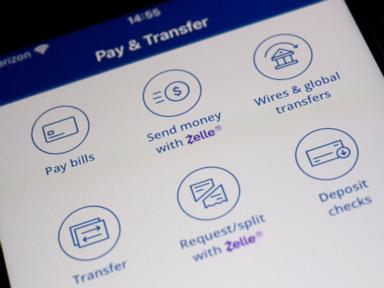
Early Warning Services LLC, the bank-owned consortium operating the Zelle network, recently announced plans to expand its peer-to-peer payment service to India by the end of the year. Ostensibly, the play makes sense. India is the largest remittance market in the world, receiving over $100 billion annually, with more than a third originating from the United States. However, the decision to export a domestic bank network overseas reveals a far deeper strategic anxiety: the fear of domestic stagnation and the desperate need to find modern cross-border utility before fintech upstarts and blockchain rails make traditional bank-intermediated transfers obsolete.
By anchoring this international expansion to a newly unveiled dollar-backed stablecoin called ZelleUSD, the banking cartel is attempting a radical technological pivot. It is an acknowledgment that legacy correspondent banking networks are too slow and expensive to survive the next decade of global payments.
Yet, dropping this American banking experiment into the Indian market is the structural equivalent of bringing a horse-drawn carriage to a Formula 1 race.
The Illusion of the Remittance Monopolization
To understand why American banks are suddenly eager to cross the ocean, look closely at the domestic growth ceiling. In the United States, Zelle processed $1.2 trillion across more than three billion transactions in 2025. It is a massive number. It is also a mature market. Domestically, the growth curve is flattening, and the platform has spent years playing defense against legislative scrutiny over unauthorized electronic fund transfers and scam liabilities.
International remittance represents the last uncolonized frontier for bank-native P2P services.
Under the current architecture, an Indian immigrant in New York wanting to send money to a relative in Mumbai faces a fragmentation of options. They can use traditional money transfer operators like Western Union, digital-native fintech apps like Wise or Remitly, or standard bank wire transfers via SWIFT. The bank option is universally the worst. It takes days, relies on a chain of intermediary correspondent banks, and hides heavy costs inside opaque foreign exchange markups.
Zelle wants to change this by making international transfer a native feature within existing U.S. bank applications. The consumer sees a familiar button, enters a phone number or email, and the money leaves their account.
The mechanism behind the curtain, however, is where the friction lies.
The Unforgiving Reality of India UPI Monopoly
The primary obstacle to this expansion is that India does not need American payment infrastructure. The country already possesses the most advanced, high-velocity real-time payment network on earth: the Unified Payments Interface (UPI).
Managed by the National Payments Corporation of India (NPCI), UPI handles over 23 billion transactions a month. It operates instantly, operates on open-source API principles, and costs consumers nothing. It is deeply embedded in every layer of the Indian economy, from street vendors accepting microscopic payments via QR codes to high-end enterprise settlements.
For Zelle to work in India, it cannot simply launch a standalone application and expect adoption. It has to interface directly with the local ecosystem. This means negotiating regulatory clearance from the Reserve Bank of India (RBI) and establishing interoperability agreements with the NPCI.
Historically, the RBI has guarded its domestic payment systems with ferocious protectionism.
Foreign companies operating in India must comply with strict data localization mandates, meaning all payment data must be stored on servers physically located within Indian borders. For a consortium owned by seven major American banks—including JPMorgan Chase, Bank of America, and Wells Fargo—navigating foreign data governance and reporting requirements is a compliance nightmare.
Furthermore, the local competition is fierce and deeply capitalized. Alphabet's Google Pay and Walmart's PhonePe control the lion's share of the Indian digital payment space. These tech giants did not win the market through bank partnerships; they won by building hyper-localized consumer experiences on top of India's free public infrastructure. Zelle arrives with no brand equity among Indian merchants or consumers, relying entirely on the premise that the transaction originates from a U.S. bank account.
The Stablecoin Gambit
The most telling detail of the expansion announcement is the introduction of ZelleUSD. Why would a network built entirely on sovereign fiat currency and central bank reserves suddenly issue a digital token?
The answer lies in the structural failure of traditional cross-border settlement.
When you send money instantly within the United States via Zelle, the funds move immediately to the recipient’s account, but the actual settlement between the two involved banks happens later via net settlement systems. This structure breaks down across borders. Time zone differences, varying bank holidays, and volatile currency fluctuations mean that instant international settlement using traditional commercial bank money is functionally impossible without massive liquidity pools held in both countries.
By utilizing a proprietary stablecoin, Early Warning Services is attempting to bypass the SWIFT network entirely.
[U.S. Bank Account] ──> [Convert to ZelleUSD] ──> [Instant Ledger Transfer] ──> [Convert to INR] ──> [Indian Bank Account via UPI]
In a hypothetical transfer scenario, a user initiates a payment in U.S. dollars. The Zelle network instantly converts those dollars into ZelleUSD on a private or permissioned ledger, transfers the token across borders in seconds, and settles with an institutional partner in India. That partner then converts the token into Indian Rupees and deposits them via the local UPI network.
It is an elegant technological solution to a legacy banking problem. Unfortunately, it creates an immediate regulatory target.
The Indian government has maintained a highly skeptical, often hostile stance toward digital assets and private stablecoins. The RBI has repeatedly called for outright bans on cryptocurrencies, arguing they threaten sovereign monetary policy and open avenues for illicit financial flows. While a stablecoin backed 1:1 by U.S. treasury bills and issued by a regulated consortium of American banks is vastly different from a decentralized algorithmic token, it still represents a dollarization threat that Indian regulators will scrutinize with extreme prejudice.
The Fraud Problem Crosses Borders
If Zelle successfully bridges the technological and regulatory gaps, it faces an operational crisis that it has failed to fully solve at home: authorized push payment fraud.
Because Zelle transactions are instant and irreversible, the platform has become a prime target for scammers. In the United States, criminals use sophisticated social engineering to trick victims into voluntarily sending funds. Because the consumer technically authorized the transaction, banks historically denied reimbursement claims, leading to consumer outrage, class-action lawsuits, and Senate investigations.
Now imagine that vulnerability stretched across an international remittance corridor.
India’s digital payment ecosystem is currently fighting its own massive wave of cyber fraud. The NPCI and the Department of Telecommunications have recently deployed real-time artificial intelligence tools, such as the Financial Fraud Risk Indicator, to flag suspicious mobile numbers and force mandatory transaction delays on high-risk peer-to-peer transfers.
When a fraudulent transaction occurs within the United States, recovering the funds is difficult. When a fraudulent transaction occurs across international borders, involving two different legal jurisdictions, two different banking regulators, and an instantaneous currency conversion, fund recovery is impossible.
Zelle will enter the Indian market bearing the liability structures of traditional banking. If it absorbs the losses of cross-border scams, the narrow margins of the remittance business evaporate. If it forces the consumer to bear the loss, the reputational damage could poison the expansion before it gains traction.
The Real Threat is Not Who You Think
The ultimate irony of Zelle’s international push is that while American banks are trying to build a bridge to India, India is already building its own bridges to the rest of the world.
The NPCI has spent the last few years aggressively exporting UPI architecture globally. India has already linked its real-time payment rails with Singapore’s PayNow, enabling instant, low-cost cross-border transfers between the two nations using nothing more than phone numbers. Similar linkages are active or under development with the United Arab Emirates, France, Mauritius, and several retail networks across Europe.
The long-term goal of the Indian government is not to welcome foreign remittance networks, but to render them obsolete by linking national real-time payment systems directly.
Zelle is entering a chess match where its opponent has already captured the center of the board. The American banking cartel is gambling that its monopoly over U.S. checking accounts will force international markets to accept its terms. But in an era where sovereign real-time rails are connecting globally and digital asset protocols can move value for fractions of a cent, relying on domestic scale is a dangerous strategy.
The success of this venture will not be determined by how many Americans hit the transfer button, but by whether Indian regulators decide that allowing a private, dollar-backed banking token into their domestic ecosystem is worth the disruption to their own master plan.