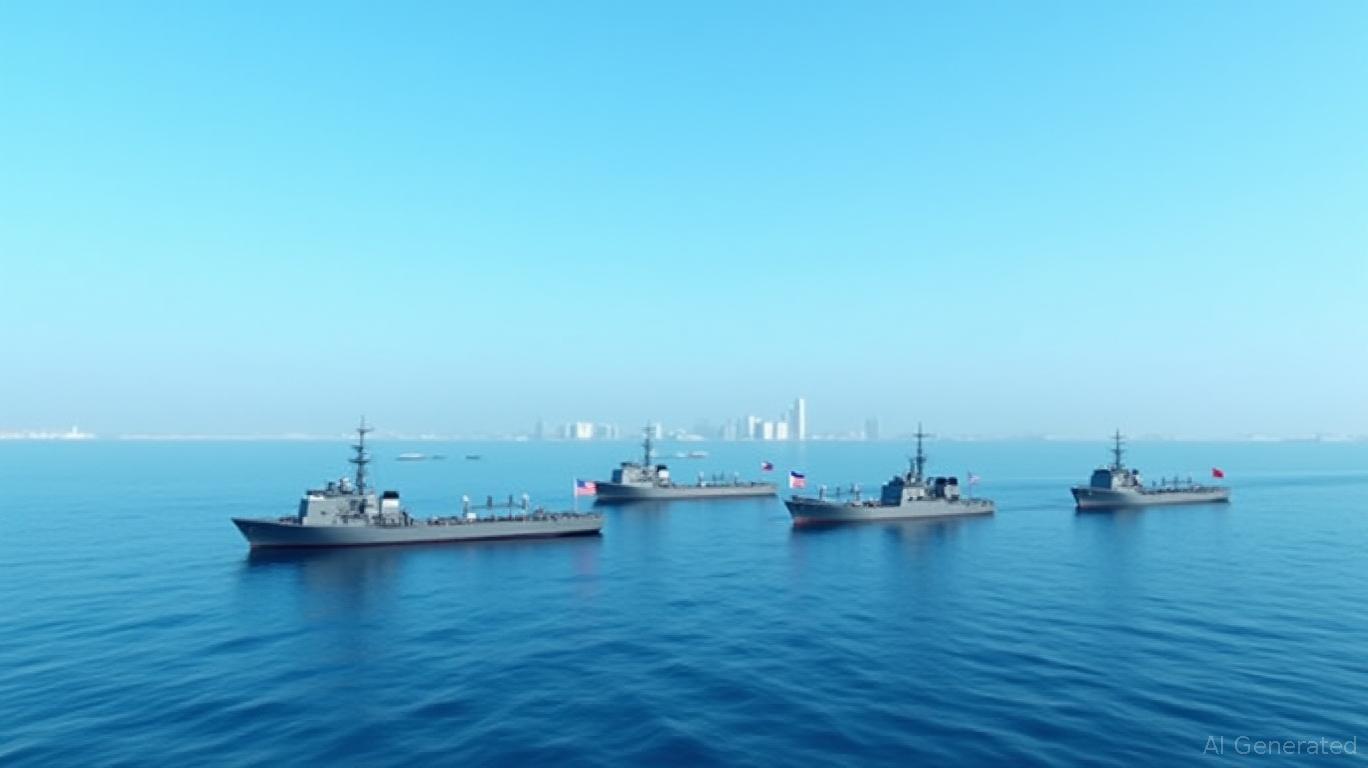
The steel is cold, the oil is thick, and the horizon is a lie.
If you stand on the deck of a Panamax container ship, the sheer scale of human ambition hits you like a physical weight. These are not just boats. They are floating cathedrals of commerce, dragging the weight of our modern lives—your smartphone, your coffee beans, the sweater you bought on a whim—across thousands of miles of indifferent ocean. We call this globalization. But behind the rhythmic thrum of the engines, a silent war is being fought. It is a war of ink, bureaucracy, and calculated delay. For a closer look into this area, we suggest: this related article.
Shipping is the invisible circulatory system of the world. Ninety percent of global trade moves by sea. Yet, while the cars in our driveways shift to electric and our homes sprout solar panels, the leviathans of the ocean remain anchored to the past. They burn the dregs of the refinery process: heavy fuel oil, a sludge so thick it must be heated just to flow into the engine.
Last year, the world’s most powerful maritime nations gathered in London at the International Maritime Organization (IMO). They spoke of "green corridors" and "net-zero targets." They smiled for the cameras. But beneath the surface, the water was dark. For broader context on this development, extensive coverage can also be found on The Guardian.
The Architect of Inertia
Consider a man named Elias. He doesn't exist, but he represents a thousand lobbyists who do. Elias sits in a boardroom with wood-paneled walls, far from the salt spray. His job is not to save the world, but to protect a fleet valued at billions. He knows that retrofitting a single vessel with ammonia-ready engines or wind-assisted propulsion costs millions. Multiply that by a fleet of fifty, and you have a financial heart attack.
Elias doesn't say "no" to decarbonization. That would be a PR disaster. Instead, he suggests "further study." He asks for "flexibility for developing states." He pushes for "market-based measures" that are so complex they take a decade to implement.
This is the art of the sabotage. It isn't a bomb; it's a slow leak.
When powerful states like China, Brazil, and Saudi Arabia voiced concerns at the IMO, they weren't just protecting their exports. They were protecting a status quo that treats the atmosphere as a free sewer. By questioning the technical feasibility of zero-emission fuels or demanding exemptions for specific trade routes, they create a fractured regulatory environment.
Industry hates uncertainty. If the rules are murky, shipowners don't invest in new tech. They wait. And while they wait, the planet warms.
The Carbon Math of a T-Shirt
The numbers are staggering. If international shipping were a country, it would be the sixth-largest emitter in the world, ranking just above Germany. Every year, these ships pump nearly a billion tonnes of CO2 into the air.
Let's look at the math of a single cotton T-shirt. It is grown in India, processed in China, sewn in Bangladesh, and sold in London. By the time it reaches your drawer, it has likely traveled 15,000 miles. The shipping cost is pennies. That efficiency is the miracle of the modern world, but it’s a miracle subsidized by a massive, unpaid environmental debt.
The proposal on the table in London was simple: a universal carbon tax on shipping fuel. The logic is clear. If you make the dirty fuel expensive, the clean fuel—green hydrogen, ammonia, or even old-fashioned wind—becomes competitive.
But for a country like Brazil, which exports massive amounts of iron ore and soy to China, a carbon tax feels like a direct hit to their GDP. Distance is their enemy. A tax on distance is a tax on their survival. So, they fight. They use the language of equity and fairness to mask the reality of atmospheric destruction.
It’s a tragic irony. The very nations most vulnerable to rising sea levels and extreme weather are often the ones whose immediate economic interests compel them to stall the transition.
The Ghost Fleets
While the diplomats argue, the technology is actually ready. We have ships that can harness the wind with automated "sails" that look like giant vertical wings. We have engines that can burn green methanol.
The problem isn't the engineering. It’s the infrastructure.
A ship is a thirty-year investment. If you build a ship today that runs on heavy oil, you are locking in three decades of emissions. To break that cycle, we need more than just a tax; we need a global refueling network. Imagine a gas station, but for green ammonia, located at the tip of Africa, the mouth of the Suez Canal, and the ports of Singapore.
This requires trillions in investment.
The sabotage happening in the halls of power isn't just about avoiding a tax. It’s about who pays for that transition. The wealthy nations of the Global North want the industry to pay. The Global South wants the North to foot the bill, citing centuries of historical emissions.
Stalemate.
The Cost of the Delay
I once stood on a beach in the Philippines after a typhoon. The debris was a grotesque catalog of our consumption: plastic bottles, shredded clothing, pieces of electronics. All of it had arrived via the sea, and the storm that brought it back to land was fueled by a warming ocean.
We treat the sea as a vast, empty space where rules are suggestions. The "flags of convenience" system allows ships to register in countries like Panama or Liberia, where oversight is thin and labor laws are ghosts. This lawlessness has extended to the climate. For decades, shipping was excluded from international climate agreements because no one could agree on who "owned" the emissions of a ship in the middle of the Atlantic.
Now, the bill is coming due.
The sabotage we see today is the final gasp of an old world. Some call it "pragmatism." Some call it "economic sovereignty." But when you look at the melting ice in the Arctic—a region that is now becoming a new, shorter shipping lane—you realize the absurdity of our logic. We are literally melting the world to make it easier to ship the products that caused the melting.
The shipping industry could be the hero of this story. Because it is so centralized, a single, bold piece of global legislation could transform it overnight. Unlike the millions of individual car owners who must be convinced to switch to EVs, there are only a few thousand major shipowners in the world.
The Invisible Stakes
The stakes are not just degrees of warming. They are the stability of the global food supply. They are the survival of coastal cities. They are the very breath we take.
When a state blocks a carbon levy, they aren't just saving a few cents on a ton of iron ore. They are stealing time. And time is the one commodity that even the largest container ship cannot transport.
The ocean is a mirror. For too long, it has reflected our greed and our willingness to look away. The transition to green shipping will be expensive. It will be disruptive. It will require a level of international cooperation that we haven't seen since the end of the last Great War.
But the alternative is a horizon that keeps shrinking until there is nowhere left to sail.
The next time you hold a product in your hand, think of the wake it left behind. Think of the dark sludge burning in the engine of the ship that carried it. And think of the quiet men in suits who are working very hard to make sure nothing changes.
The engine room is hot. The pressure is rising. And the captains of the world are still arguing over the price of the coal while the ship is already on fire.