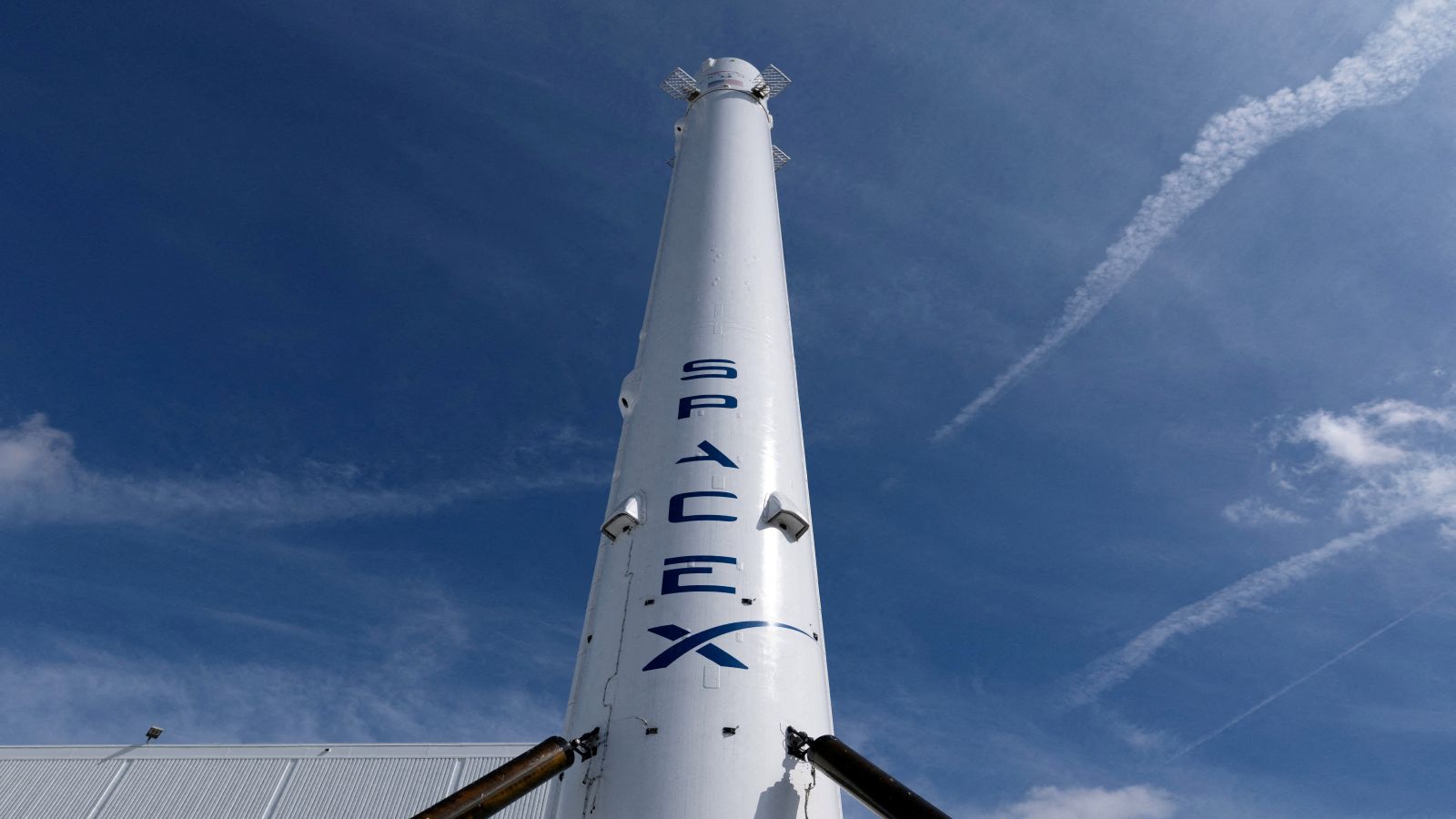
The financial establishment spent decades building walls to protect ordinary savers from corporate engineering, but those walls just dissolved. SpaceX completed a record-breaking initial public offering on the Nasdaq under the ticker SPCX, raising $75 billion at an initial valuation of $1.75 trillion. By the closing bell, frantic retail buying and massive institutional positioning pushed the stock up 19 percent to $160.95 per share. The rally added another 6 percent in early pre-market action on Monday. The market capitalization now sits at a dizzying $2.1 trillion, minting its founder as the world’s first paper trillionaire.
This historic market debut is not just a triumph of momentum trading. It is a fundamental rewriting of the rules of public equity, achieved by blending low-earth orbit telecommunications with artificial intelligence hype. The primary asset drawing public capital is not the proven workhorse Falcon 9 rocket fleet, but an intricate corporate weave involving orbital data centers and a controversial multi-billion-dollar transaction with a closely held AI startup. To sustain a valuation that eclipses almost every established technology giant on earth, the underlying business must execute a flawless, unprecedented scaling effort while burning billions in capital. Investors piling into the Monday session are betting on a total addressable market claimed to be worth trillions, but the structural realities of the business suggest that the real test of this historic valuation is only just beginning.
The Financial Engineering of a Space Monopoly
The math behind the listing numbers reveals a steep premium for future growth. The underwriting syndicate, led by Wall Street mainstays Goldman Sachs and Morgan Stanley, priced the initial offering at roughly 92 times the trailing annual sales of the company. For context, established technology giants with massive, predictable cash flows rarely command multiples half that size. The aerospace division generated $18.67 billion in revenue over the preceding calendar year, yet the company reported a steep net loss of $4.94 billion. The loss represents a sharp reversal from the modest profit recorded a year prior.
SpaceX Core Financial Disconnect (2025)
---------------------------------------
Trailing Annual Revenue:   $18.67 Billion
Net Income / Loss:        -$4.94 Billion
IPO Revenue Multiple:     92x
The underlying catalyst for this valuation spike is the strategic absorption of the artificial intelligence firm xAI, an entity previously controlled independently by leadership. This transaction required a $20 billion bridge loan to execute, effectively transferring the immense operational losses of a pre-revenue machine learning enterprise onto the balance sheet of the public space corporation. The resulting corporate structure relies heavily on the concept of space-based data processing. The official prospectus outlines a vision involving up to one million specialized orbital satellites configured to process massive artificial intelligence workloads outside the earth’s atmosphere.
Independent research groups are already flagging a severe divergence between market expectations and fundamental infrastructure constraints. While internal investor presentations point to an eventual total addressable market of $28.5 trillion, analytical models from firms like Morningstar calculate a far more modest global connectivity opportunity of approximately $129 billion. The firm issued a stark research note valuing the underlying equity at just $63 per share, representing a massive discount to the current market trading price.
Passive Index Inflow Traps
A significant portion of the buying pressure driving the initial market debut stems from recent, quiet overhauls in benchmark index eligibility criteria. Historically, major stock indices required newly public entities to undergo a prolonged period of market seasoning, often lasting from several months to a full year, alongside strict minimum public float allocations. These structural speed bumps were designed to protect index-tracking funds from extreme price discovery volatility.
The sheer scale of this public offering forced index providers to blink. The Nasdaq-100 adjusted its internal framework to allow top-tier market capitalizations exceeding a specific threshold to gain fast-track entry within fifteen trading days. Parallel updates from global index providers cleared the way for near-immediate inclusion, triggering mandatory, automated asset purchases by passively managed index funds and exchange-traded portfolios.
Index Fast-Track Requirements vs. Traditional Rules
-----------------------------------------------------------
Traditional Rules:  6 to 12 Month Seasoning Period
New Nasdaq Rule:     15-Day Fast-Track for Ultra-Large Caps
S&P 500 Position:    Maintained Strict Financial Viability Screens
This passive indexing mechanism creates an artificial floor for the stock price in the short term, as billions of dollars of non-discretionary capital are legally required to buy shares regardless of valuation multiples or bottom-line losses. S&P Dow Jones Indices chose a different path, electing to maintain its strict historical criteria, including its baseline financial viability screens. The resulting divergence means that automated retirement portfolios tracking different large-cap indexes will soon hold radically different risk profiles connected to the exact same aerospace asset.
Operational Volatility and Institutional Constraints
The capital requirements to maintain this orbital infrastructure are unprecedented in modern industrial history. The hardware cost alone of assembling, launching, and constantly replacing thousands of low-earth orbit communication satellites represents a permanent capital expenditure loop. Unlike terrestrial fiber networks that function for decades once buried, low-earth orbit hardware suffers from atmospheric drag and deliberate orbital decay, requiring complete network replenishment cycles every five to seven years.
The corporate governance architecture places near-total operational control in a single set of hands. No public shares sold during the initial transaction carried meaningful voting weight, leaving the founder with more than 82 percent of the aggregate voting shares. This structural arrangement leaves public shareholders with virtually zero recourse to influence capital allocation, board composition, or executive compensation structures.
The presence of strict post-initial public offering insider lock-up agreements will prevent early venture capital backers and corporate staff from liquidating their personal holdings during the initial months of trading. This restriction artificially limits the active supply of shares circulating in the public market, compounding the upward price volatility seen in the early sessions. When these institutional lock-up periods expire later in the year, a massive wave of secondary supply could test the depth of public market demand, forcing the stock to rely on actual operational metrics rather than structural scarcity.