Everyone in the foreign policy establishment is crying over the same spilled ink.
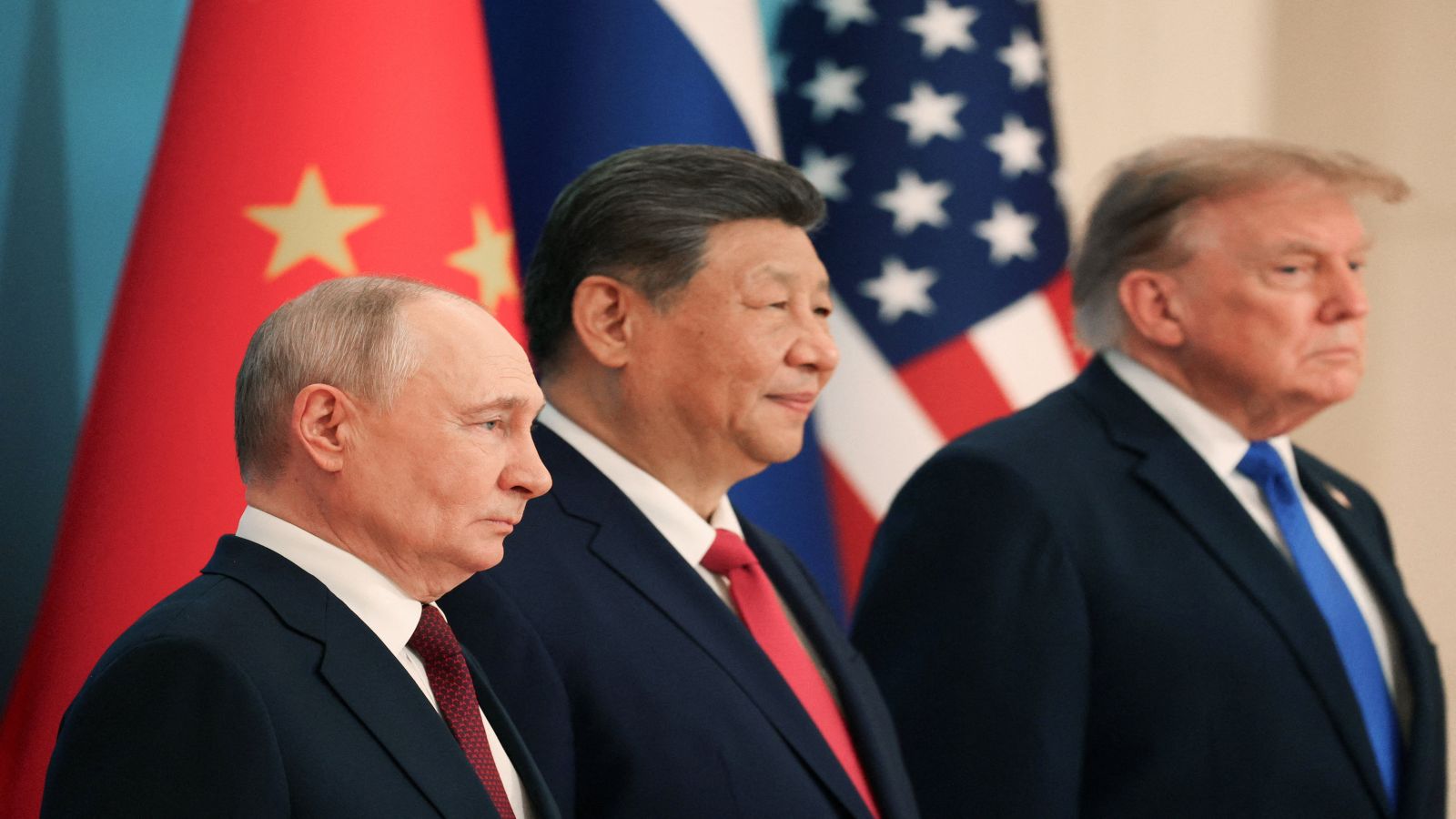
They looked at the 90-minute closed-door meeting at Shenzhen’s Kylin Villa on November 19, 2026. They read the four-point "Declaration Towards Peace" signed by Donald Trump, Xi Jinping, and Vladimir Putin. They noticed the glaring omissions—no ceasefire timeline for Ukraine, no settlement for the Iran conflict, no numerical caps to replace the New START nuclear treaty that expired back in February—and immediately declared the whole thing an empty photo op. German Chancellor Friedrich Merz called it staging. Pundits from Washington to New Delhi labeled it a "letdown" and proof that multipolarity has hit a brick wall.
That consensus is lazy, backwards, and dangerously naive.
If you judge a closed-door syndicate meeting by the standards of a peace conference, you are going to miss the robbery happening right in front of you. The Shenzhen summit was never designed to solve the wars in Ukraine or the Middle East. It was a structural stress test for a brand-new cartel—an informal "G3" directorate where the three largest nuclear powers quietly agreed to manage global friction on their own terms while locking everyone else out of the room.
The Illusion of Multipolarity Just Died in Guangdong
For a decade, mid-tier capitals have intoxicated themselves with talk of a "multipolar world." Diplomats in Brussels, New Delhi, Tokyo, and Brasília convinced themselves that power was diffusing outward into a neat, rules-based circle where regional heavyweights would hold veto power over global affairs.
Shenzhen took a sledgehammer to that fantasy.
Look at who was invited to Kylin Villa and who was left pacing the hallways outside. On the very day Trump, Xi, and Putin sat down together, European leaders were huddled in Berlin under their "Coalition of the Willing" banner, repeating the desperate mantra that nothing about Ukraine should be decided without Ukraine. Days earlier, during the November 10–11 US-mediated talks in Abu Dhabi, European officials had already been kept away from the main table.
Meanwhile, the Shenzhen declaration paid lip service to "UN reforms" without setting a single timeline for expanding the Security Council or endorsing permanent seats for rising powers like India.
Here is the blunt truth that polite diplomatic commentary refuses to print: multipolarity is a marketing slogan used by revisionist powers to weaken American alliances, not a governance model they actually intend to share.
When Beijing and Moscow spent years pitching a multipolar order, they were selling a vision of unipolar resistance. The moment Washington signaled a willingness to deal directly at the top, the "Global South" talking points evaporated. What emerged in Shenzhen was not a broad multipolar concert. It was a tripolar oligopoly. Three men representing the only three states capable of ending human civilization in forty minutes decided to open a direct channel outside every existing multilateral institution.
Why the "Empty" Declaration Is Actually Loaded
Critics mock the four-point communique because it lacks enforcement mechanisms, verification schedules, or binding quotas. Having watched dozens of bilateral and multilateral accords collapse under the weight of their own legalistic bloat over the past twenty years, I can tell you that early-stage great-power deals never start with binding spreadsheets. They start with boundary-setting.
Read the four pillars of the Shenzhen text again—not for what they promise to fix, but for what they quietly legitimize:
- Nuclear Risk Dialogue Without Caps: Since New START expired on February 5, 2026, the world’s two largest nuclear arsenals have operated with zero legally binding limits for the first time in half a century. Washington spent years demanding China join trilateral arms-reduction talks as Beijing’s stockpile surged past 600 warheads. Xi refused numerical caps, and he didn't concede them in Shenzhen. Instead, he agreed to a three-way dialogue on nuclear risk reduction and non-proliferation. In arms-control mechanics—a reality scholars like Thomas Schelling mapped out decades ago—establishing a direct crisis-communication channel among three nuclear rivals before an accident happens is infinitely more urgent than arguing over warhead ceilings none of them intend to verify anyway.
- Coordinated Oil Supply Without Quotas: With the Iran conflict threatening shipping through the Strait of Hormuz, the three leaders pledged to boost fuel supplies to stabilize global energy markets. No barrels-per-day numbers were published. None were needed. The signal to energy traders and regional belligerents was unmistakable: the world's top producer (the US), top sanctioned exporter (Russia), and top importer (China) will coordinate to prevent an oil shock from wrecking their domestic economies, regardless of how hot the Persian Gulf gets.
- State-Consent Limits on the ICC: This is the clause most Western commentators glossed over, yet it carries the sharpest teeth. By affirming state-consent boundaries around International Criminal Court jurisdiction, Washington and Beijing handed Putin a massive diplomatic shield against his 2023 ICC arrest warrant. Neither the US nor China is a party to the Rome Statute. Together, they effectively neutered European attempts to use international legal mechanisms to isolate a sitting nuclear head of state—clearing the diplomatic runway for Trump to host Putin at the December G20 summit in Miami.
- Controlled UN Reform Rhetoric: Vague support for United Nations restructuring keeps middle powers chasing a mirage inside Turtle Bay while real crisis management migrates to private trilateral channels.
The Real Questions You Should Be Asking
If you want to understand what happens after Shenzhen, stop asking whether Trump, Xi, and Putin "solved" Ukraine or Iran. They didn't, and they weren't trying to. Ask the questions that actually dictate risk over the next twelve months.
Did Shenzhen revive a "Yalta 2.0" spheres-of-influence deal?
No—and comparing Shenzhen to the 1945 Yalta Conference exposes a profound misunderstanding of modern leverage. At Yalta, three victorious empires physically partitioned occupied territory across Europe and Asia. In November 2026, none of these three leaders possesses the military or economic bandwidth to police another's empire.
Beijing has zero desire to co-sign Russian territorial annexations in Europe and blow up its remaining trade access with the European Union. Washington isn't handing Taiwan to Xi in exchange for a phone call to Tehran. Shenzhen wasn't a map-drawing session. It was a spheres-of-restraint agreement—an unspoken understanding that while proxy wars and tariff fights will continue, the three principals will not let regional clients drag them into direct kinetic collision with one another.
Why did Xi Jinping host this on the sidelines of APEC?
Look at the venue. Shenzhen isn't just a coastal boomtown; it is the physical monument to Deng Xiaoping’s reform era and China’s technological self-reliance. By convening Trump and Putin on the margins of the 33rd APEC Leaders' Meeting—China's first time hosting APEC in twelve years—Xi positioned Beijing as the indispensable switchboard of global geopolitics.
For the past three years, conventional wisdom insisted China’s slowing growth and property overhang had permanently diminished its diplomatic clout. Yet when Washington needed leverage over Moscow and Tehran, and when Moscow needed economic oxygen and diplomatic legitimacy, both roads led directly to Guangdong. Xi didn't have to sign a single binding concession to walk away the biggest winner in the room. Hosting the table was the victory.
What happens if the G3 format collapses before Miami?
Let’s be brutally honest about the flaw in this emerging tripolar setup: it relies entirely on personalist diplomacy rather than institutional guardrails.
Nine Democratic senators in Washington have already warned against trading hard security commitments for leader-level spectacle. European capitals are furious about being sidelined. In Moscow, Putin openly stated after the meeting that Ukraine and Europe were "not ready" to compromise, signaling zero intention of softening his maximalist demands unless forced to do so on the battlefield.
If the nuclear dialogue pledge fails to produce named negotiators, a venue, and a calendar date before the Miami G20 in December, Shenzhen will rot into the exact diplomatic theater its critics claimed it was. An informal G3 has no secretariat, no treaty ratification process, and no resilience if domestic politics in Washington shift or if an accidental clash in the South China Sea or Eastern Europe spikes mistrust overnight.
How Middle Powers and Markets Must Play This New Board
Stop waiting for a tidy multilateral treaty to restore predictability. That era is gone. Whether you are running sovereign risk models, managing global supply chains, or advising a foreign ministry, the Shenzhen summit demands an immediate pivot in how you read geopolitical signals:
- Discount multilateral communiques; track trilateral friction points. The APEC Shenzhen Outlook will generate thousands of pages of trade-facilitation prose. Ignore 90% of it. Watch three concrete indicators instead: whether US-China-Russia working groups actually convene on nuclear risk, whether Washington eases secondary tariff threats on buyers of Russian crude to keep energy prices capped, and whether Putin actually lands in Miami next month.
- Price in the "Middle-Power Squeeze." If you operate in Europe, India, Japan, or South Korea, recognize that great-power coordination is often more dangerous to your autonomy than great-power gridlock. When Washington, Beijing, and Moscow talk directly, allied capitals lose their ability to play one superpower off another for security guarantees or trade exemptions. Build sovereign redundancy in defense manufacturing and critical minerals now, because nobody at Kylin Villa is looking out for your seat at the table.
- Separate public theater from private backchannels. Just because Ukraine and Iran were scrubbed from the four-point text does not mean they weren't traded across the table. In great-power bargaining, the issues left out of the joint statement are usually the exact ones where active, sensitive horse-trading is underway.
The pundits calling Shenzhen a failure are looking for a peace treaty in a room full of arsonists who just agreed on fire insurance for their own houses. The multipolar utopia isn't coming. Three superpowers just carved out a private booth at the top of the international system—and if you aren't inside it, you're on the menu.