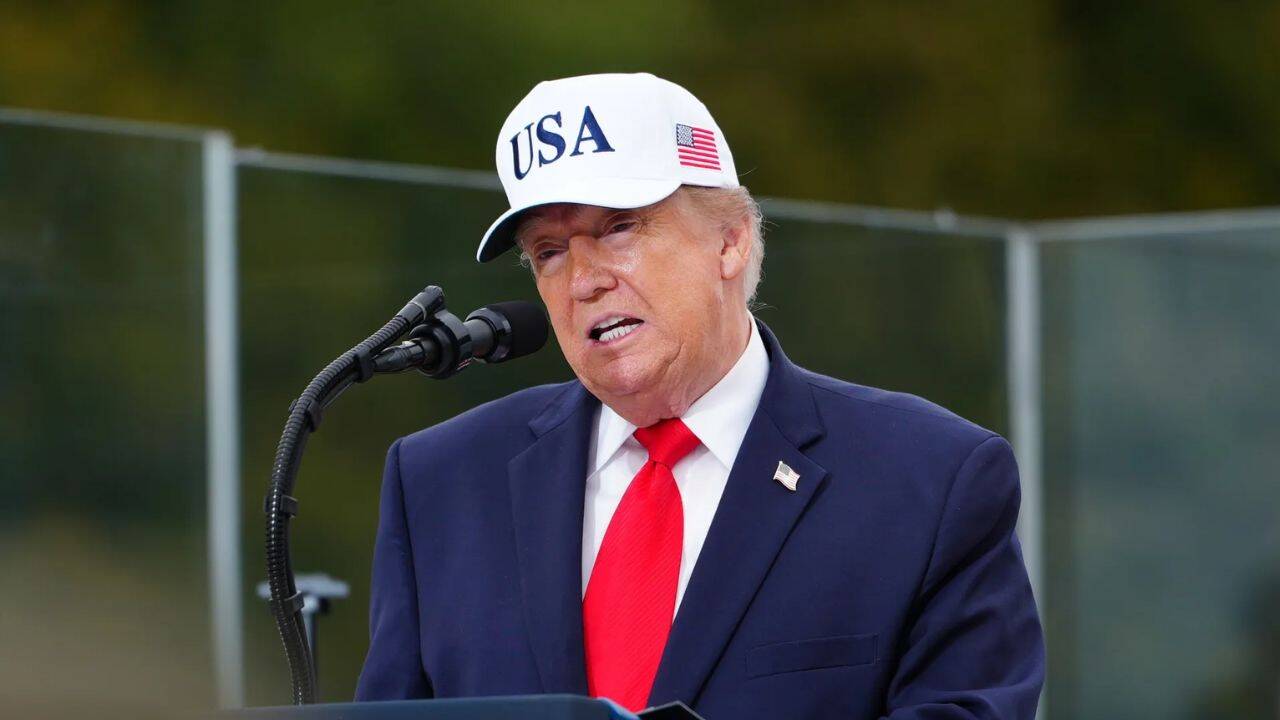
Every legacy newsroom in Washington fell for the exact same trap this week. Donald Trump stood behind a podium, cracked a smirk, and suggested that if American voters ever get tired of him, he will pack his bags, move to Israel, and easily win election as their Prime Minister.
The mainstream press immediately did what it always does. They slapped "Trump jokes" into the headline, rolled their eyes at the hyperbole, and moved on to the next news cycle.
They missed the entire story.
When a dominant political figure drops a throwaway line about running a foreign democracy, treating it as late-night comedy fodder is journalistic malpractice. I have spent two decades analyzing political messaging, cross-border campaign strategy, and populist rhetoric. I have watched consultants burn tens of millions of dollars misreading candidate humor because they refuse to look past the surface punchline.
Humor in high-stakes politics is never just a joke. It is a diagnostic tool. It tells you exactly how a leader views power, how they measure their own brand equity, and where the institutional guardrails of two different democracies actually stand.
By reducing this moment to a silly soundbite, the media ignored three massive realities: the actual legal and constitutional mechanics of Israeli politics, the terrifyingly transactional way modern populism views national sovereignty, and the stark warning signs about voter fatigue right here in the United States.
The Lazy Consensus and Why It Fails
The standard media coverage of this remark operates on a predictable, lazy script. Reporters transcribe the quote, note that Trump boasts high approval ratings among certain Israeli demographics, and wrap the piece up with a patronizing pat on the head. The underlying assumption is simple: Trump is bragging again, his base loves the bravado, and critics think he is delusional.
That analysis is completely useless. It tells you nothing about why the remark landed, nothing about how international audiences perceive American political arrogance, and nothing about the structural impossibility of the claim itself.
When you treat populist hyperbole as harmless entertainment, you blind yourself to the strategic function it serves. Trump uses absurd hypotheticals to test boundaries and reinforce a singular narrative: that his political appeal is universal, transferable, and entirely independent of local institutions.
To dismantle this properly, we have to stop asking whether Trump was serious. Of course he was not filing paperwork with the Israeli Central Elections Committee. The real question—the one every political analyst should be asking—is what happens to democratic norms when leaders treat national leadership like a portable corporate franchise.
The Brutal Reality of Israeli Constitutional Law
Let us strip away the campaign rhetoric and look at the cold, hard statutory facts. Even if we entertain a thought experiment where Trump genuinely decided to relocate to Tel Aviv and launch a political career, he would hit a concrete wall before printing a single yard sign.
Israeli election law is notoriously complex, fiercely guarded, and radically different from the American system.
First, there is the question of citizenship and the Law of Return. Under the 1950 Law of Return, every Jew has the right to come to Israel as an oleh (immigrant) and claim automatic citizenship. This right extends to children and grandchildren of Jews, as well as their spouses. Donald Trump is not Jewish. While his daughter Ivanka converted to Orthodox Judaism before marrying Jared Kushner, Israeli law does not grant automatic citizenship to the parents of converts. Trump would have to apply for naturalization through the Ministry of the Interior, a process requiring years of permanent residency, proficiency in Hebrew, and the renunciation of prior nationalities.
Second, look at Basic Law: The Knesset. In the United States, voters cast ballots directly for presidential electors. In Israel, citizens do not vote for a Prime Minister. They vote for a closed party list in a nationwide proportional representation system. To become Prime Minister, a candidate must first be an Israeli citizen, secure a spot on a party list, win a seat in the 120-member Knesset, and then cobble together a fragile coalition of at least 61 seats among fractious ideological rivals.
Third, consider the renunciation mandate. Under Section 16A of Basic Law: The Knesset, a member of parliament cannot hold foreign citizenship if the laws of that foreign country allow them to renounce it. To even sit in the Knesset, let alone lead the government, Trump would have to walk into a U.S. Embassy, swear an oath of renunciation, and permanently surrender his American passport.
The idea that a man whose entire political identity is built on "America First" nationalism would legally sever his ties to the United States to navigate the backroom coalition horse-trading of Jerusalem is absurd on its face.
Yet, not a single mainstream wire story bothered to lay out these statutory barriers. Why? Because fact-checking the structural mechanics of a parliamentary democracy takes effort, while transcribing a quote takes thirty seconds.
The Franchise Model of Populist Power
If the legal reality makes the scenario impossible, why does the rhetoric matter so much? Because it exposes the evolution of modern political branding.
Traditionally, political capital was hyper-local. A politician’s power was rooted in deep familiarity with a specific electorate’s history, grievances, and constitutional framework. You could not simply pick up a winning formula in Ohio and drop it into parliamentary Europe or the Middle East. The cultural and institutional friction would destroy the campaign on day one.
Trump views political power through the lens of real estate licensing and global brand management. In the business world, if a hotel tower faces market saturation in New York, you license the name to a developer in Dubai or Panama. The brand is the asset; the geography is just a venue.
When Trump suggests he could seamlessly transition from leading the American executive branch to running the State of Israel, he is applying licensing logic to democratic governance. He is telling his audience that his persona—the rallies, the slogans, the strongman posture—is a plug-and-play operating system that works anywhere.
This reveals a massive blind spot in how populists view allies. Support for a foreign leader’s policies is not the same thing as wanting that leader to govern your country.
Polls have repeatedly shown that many Israelis favor Trump’s hardline policies on Iran, the relocation of the U.S. Embassy to Jerusalem, and the Abraham Accords. In the minds of Israeli voters, he is a useful external ally who delivers tangible diplomatic wins.
But admiring a foreign president from afar is worlds apart from trusting him with domestic tax policy, ultra-Orthodox military draft exemptions, judicial reform, and the day-to-day management of Israel’s hyper-localized coalition politics. Israeli voters are notoriously unforgiving toward their own politicians; the average Israeli government rarely survives a full four-year term. A foreign billionaire parachuting in without speaking Hebrew would be chewed up by the Knesset before his first budget passed.
People Also Ask: Dismantling the Flawed Premises
Whenever a viral political clip hits the internet, search engines flood with predictable questions from confused readers trying to separate satire from reality. Most of these queries are built on fundamentally broken assumptions.
Could Donald Trump legally run for Prime Minister of Israel?
No. As established under Israel’s Basic Laws, a candidate must be an Israeli citizen and a member of the Knesset. Because Trump does not qualify under the Law of Return, he cannot simply claim citizenship upon arrival. Furthermore, Israeli law prohibits Knesset members from holding dual citizenship when the other nation permits renunciation. He would have to formally abandon his U.S. citizenship, live in Israel long enough to naturalize, learn Hebrew, and win a parliamentary seat.
Why did Trump say Americans might get tired of him?
This is the most revealing part of the entire quote, and the part everyone ignored. Politicians at the peak of their confidence do not casually float exit strategies—even joking ones—rooted in voter fatigue.
In political communications, we call this pre-emptive framing. Every multi-term or long-running political figure eventually hits a wall of public exhaustion. Voters grow weary of the constant drama, the relentless news cycles, and the perpetual state of crisis. By joking about Americans getting "tired" of him, Trump is acknowledging a very real vulnerability in his political armor while trying to neutralize it with humor. He is attempting to reframe potential rejection by American voters not as a failure on his part, but as a loss for them—implying that another country would gladly snap him up if Americans fail to appreciate him.
Do Israelis actually want Trump as their leader?
No. Confusing geopolitical approval with domestic electoral viability is a rookie mistake. While right-leaning Israelis frequently express gratitude for Trump’s foreign policy decisions during his presidency, Israeli political culture is deeply insular and fiercely protective of its own sovereignty. Voters in Jerusalem and Tel Aviv want an American president who backs them in Washington, not an American ex-president trying to run their cabinet meetings.
The Strategic Flaw in My Own Critique
Before we get carried away dissecting the constitutional impossibilities and psychological subtext of a campaign trail one-liner, intellectual honesty requires admitting the downside of taking a hardline analytical stance on populist humor.
There is a very real risk of over-intellectualizing a throwaway joke.
When political analysts dissect every off-the-cuff remark with surgical precision, we can inadvertently hand the speaker exactly what they want: free oxygen. Trump thrives on dominating the attention economy. By writing two thousand words analyzing the statutory barriers of the Knesset in response to a ten-second joke, critics can look humorless, pedantic, and out of touch with how ordinary voters actually consume political speech.
Most people hearing that clip at a rally or scrolling past it on their phones do not think he is drafting a residency application for Tel Aviv. They hear a guy cracking a joke about how popular he is in Israel. If you respond to a punchline with a lecture on Section 16A of Basic Law: The Knesset, you risk losing the room before you even make your point.
That is the tightrope every serious observer has to walk. You cannot ignore the deeper implications of how leaders talk about power, yet you cannot pretend a comedy bit is a formal policy white paper.
How to Actually Read Political Humor Without Getting Played
If you want to stop falling for superficial media coverage and start reading the political chessboard like an insider, stop reacting to the punchline and start auditing the mechanics behind it.
- Separate the Audience from the Target. When a politician makes a joke about a foreign country, they are rarely talking to that country. Trump was not speaking to voters in Haifa; he was speaking to American voters and donors. The joke was designed to remind his domestic base of his foreign policy credentials and project an image of unstoppable global popularity. Always ask who is actually in the room.
- Watch the Vulnerability Admissions. Ignore the boasts; track the concessions. Whenever a leader uses humor to introduce a negative premise—like the electorate growing "tired" of them—pay close attention. Internal polling almost always precedes public humor. If a candidate is joking about voter fatigue, you can bet their campaign strategists are seeing fatigue metrics flashing red in swing-district focus groups.
- Audit the Institutional Friction. Whenever a politician claims they could easily replicate their success in another system—whether it is a CEO claiming they can run government like a business, or a president joking about running a foreign parliament—look at the structural rules. Power does not transfer across different incentive structures. A system built on proportional representation and coalition survival rewards completely different instincts than a two-party presidential system.
- Ignore the Tone, Track the Precedent. Media outlets obsess over whether a remark was "lighthearted" or "deadpan." Tone is irrelevant. What matters is the normalization of the underlying idea. Repeating the notion that democratic leadership is interchangeable across borders slowly erodes the public’s understanding of citizenship, constitutional fidelity, and local accountability.
Stop Consuming Headlines Like Fast Food
The press corps will continue to treat every populist utterance as either an existential crisis or a harmless comedy routine. Both reactions are lazy, and both leave you completely uninformed about how power actually operates.
The next time a political heavyweight jokes about taking their talents to a foreign capital, do not laugh along with the crowd, and do not clutch your pearls over the audacity. Look at the legal impossibility of the claim, recognize the quiet admission of domestic voter fatigue buried inside the setup, and realize how thoroughly modern politics has been reduced to a portable personal brand.
Stop reading the punchline and start reading the room.