The Shiny Distraction in the Dirt
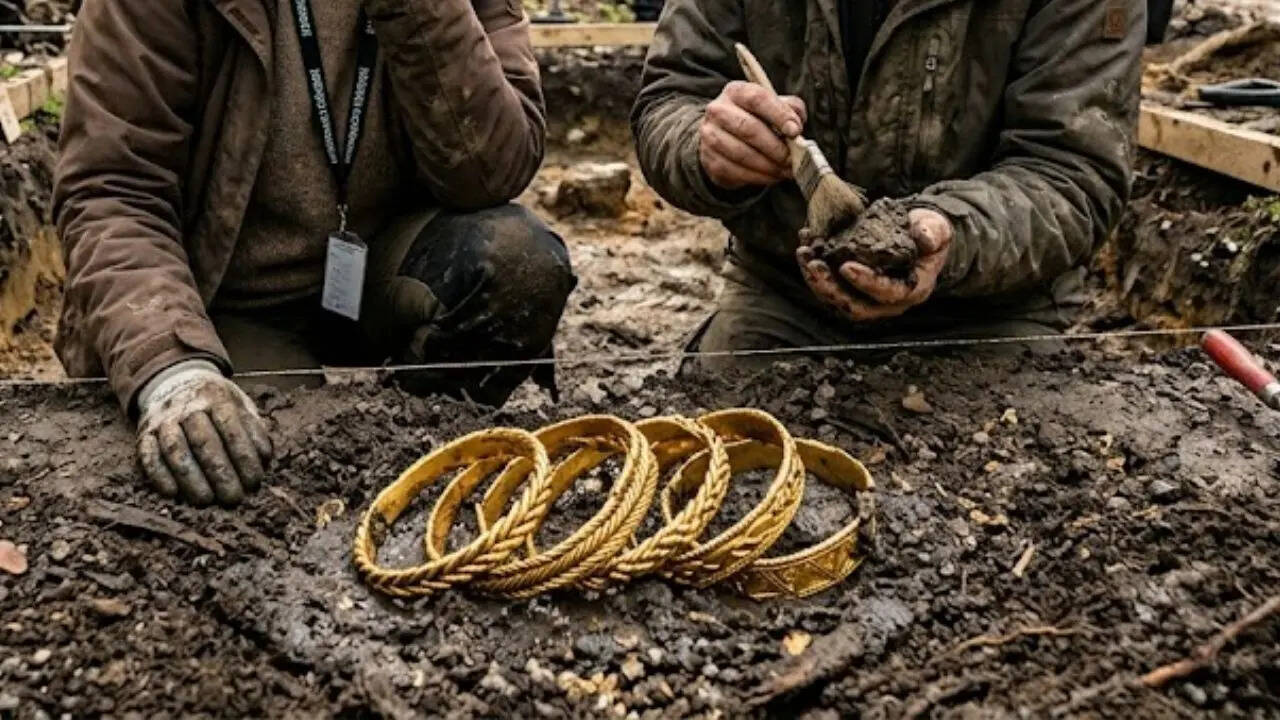
Archaeologists in Denmark are popping champagne over a stash of "nearly pure gold" arm rings. The headlines scream about 1,000-year-old treasures and the raw majesty of Viking craftsmanship. They want you to marvel at the shine. They want you to feel a sense of wonder about a "lost era" of wealth.
They are missing the point entirely.
This isn't a story about jewelry. It is a story about a desperate, failing financial system. When you find high-purity gold buried in a field, you aren't looking at a "treasure chest." You are looking at a 10th-century bank run. People don’t bury their liquid assets in the mud when things are going well. They bury them when the institutions they trust are about to burn to the ground.
The Purity Myth
The mainstream press is obsessed with the "nearly pure" nature of these arm rings. They frame it as a testament to Viking skill. It’s actually a sign of a primitive, inflexible economy.
In a sophisticated financial ecosystem, gold is a backing, not the literal product you wear on your sleeve. The Vikings used "hacksilver" and gold rings because they lacked a centralized coinage system that anyone actually trusted. Purity wasn't a choice; it was a necessity for survival in a low-trust environment. If you can’t trust the king’s mint, you better hope the metal in your hand is $99%$ pure, or you aren't getting fed during the next famine.
The math of ancient hoarding is simple. If the value of your currency is tied to the physical volume of the metal, you have zero leverage. You have no velocity of capital. You have a heavy, shiny paperweight that invites a knife to your throat. These arm rings represent stagnant wealth—capital that was removed from the economy, providing zero utility to the community, and ultimately failing the owner who died before they could dig it back up.
Why Archaeology Gets the "People Also Ask" Section Wrong
Go to any search engine and you’ll see the same tired questions: How much is Viking gold worth today? or How did Vikings get so much gold?
These questions are fundamentally flawed. They apply a modern capitalist lens to a raiding-and-tribute culture.
- "How much is it worth?" The spot price of gold today is irrelevant. The historical cost was total. To get those arm rings, a village somewhere else was likely wiped off the map. This wasn't "wealth creation." It was wealth relocation.
- "How did they get it?" Not through trade. Not through "innovation." They got it through the extraction of value from more settled, productive societies.
When we celebrate these finds without acknowledging the economic vacuum they created, we are cheering for the 10th-century equivalent of a massive ransomware attack.
The Hoarder’s Fallacy
I have spent years watching modern investors make the exact same mistake as the person who buried these rings. They buy physical gold, stick it in a safe, and wait for the world to end.
The Danish find proves that "gold as a hedge" is a losing strategy. If you are forced to bury your wealth to keep it, you have already lost the society that makes that wealth worth having. These arm rings stayed in the dirt for a millennium. For 1,000 years, that "wealth" did nothing. It didn't grow. It didn't build a house. It didn't fund a voyage. It was a 100% loss for the person who owned it.
The Technological Stagnation of the Viking Age
We love to talk about Viking longships as the pinnacle of tech. But look at their jewelry. It’s basic. It’s heavy. It’s "pure" because they didn't have the metallurgical sophistication to create complex alloys that maintained durability while stretching the supply of precious metal.
Contrast this with the Byzantine Empire of the same period. While the Vikings were hammering out heavy gold bars to wear on their wrists like primitive trackers, the Byzantines were managing a complex, multi-tiered currency system that fueled international trade across three continents.
One society built an empire that lasted over a thousand years. The other left some shiny trash in a Danish field.
The Reality of "Treasure"
Stop looking at these archaeological finds as "lucky breaks." Start looking at them as data points of failure. Every time a metal detector pings over a hoard of gold, it’s a recording of a moment where the social contract broke.
- Trust collapsed.
- Trade stopped.
- Fear became the primary motivator.
We aren't uncovering the glory of the Vikings. We are excavating their anxiety.
If you want to understand wealth, don't look at what was buried. Look at what was used, circulated, and transformed into lasting infrastructure. Gold arm rings are just the 10th-century version of a stuffed mattress. They are the ultimate "Lazy Asset." They require no intelligence to create and even less to manage.
Stop Digging, Start Building
The obsession with "pure gold" finds in Denmark reflects our own modern insecurity. We are attracted to the idea of "real" value because our own digital and fiat systems feel ephemeral. But the lesson of the Viking hoard is that "real" value is useless if the world around you is too chaotic to let you spend it.
The person who owned these rings died in a world where they couldn't even trust their neighbor enough to leave their jewelry on the table. That isn't a golden age. That’s a nightmare.
Take the arm rings. Put them in a museum. But stop pretending they represent a peak of human achievement. They represent the moment the lights went out.
Burn the romanticism. Study the collapse.