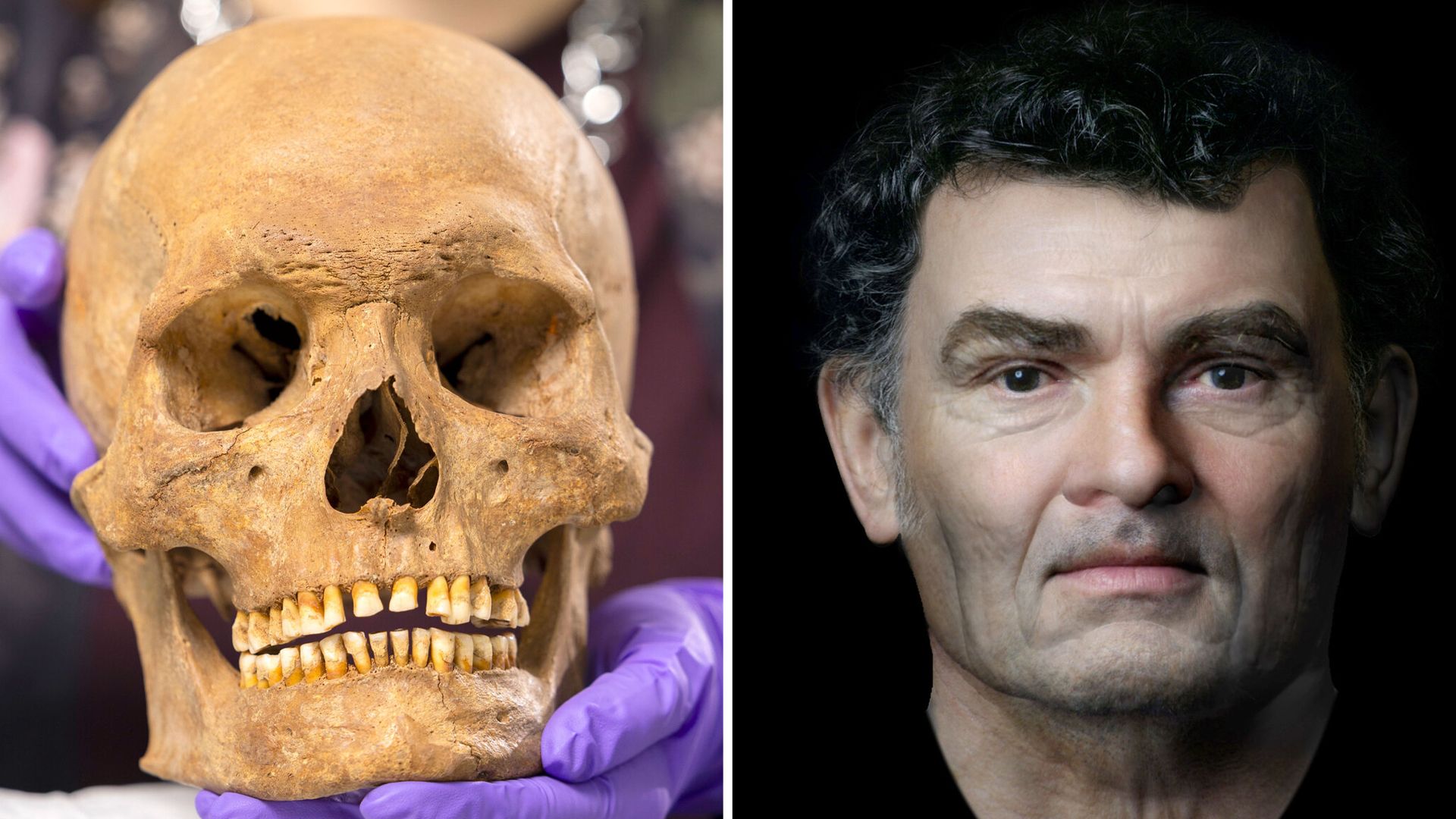
Every few years, forensic artists dig up a pile of ancient bones, slap some clay over a skull, and flood the news cycle with the face of a man who lived two millennia ago.
We are supposed to gasp. We are supposed to look into the soulful, dead eyes of a reconstructed Roman-era Scot and feel a profound, transcendent bridge across the centuries. Look, they tell us, he was just like us. He had a nose, eyes, maybe a scruffy beard, and worries about the local harvest or imperial taxes. Recently making headlines in related news: Alberta Didn't Reject Independence Because It Loves Ottawa.
It is complete garbage.
Anthropological reconstructions are not time machines. They are artistic interpretations dressed up in scientific theater. When headlines scream about the face of a man who lived in Roman Scotland almost two thousand years ago, they are selling you a comforting myth about human continuity. They want you to believe that underneath the togas, tunics, and iron weapons, ancient Britons were modern humans waiting to be discovered. Further details regarding the matter are explored by Al Jazeera.
They were not.
Let us start with the clay itself. Forensic facial reconstruction is an educated guessing game. Sure, tissue depth markers give artists a general baseline for how thick flesh sat over specific bone structures. But do you know what bone does not preserve? Fat distribution, exact ear shape, lip thickness, skin tone, freckles, scarring, asymmetry, and expression. You are staring at a fiberglass mannequin molded by a sculptor who made hundreds of subjective aesthetic choices to fill in the massive gaps left by rotting tissue.
Treating a forensic bust as a true portrait is like looking at a weather map and believing you are staring at the actual sky.
The lazy consensus in historical journalism loves the universal human angle. It makes history digestible. It turns a brutal, radically alien iron-age society into a quirky historical sitcom where everyone speaks Latin or Celtic dialects and worries about mortgage rates.
The reality of Roman Scotland is far more uncomfortable.
The northern frontier of the empire was not a multicultural café where people shared olive oil and debated philosophy. It was a meat grinder. The tribes living north of the Antonine Wall—the Caledonians and Maeatae—were living in a state of perpetual, low-intensity guerrilla warfare against the most efficient military machine the ancient world had ever produced.
When you look at that reconstructed face, you are looking at a survivor of systemic violence, malnutrition, and a tribal culture completely detached from anything you recognize as normal. Infant mortality hovered near fifty percent. Dental wear was atrocious because their grain was ground using stone querns that mixed grit straight into the bread, wearing teeth down to the nerves by middle age. Most people were in constant, low-grade physical pain from joint damage, healed fractures, and chronic infections.
Yet the mainstream narrative sanitizes all of this. They put clay on a skull, give it a thoughtful expression, and write a caption about our shared humanity.
Why do we fall for it? Because it flatters our egos. We want to believe that history is just us, but wearing cheaper clothes. It requires zero imagination to project our own psychological landscape onto a lump of sculpted clay. It is much harder—and much more interesting—to accept that an ancient Caledonian tribesman would look at your lifestyle, your anxieties, and your worldview with absolute, uncomprehending bewilderment.
Consider how we talk about identity in these discoveries. Headlines love to ask where these people came from and what they felt. Isotope analysis of teeth can tell us where someone grew up based on water chemistry, sure. It can reveal migration patterns, trade routes, or the movements of auxiliary troops. But it cannot tell you what gave this man joy, what terrified him in the dark, or how he conceptualized his place in the cosmos.
When researchers unearthed the remains behind that famous Scottish reconstruction, the mainstream press ran wild with stories of cultural blending at the edge of the empire. They framed it as an ancient melting pot.
That is projection at its finest.
Imperial contact zones were marked by extortion, hostage-taking, forced tribute, and retaliatory slaughter. The Roman Empire did not expand through cultural exchange programs; it expanded through subjugation and economic extraction. If a local tribesman interacted with Rome, it was usually because his crops were being burned, his family was being enslaved, or he was being paid off to keep the peace until the legions found a better excuse to march north.
Strip away the glossy museum lighting and the breathless press releases. You are left with a dead human being whose privacy has been invaded by modern scientists, converted into a tourist attraction, and weaponized to validate our modern obsession with relatability.
We do not want to understand the past on its own terms. We want the past to validate us. We want ancient people to nod along with our current cultural preoccupations.
Stop treating historical reconstructions like windows into the soul. They are museum props designed to keep funding flowing and click-hungry readers engaged. The next time a headline tries to introduce you to a guy who lived two thousand years ago, remember that you are looking at a modern artist's best guess wrapped in an ancient skull.
The past is a foreign country. They do not want your empathy, and they certainly do not look like you.