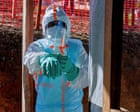
Health workers cannot fight an Ebola outbreak alone. When the World Health Organization issues an urgent call for community cooperation to contain Ebola outbreak in DRC, it isn't just bureaucratic paperwork. It is a desperate recognition of a hard truth. Military escorts and experimental vaccines fail if the people living in the affected villages do not trust the people delivering them.
The Democratic Republic of the Congo knows Ebola better than any nation on earth. The country has battled more than a dozen outbreaks since the virus was discovered near the Ebola River in 1976. Yet, every time a new cluster of cases emerges in provinces like North Kivu or Équateur, public health agencies make the exact same mistakes. They rush in with hazmat suits, set up isolation tents, and wonder why the local population runs away or throws stones at their vehicles.
Containing Ebola requires a shift in power, not just more funding. To understand why communities resist external intervention, you have to look at the ground reality of how these health campaigns operate.
The Broken Trust in Local Classrooms and Clinics
When an outbreak hits a rural territory, international teams arrive with massive logistical setups. They bring shiny SUVs, supply chains, and specialized personnel. To a villager who has watched family members die of malaria, measles, or clean water scarcity for years without a single aid truck showing up, this sudden influx of millions of dollars to treat one specific disease looks suspicious.
Suspicion breeds resistance. During the massive 2018–2020 outbreak in eastern DRC, which claimed over 2,200 lives, responders faced severe community pushback. Treatment centers were attacked. Health workers were killed.
This resistance does not happen because people are uneducated. It happens because the response infrastructure ignores local leadership. When international agencies bypass village elders, religious leaders, and traditional healers, they alienate the very people who hold the community's trust. If a chief says the vaccine is safe, people take it. If an outside doctor in a plastic suit says the same thing, people hide their sick relatives.
Why Safe Burials Spark Local Revolts
Ebola is highly contagious after death. Traditional mourning practices in the DRC involve washing, touching, and kissing the body of the deceased. This is a sacred ritual. When early response teams started grabbing bodies, putting them in plastic bags, and burying them in unmarked graves without the family's consent, it caused massive psychological trauma.
People felt the response teams were treating their loved ones like toxic waste rather than human beings. The result? Families started hiding bodies under beds or conducting secret night burials. This drove the virus further underground and accelerated transmission.
The turning point came when the WHO and local red cross societies adapted to "Harmonized Safe and Dignified Burials." This compromise allowed families to view the burial, choose the gravesite, and ensure religious rites were respected while trained teams handled the biohazard risks. Respecting the culture stopped the secret burials.
Redefining the Ebola Response Strategy
Stopping an outbreak requires treating the community as equal partners rather than targets of medical intervention. The World Health Organization's recent appeals emphasize this, but the execution on the ground needs a complete overhaul.
Conventional Response          Community-Led Response
-----------------------------------------------------------------
Top-down dictates              Co-designed surveillance
Forced isolation centers       Home-based isolation options
Enforced safe burials          Dignified, collaborative rituals
Foreign spokesperson           Local trusted leaders as speakers
True cooperation means hiring local youth as contact tracers. They know the pathways, the families, and the language. When a neighborhood youth knocks on a door to ask if anyone has a fever, the conversation is entirely different than when a foreign worker shows up with a clipboard.
Data Driven Isolation That Actually Works
Data from past outbreaks shows that early isolation saves lives. When an infected person enters a treatment center within three days of symptom onset, their survival rate climbs significantly. More importantly, it prevents them from infecting their immediate family.
But people avoid treatment centers because they see them as places where people go to die. To change this perception, organizations like ALIMA (Alliance for International Medical Action) developed the CUBE. These are individual, biosecure, transparent treatment units. They allow patients to see their family members' faces, talk to them without a wall of plastic between them, and receive care in the open. This single design innovation reduced fear and increased voluntary admissions.
Moving Beyond Emergency Mode
The international community must stop treating the DRC as a perpetual emergency zone and start investing in permanent healthcare infrastructure. You cannot expect a population to cooperate with an Ebola response when the local clinic lacks basic gloves, clean water, and paracetamol during peace times.
True security against hemorrhagic fevers lies in strengthening everyday health systems. When local clinics are equipped to handle routine infections, they can spot the first case of Ebola before it turns into a regional crisis.
If you are an international donor, public health official, or policymaker, stop funding short term emergency fixes that disappear when the outbreak ends. Direct resources toward training Congolese epidemiologists, funding local community networks, and building permanent laboratory capacity in vulnerable provinces. True containment happens from the inside out.