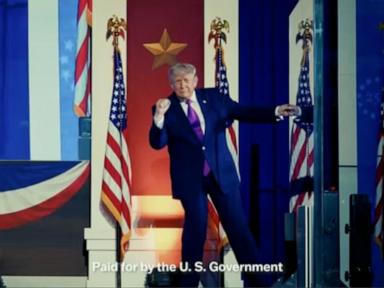
When the Department of Homeland Security quietly diverted twenty million dollars toward a national media campaign, few expected the money to fund television spots heavily featuring Donald Trump. Yet that is precisely what happened. Public disclosures and reporting revealed that federal resources—pulled through Customs and Border Protection accounts—were used to roll out campaign-style commercials right as early voting for the midterm elections kicked off.
The revelation sparked immediate backlash, legal challenges, and a fierce debate over the boundaries of government communication versus political self-promotion.
How the Funds Were Shifted
The mechanics behind the ad blitz rely on bureaucratic maneuvering that bypassed typical congressional oversight. Office of Management and Budget Director Russ Vought shifted the twenty million dollars into the Department of Homeland Security specifically for the media campaign. Contracts were swiftly awarded to private firms like the LMD Agency to produce and air the spots across major national broadcast and cable networks.
Federal agencies run public awareness campaigns all the time. Think recruitment drives for the military or safety warnings regarding public health. But these spots looked and felt entirely different. They featured striking visual branding, direct political messaging, and praise from prominent public figures closely tied to the administration.
Critics from both sides of the aisle pointed out an uncomfortable truth. Using money meant for national security and border operations to broadcast promotional material featuring a sitting president walking the halls of the White House looks a lot like campaigning on the taxpayer dime.
The Legal and Political Fallout
Unsurprisingly, the rollout triggered a flurry of lawsuits. Advocacy groups, democratic lawmakers, and the DNC argued that federal laws strictly prohibit using public funds for partisan propaganda or election interference. Federal judges stepped in quickly, ordering halts to the broadcasts while courts reviewed whether the administration overstepped its statutory authority.
The administration defended the spots as educational and patriotic, arguing that similar promotional efforts have been utilized by past commanders-in-chief. As public pressure mounted and legal threats piled up, the tune shifted. Trump suggested that his aligned super PAC would step in to cover the costs instead, attempting to distance the official government apparatus from the ongoing controversy.
Yet, shifting the bill to a political action committee doesn't erase the core issue. The episode exposed deep vulnerabilities in how federal budgets can be reallocated under tight deadlines. When millions can be redirected from security operations into media buys without explicit legislative blessing, oversight systems clearly need a major overhaul.
Watch how federal agencies handle discretionary funds moving forward. Transparency rules exist for a reason, and ignoring them carries steep political and legal costs.
Pro-Trump ad campaign was financed by DHS sources
This video report from the news coverage breaks down the initial details of how the Department of Homeland Security funded the controversial advertisements.