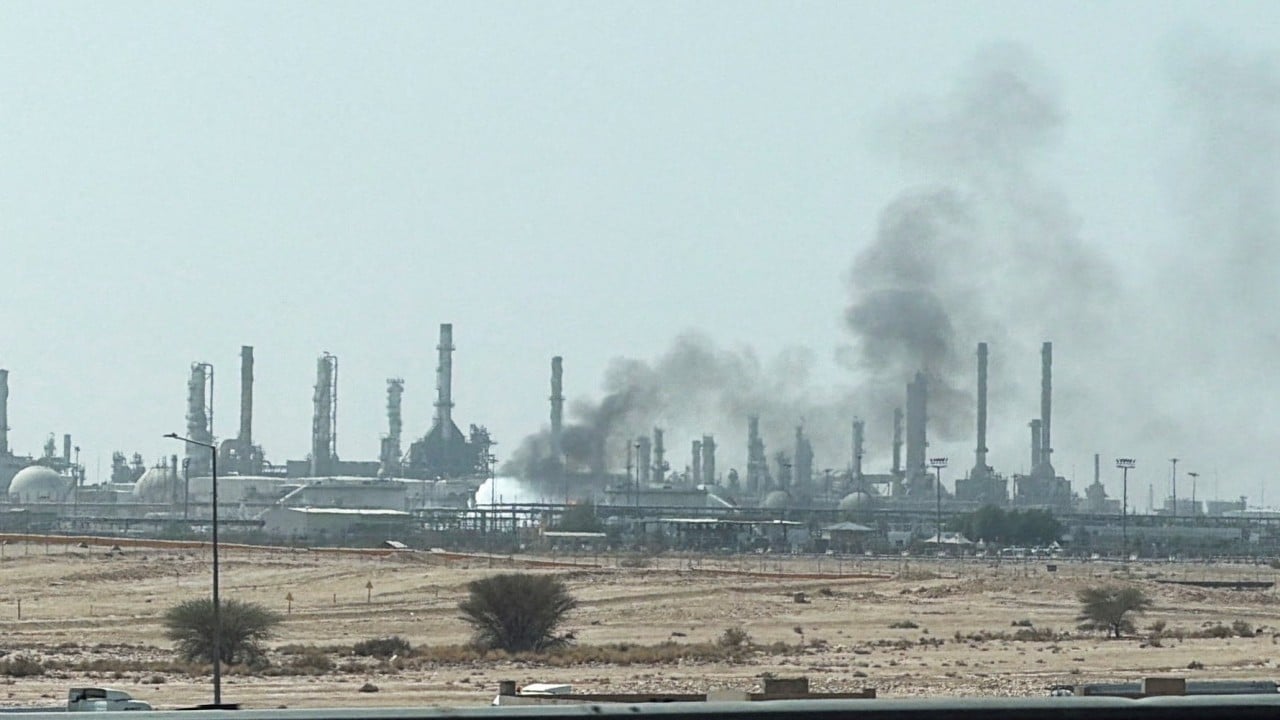
Geopolitical volatility directly impacts critical infrastructure valuations through asymmetric disruption vectors. When plumes of smoke rise from an energy installation near a major capital, the immediate market reaction focuses on loss of output, yet the structural mechanics run far deeper. Energy assets like those operated by Saudi Aramco are not merely industrial plants; they represent complex nodes in global price stability, requiring an evaluation of risk that traditional corporate metrics frequently fail to capture.
The core vulnerability stems from the cost asymmetry between offensive ordnance and defensive architectures. Interception economics dictate that defending a sprawling industrial footprint requires continuous, high-expenditure resource allocation across multiple layers of radar, surface-to-air missiles, and electronic countermeasures. Conversely, the aggressor relies on low-cost, expendable aerial systems that force asymmetric defense spending. This structural imbalance shifts the financial burden permanently onto the asset owner, irrespective of whether an individual strike breaches primary containment structures.
Evaluating the true impact of such an incident requires separating physical damage from systemic friction costs. Operational resilience depends on three critical variables: redundancy of processing trains, repair lead times for specialized components, and insurance risk premiums. When primary facilities experience disruptions, downstream supply chains do not simply halt; they absorb shock through inventory drawdowns and rerouting protocols. However, repeated incidents compress the structural buffer between supply and demand, raising the baseline cost of capital for state-backed energy giants.
Strategic risk management in this environment demands a shift from perimeter defense to continuous business continuity engineering. Because total immunity against low-signature projectiles is mathematically improbable given the geographic scale of energy grids, resilience must be built into supply chain modularity. Assets must be decentralized, critical spares duplicated locally rather than globally, and financial models updated to price persistent regional friction as a permanent operational expenditure rather than an anomalous tail risk.