The coffee in Nuuk is always hot, but the houses are cold if the wind shifts from the east.
Up here, winter is not a season. It is a roommate. It sits in the corners of the kitchen, rattling the triple-pane glass, reminding everyone who pays rent that humanity is merely a tenant on a very old, very indifferent rock. For generations, the rhythm of life in Greenland and across the sea in Denmark has been dictated by things older than parliaments: the calving of glaciers, the migration of cod, the long, ink-black nights where the stars look like broken glass scattered across velvet.
Then came the ink on the paper.
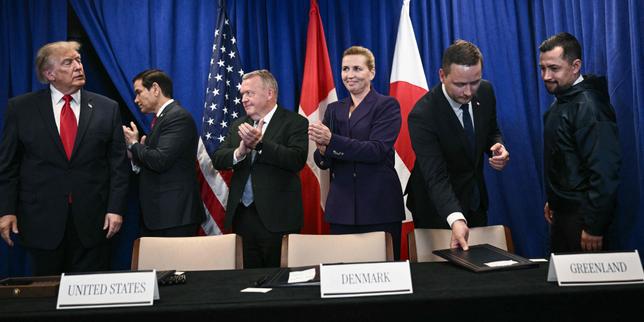
When the news of the security agreement signed with Washington drifted across the North Atlantic, the reaction in the cafés of Nuuk and the cobbled squares of Copenhagen was not one of jubilation. It was the quiet, profound exhalation of people who had been holding their breath for a very long time. Relief.
Breathe.
To understand that relief, you have to look past the dry diplomatic cables. You have to look at the map.
If you flatten a globe on a table, the Arctic is not the top of the world. It is the middle. It is the corridor between superpowers, the shortest distance for a missile, the vault where the future of global shipping routes and rare earth minerals is locked away in ice. For small nations like Greenland—self-governing within the Danish realm, home to fewer than sixty thousand souls—living beneath that geopolitical magnifying glass is exhausting.
Imagine standing on a narrow cliff path while two heavy trucks pass each other in the dark. That is what it feels like to manage sovereignty in the modern Arctic.
The agreement signed with Washington changes the temperature in the room. It formalizes a dance that has been awkward for decades. It provides a framework of security that acknowledges a simple, unvarnished truth: Greenland cannot defend its vast coasts alone, and Denmark, for all its historic ties and deep affection, cannot shoulder the entire burden of northern defense in an era where the neighborhood is getting louder and more crowded.
Critics will call it a compromise. Analysts will parse every clause for signs of overreach. But down on the ground, where the salt spray hits the hull of the fishing boats, the calculation is simpler.
Protection without subjugation. Partnership without erasure.
History is heavy here. Every Greenlander knows the stories of the Thule Air Base, established during the Cold War—a massive American footprint stamped onto ancestral hunting grounds. That history left scars, a lingering unease about being treated as a strategic asset rather than a society of living, breathing human beings with traditions, languages, and a future of their own choosing.
This new pact tries to thread a needle through that complicated past. It recognizes that in a fracturing world, isolation is not independence. True independence requires partners you can trust, even when those partners are giants and you are small.
Consider the fisherman heading out into the Disko Bay before dawn. His boat creaks against the ice-chilled swell. He has a GPS, a satellite phone, and generations of ancestral knowledge wired into his bones. He knows how to read the ice. But he cannot read the boardroom battles in Washington, Beijing, or Moscow. He relies on the diplomats to keep the skies clear so he can bring home the halibut.
When the agreement was inked, that fisherman didn't pop champagne. He just felt the ice beneath his boots feel a fraction of an inch thicker.
That is what security means when you live on the edge of the inhabitable world. It is not about dominance or projection. It is about sleeping through the night without wondering if tomorrow will bring a crisis you are too small to survive.
The North is waking up. The ice is retreating, exposing resources and sea lanes that have been locked away since the dawn of the Holocene. With that thaw comes ambition, competition, and risk.
Denmark and Greenland have chosen to face that thaw together, hand in hand with an ally across the ocean. The ink is dry. The coffee is gone. The wind outside still rattles the glass.
But the door is bolted. And for tonight, that is enough.