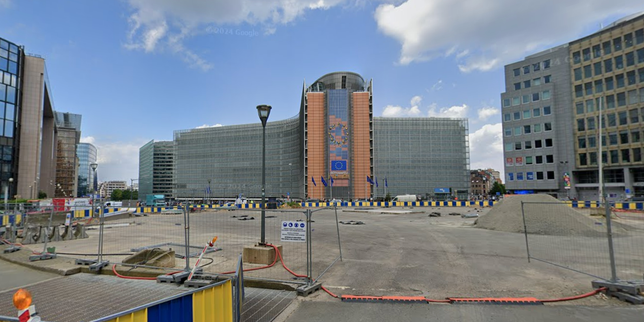
Step out of the Schuman metro station in Brussels on a raw Tuesday morning, and the air hits you first. It smells of damp concrete, stale diesel fumes, and the sharp, metallic tang of perpetual construction. You are standing in the administrative heartbeat of the European Union. Glass monoliths rise around you like giant vertical filing cabinets, reflecting a washed-out Belgian sky that rarely decides whether to rain or threaten it.
Yet, look down.
Between the towering fortresses of the European Commission and the Council, where decisions shaping the lives of four hundred and fifty million citizens are forged daily, lies an open scar of gray intent. They called it a greening project. They promised a public square that would breathe, a sanctuary of living green nestled among the steel and tinted windows, a place where bureaucrats and citizens could cross paths under the gentle rustle of leaves.
Instead, what materialized is a monument to bureaucratic irony. A sterile expanse of pale stone slabs punctuated by a few tragic, wire-caged saplings shivering in the wind, surrounded by awkward concrete planters that look less like a garden and more like outdoor barricades. It is asphalt masquerading as ecology.
To understand why this happened is to understand the invisible disconnect between the grand architectural visions drafted in climate-controlled boardrooms and the messy, stubborn reality of how cities actually live.
Consider a hypothetical commuter named Elena. She works on the sixth floor of the Berlaymont building, reviewing environmental directives that urge member states to restore biodiversity, combat urban heat islands, and reconnect citizens with nature. Every morning, Elena walks across the newly revamped European crossroads. She wears sensible shoes to navigate the awkward micro-paving. She feels the glare bouncing off the blindingly pale stone, which absorbs the summer heat and turns the plaza into a baking oven. When it rains, the water pools awkwardly instead of sinking into the earth.
Elena is not angry. She is simply exhausted by the quiet absurdity of it all. Here sits the capital of a continent pledging to lead the green transition, yet its own front lawn is a monument to ecological failure.
How did we get here?
Urban greening is not a cosmetic luxury. It is not a matter of dropping potted boxwood trees onto a concrete deck and calling it a sustainable urban landscape. Real soil breathes. Real root systems interconnect beneath the surface, whispering chemical signals back and forth, filtering rainwater, cooling the air through evapotranspiration, and providing a physical sanctuary for urban pollinators. When you pour concrete boxes over underground parking garages, seal the earth with impermeable membranes, and starve roots of oxygen and moisture, you do not build a park. You build a greenhouse without the glass.
The Brussels project at the crossroads of European power suffered from a fatal flaw that plagues modern civic planning. It was designed from the top down, on a computer screen, optimized for aerial renderings rather than human footsteps. The priorities were structural load limits, security perimeters, underground metro line clearances, and sleek, minimalist aesthetics that look breathtaking in a PDF presentation but feel hostile in the rain.
The local residents watched the multi-million-euro renovation unfold with a mixture of cynicism and sorrow. They knew the soil beneath was too shallow to support mature canopy trees. They knew the relentless summer sun would bake the stone slabs into radiating heaters. Yet their voices, muffled by layers of public consultations that felt more like bureaucratic theater than genuine dialogue, were brushed aside.
The cost of this failure goes deeper than wasted taxpayer money, though the bills were steep. It damages trust. When people see their institutions failing at the most basic, tangible task of cultivating a patch of living earth right outside their front door, it becomes infinitely harder to believe those same institutions can successfully manage complex, continent-wide ecological transitions. If you cannot green a single plaza correctly, how can you convince citizens you understand the planetary crisis?
Yet, there is a fierce resilience in nature, and an equally stubborn hope in the people who inhabit these concrete canyons.
Walk a few blocks away from the official EU bubble, down toward the quieter residential edges of Ixelles or the shaded alleys near Parc du Cinquantenaire, and you see what is possible when urban spaces are treated as living ecosystems rather than geometric canvases. There, ivy climbs old brick walls. Neighbors rip up paving stones in front of their townhouses to plant pocket gardens, turning tiny strips of dirt into riots of wildflowers and climbing roses. Bees find sanctuary. The air softens.
These grassroots micro-interventions prove that the hunger for genuine living space is real. People do not want sterile monuments. They want dirt under their fingernails, shade in July, and the sound of wind in actual branches.
The failed greening of the European quarter is a warning carved in pale stone. It reminds us that sustainability cannot be outsourced to a corporate landscaping brochure or checked off a compliance checklist. It requires humility, a willingness to listen to the soil, and an understanding that cities are living organisms, not diagrams.
The concrete at the crossroads is still there, cold under the autumn drizzle. But beneath the cracks in the ambitious rhetoric, the demand for something real continues to grow.
The next time the blueprints are drawn, the architects will have to choose between rendering another illusion and letting the earth back in.
Until then, the saplings wait in their cages, and the rain falls on the stone.