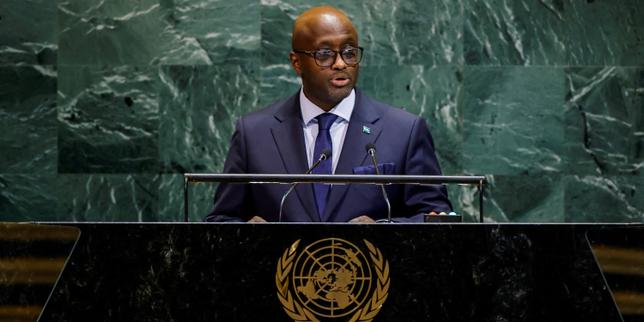
Diplomatic isolation operates as a high-cost, low-yield instrument of statecraft when applied to asymmetric regional conflicts. The formal restoration of bilateral relations between Rwanda and Belgium, finalized at the United Nations General Assembly after an eighteen-month rupture, marks a calculated return to structured channels of state communication. In March 2025, Kigali severed diplomatic ties, citing Brussels' institutional alignment with Kinshasa amid escalating hostilities in the eastern Democratic Republic of Congo. The subsequent diplomatic freeze severed ambassadorial lines, expelled accredited personnel, and suspended bilateral cooperation frameworks. The September 2026 reconciliation mediated through Qatari diplomatic architecture demonstrates that bilateral estrangement failed to alter core security calculations on either side. Instead, the freeze imposed operational friction on consular services, intelligence exchanges, and multilateral coordination without shifting the underlying military balance in the Kivu provinces.
The Structural Anatomy of the March 2025 Rupture
Diplomatic ruptures between European capitals and African states rarely stem from isolated incidents. They represent the culmination of diverging threat assessments and incompatible legal interpretations of sovereignty. The March 2025 breakdown occurred at the intersection of three distinct systemic pressures that had been accumulating for years.
First, the military escalation in the North Kivu and South Kivu provinces involving the M23 insurgency and allied armed groups created acute pressure on the central government in Kinshasa. As Kinshasa mobilized diplomatic channels within the European Union, Belgian foreign policy increasingly reflected a posture defending Congolese territorial integrity. This European alignment generated deep resentment in Kigali, where policymakers viewed Belgian diplomatic interventions as partisan interference that ignored the historical and security dimensions of cross-border militia threats.
Second, divergent definitions of regional security created an irreconcilable diplomatic deadlock. Kigali maintained that the persistent presence of the Democratic Forces for the Liberation of Rwanda in eastern Congo posed an existential threat, arguing that international actors failed to address the root causes of cross-border militia activity. Brussels, operating under European foreign policy norms, insisted on adherence to regional peace frameworks that required halting external military support to non-state actors. When these two security imperatives collided in bilateral diplomatic exchanges, the dialogue collapsed into mutual accusations.
Third, domestic political considerations in both capitals amplified the friction. Diplomatic signaling served as a domestic signaling mechanism for political leadership facing internal scrutiny over foreign policy coherence. When mutual expulsions of diplomats occurred, each government prioritized short-term domestic signaling over long-term strategic stability, trading institutional communication channels for symbolic posturing. The cost of this rupture was immediate: intelligence sharing ceased, consular processing for thousands of citizens halted, and bilateral development projects were frozen.
The Economics of Third-Party Mediation
The pathway from rupture to reconciliation required an external structural intermediary capable of absorbing transaction costs and providing a neutral bargaining space. Direct bilateral talks between Kigali and Brussels remained politically unviable during the height of the crisis due to the rigidities of public ultimatums. Qatar filled this structural void by hosting confidential ministerial engagements in Doha starting in June 2025.
Mediation by a third party alters the game-theoretic incentives of state actors. Qatar provided an asymmetric incentive structure: a low-visibility venue where technical delegations could negotiate the technicalities of embassy reopening without losing domestic political face. Statecraft of this nature relies on separating public rhetoric from private bureaucratic negotiation. By lowering the domestic political cost of re-engagement, the Doha meetings transformed an intractable bilateral stalemate into a manageable diplomatic process.
The operational architecture agreed upon by Belgian Foreign Minister Maxime Prévot and Rwandan Foreign Minister Olivier Nduhungirehe centers on procedural pragmatism. Restoring ties does not signal convergence on the root causes of the Kivu conflict. Rather, it establishes a dedicated mechanism for crisis management. Diplomatic recognition functions as an operational pipeline rather than an endorsement of foreign policy alignment. Both governments recognized that maintaining a total diplomatic freeze penalized their respective economic, consular, and security apparatuses while offering zero strategic influence over the conflict dynamics on the ground in Central Africa.
Operational Objectives and Diplomatic Mechanics
The resumption of ambassadorial postings introduces specific operational capabilities that were absent during the eighteen-month freeze. Without formal representation, intelligence collection, consular protection, and real-time diplomatic signalling degraded significantly, forcing both nations to rely on third-party intermediaries and fragmented intelligence channels.
The re-establishment of embassies restores three critical state functions.
Consular services resume immediate processing for citizens, business entities, and institutional partners who faced administrative bottlenecks throughout the freeze. Visa issuance, legalizations, and citizen protection protocols transition from ad-hoc embassy operations in neighboring states back to their proper bilateral channels.
Bilateral trade and institutional cooperation, suspended during the peak of the dispute, regain a legal and administrative framework for negotiation. While major development aid packages remain subject to ongoing political review, technical cooperation agreements can now be evaluated through structured ministerial committees rather than public press releases.
Crisis communication channels are re-opened at the ambassadorial level, allowing for immediate de-escalation when military incidents occur along the Kivu frontier. Without direct channels, minor tactical miscalculations risk escalating into broader diplomatic crises. Direct communication protocols reduce the latency of state responses during security incidents.
Yet, structural friction points remain entirely intact. Belgium continues to articulate its position on the protection of Congolese sovereignty and adherence to international law, while Rwanda maintains its security calculus regarding insurgent threats emanating from Congolese territory. The resumption of diplomatic ties creates the institutional machinery to manage these contradictions without descending into institutionalized hostility.
Regional Spillover and Multilateral Implications
Bilateral relations between European donor states and Central African nations do not exist in a vacuum. They intersect directly with regional integration frameworks, including the East African Community and the International Conference on the Great Lakes Region. The Belgian-Rwandan reconciliation reverberates across these multilateral architectures by altering the diplomatic positioning available to Kinshasa.
When European capitals adopt hardline stances toward Kigali, regional mediation efforts led by the African Union or regional facilitators experience polarization. The return of Belgian diplomats to Kigali signals to regional actors that European foreign ministries prefer active engagement over punitive isolation. This shift aligns with broader African diplomatic consensus, which consistently emphasizes that regional conflicts require negotiated settlements facilitated through continuous dialogue rather than diplomatic excommunication.
The mineral-rich geography of the Kivu provinces underpins the entire geopolitical matrix. Control over critical mineral supply chains, including coltan, cassiterite, and cobalt, drives the economic incentives of local militias, state actors, and international corporations. Diplomatic normalization between secondary actors like Belgium and regional powers like Rwanda does not directly resolve resource competition, but it clears away secondary diplomatic noise that previously obstructed unified multilateral pressure on illegal exploitation networks. Furthermore, international mining conglomerates and financial institutions operating in the region require stable diplomatic channels to manage compliance, regulatory filings, and supply chain tracing standards. The restoration of embassies provides a predictable baseline for corporate risk assessment in an otherwise volatile operating environment.
Strategic Forecast and Implementation Metrics
Diplomatic normalization is an administrative milestone, not a permanent structural guarantee. The durability of the restored relations between Brussels and Kigali over the next twelve months depends on specific operational metrics rather than rhetoric.
First, the speed at which both governments accredit new heads of mission and restore physical embassy operations will serve as an immediate indicator of political will. Delays in bureaucratic appointments signal lingering institutional reluctance.
Second, the management of upcoming security incidents in eastern Congo will test the efficacy of the newly restored crisis communication channels. If border skirmishes or insurgent movements trigger immediate public expulsions, the eighteen-month freeze will be proven to have taught neither side adaptive conflict management. Conversely, if security friction is absorbed through private diplomatic channels without public rupture, the Doha framework will have successfully institutionalized bilateral resilience.
The strategic trajectory points toward a managed coexistence where deep geopolitical disagreements are cordoned off within specialized diplomatic forums, preserving low-level functional cooperation while the underlying structural conflicts in the Great Lakes region grind toward an uncertain regional equilibrium.