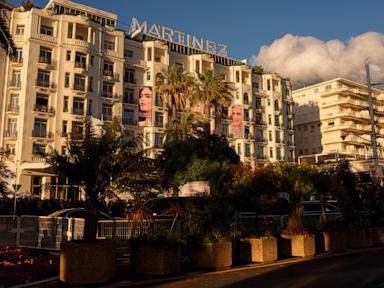
The travel industry is currently salivating over the prospect of Mike White taking his HBO juggernaut to the South of France. They see the Hôtel Martinez in Cannes and imagine a gold rush of "set-jetting" tourists ready to drop five figures on a suite because they saw a fictional character have a breakdown in the lobby.
They are wrong.
The industry consensus is that The White Lotus serves as a high-end commercial for its filming locations. They point to the "Taormina Effect," where searches for Sicily spiked after Season 2. They look at the Four Seasons Maui and see a blueprint for success. But applying this logic to Cannes and the Martinez isn't just lazy; it’s a fundamental misunderstanding of what makes the French Riviera—and the show itself—actually function.
The Death of Exclusivity by Exposure
Exclusivity is a fragile ecosystem. In the luxury hospitality world, the moment a location becomes a "must-see" for the masses, it loses the very essence that attracted the elite in the first place. I have watched historic properties spend decades cultivating a specific, quiet prestige, only to have it wiped out in a single summer by a swarm of influencers hunting for the exact angle they saw on a streaming service.
The Hôtel Martinez doesn't need a "close-up." It has been the center of the cinematic universe every May for nearly a century. By inviting the White Lotus circus in, the Riviera risks trading its permanent status as the peak of global sophistication for a three-year stint as a trendy backdrop.
When a hotel becomes a set, it stops being a sanctuary. It becomes a theme park.
The Sicily Fallacy
The "lazy consensus" screams that Sicily benefited from the show. Statistically, yes, foot traffic increased. But look closer at the quality of that traffic.
Local business owners in Taormina will tell you—off the record, away from the tourism board microphones—that the influx of "set-jetters" often displaces the loyal, high-net-worth guests who return every year. These loyalists don't want to navigate a lobby filled with people taking selfies at the concierge desk. They want discretion. They want the "old world" that the show ironically mocks.
Cannes is already struggling with its identity. It’s caught between being a serious hub for the global film industry and a playground for the nouveau riche. Doubling down on a television-induced tourism spike isn't a growth strategy; it’s a dilution of the brand.
Why the French Riviera is the Wrong Stage for Mike White
The genius of The White Lotus is its ability to satirize the ugly American abroad against a backdrop of exotic, somewhat "mystical" hospitality. Hawaii offered the colonial guilt of the Pacific. Sicily offered the operatic, tragic weight of the Mediterranean.
Cannes? Cannes is already a satire.
You cannot parody the French Riviera because it is already the most self-aware, performative place on earth. The "satire" will land flat because the reality of the Croisette during the Film Festival is far more absurd, cynical, and opulent than anything a writer's room can cook up. When you try to satirize a caricature, you just end up with a cartoon.
The Economic Mirage of Set-Jetting
Let’s talk about the math that the tourism boards ignore.
The cost of hosting a production of this scale is massive. It requires shutting down wings, displacing regular guests, and dealing with the logistical nightmare of a 200-person crew. The "marketing value" is often cited as being worth millions, but that’s "earned media" that doesn't always translate to the bottom line.
- Displacement Costs: You lose your most valuable asset—privacy—for your existing VIPs.
- Maintenance Spikes: The wear and tear of a production crew is significantly higher than that of a standard guest.
- Brand Fatigue: In two years, when the show moves to its next location (likely in Asia or the Swiss Alps), the "set-jetters" will vanish. They are not loyal to the Martinez; they are loyal to the IP.
I’ve seen hotels spend $500,000 on renovations specifically to match the "vibe" of a show, only to find that the trend has moved on by the time the paint is dry. It’s a race to the bottom disguised as a leap forward.
The Art of Being Unattainable
The Martinez should be leaning into its history as the place where the world’s most famous people go to not be seen. In an age of total transparency and digital oversharing, the ultimate luxury is being "un-searchable."
By tethering itself to a viral television moment, the hotel is signaling that it needs the help. It’s a "pick me" move from a property that should be saying "you’re not on the list."
True luxury doesn't need a close-up. It needs a closed door.
The Counter-Intuitive Play
If I were advising the heads of the Hyatt Unbound Collection, I would tell them to reject the gimmick. Instead of leaning into the White Lotus hype, they should be doubling down on the "Anti-Lotus" experience.
- Ban Professional Photography: Make the lobby a phone-free zone.
- Enforce Discretion: Market the fact that you won't find the characters' favorite cocktails on a special menu.
- Prioritize the Legacy: Focus on the 350 days of the year when the cameras aren't rolling.
The "White Lotus" effect is a sugar high. It’s a spike in engagement followed by a long, painful crash of brand equity. The French Riviera doesn't need a close-up; it needs to remember why people looked at it in the first place, long before HBO existed.
Stop trying to turn heritage into content. You’re burning the furniture to keep the house warm.