The neon sign in the window of Samir’s bodega has a faint, rhythmic buzz. For eighteen months, that hum was the only consistent thing in his shop.
Every Wednesday morning, Samir used to stand by the metal shelves with a plastic price-gun in hand, clicking away like a soldier reloading. A gallon of milk went from four dollars to five, then to nearly six. Loaves of bread climbed by quarters and dimes. Each click of the labeler felt like a tiny betrayal of the neighbors he had known for a decade. He watched his customers—people who used to grab a three-pack of pastries without looking—start flipping over cartons, calculating taxes in their heads, and quietly putting items back.
Then, last week, the clicking stopped.
For the first time in what felt like an eternity, Samir didn't change a single price tag. The milk stayed put. The bread held its ground.
This is what a statistical pause looks like on the ground. When the evening news broadcasts that inflation has finally slowed, they show charts with downward-sloping lines and talk about basis points. But out in the neighborhoods where people actually live, inflation is not a line on a graph. It is a suffocating weight. And its sudden, temporary easing is the first deep breath a gasping public has been allowed to take in months.
But to understand why Samir’s price-gun went quiet, we have to look thousands of miles away, to a strip of water we rarely think about until our gas tanks start pushing eighty dollars to fill.
The Shadow on the Horizon
Economics behaves a lot like weather. A storm brewing over the Persian Gulf doesn't stay there; it rains down on the cost of a cardboard box in Ohio.
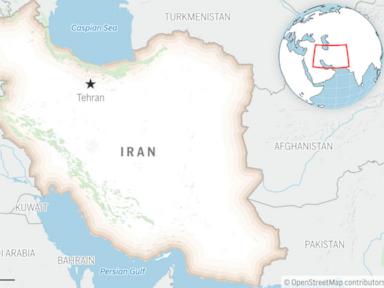
When geopolitical tensions escalated into a shooting war with Iran, the global supply chain didn't just bend. It fractured. The Strait of Hormuz, a narrow choke point through which a fifth of the world's petroleum flows, became a high-stakes hazard zone. Insurance rates for container ships skyrocketed overnight. Companies had to reroute vessels around the southern tip of Africa, adding weeks to journeys and millions to fuel bills.
Let's ground this abstract concept in a simple metaphor.
Think of global trade as a giant, interconnected conveyor belt. When someone throws sand into the gears at one end, the entire belt slows down, but the motor keeps humming, burning more energy and costing more money just to move the same distance. That extra energy cost is passed down the line. It accumulates. By the time the product reaches the end of the belt, every hand that touched it has had to pay more, and so must you.
When the war paused, the sand was temporarily swept out of the gears.
Shipping lanes reopened. Risk premiums dropped. The cost of a barrel of crude oil, which dictates the price of everything from the fertilizer used to grow wheat to the diesel in the trucks delivering toilet paper, dipped back into manageable territory.
The relief was instantaneous, but it was the relief of a fever breaking, not a cure.
The Illusion of the Downturn
There is a common misunderstanding about what "slowing inflation" actually means. It is a dangerous trap of language.
When we hear that inflation has slowed from eight percent to three percent, our brains naturally want to celebrate. We expect things to get cheaper. We look at the shelf expectantly, waiting for the four-dollar gallon of milk to return to its pre-crisis price of three dollars.
It won't.
Slowing inflation does not mean prices are going down. It simply means they are rising more slowly. The mountain is still getting taller; we are just climbing it at a less frantic pace. The ground we lost over the last two years is gone forever. The new, inflated prices are the new baseline.
Consider the reality of a family living on a fixed income.
Sarah is a retired teacher living three blocks from Samir's shop. Her pension does not adjust for inflation in real-time. For her, the "pause" in price hikes is not a victory. It is merely a temporary truce. She still has to stretch her budget to cover the twenty percent cumulative increase that occurred while the conflict raged. She still buys the generic brand. She still keeps her thermostat two degrees colder than she would prefer.
The macroeconomists in Washington talk about a "soft landing" as if it is a smooth runway. To Sarah, it feels like landing on gravel with flat tires.
The High-Stakes Gamble of a Temporary Peace
Why are we living in this state of suspended animation?
The current economic stability is entirely leveraged against a fragile political ceasefire. It is an economy built on hope, standing on a foundation of dry tinder.
During the height of the conflict, energy markets were volatile because traders were pricing in the worst-case scenario: a total blockade of the Gulf, retaliatory strikes on refineries, and a prolonged global energy drought. The pause in hostilities removed that immediate dread.
But fear is a sticky substance. It doesn't wash off easily.
Wholesalers and distributors are still hesitant to lower their prices too quickly. They are hoarding their margins, keeping their prices artificially high because they know that if the war resumes tomorrow, their costs will spike instantly. They are building a financial buffer against the next storm.
This creates a lag. Even when the raw cost of oil drops, the price of a plastic container at a local market remains elevated for weeks, sometimes months. The executives at the top of the food chain protect themselves first. The consumer at the bottom is left to pay for their caution.
The Human Cost of Constant Alert
Living under the constant threat of economic whiplash does something to the human psyche. It changes how we plan for the future. Or rather, how we stop planning.
When you cannot predict what a bag of groceries will cost next month, you stop thinking about next year. You don't buy the new car. You postpone the dental work. You hold onto your cash because you feel, deep down, that a rainy day is no longer a possibility—it is an inevitability.
This collective hesitation is what actually slows the economy. It is a self-fulfilling prophecy of caution.
On a quiet Tuesday afternoon, Samir stood by his register, watching the rain beat against the window of his shop. The pause in the war had given him a reprieve, a moment to breathe, to talk to his customers without the tension of a looming price hike hanging in the air.
He knew, as everyone did, that the truce was fragile. Diplomatic talks were stalling. The ships in the Gulf were still sailing with their lights out, watching the horizon for threats.
But for today, the prices remained unchanged.
Samir picked up the price-gun, set it down on a shelf behind the counter, and decided to leave it there. He walked over to the front door, flipped the sign to "Open," and waited for the neighborhood to walk in.