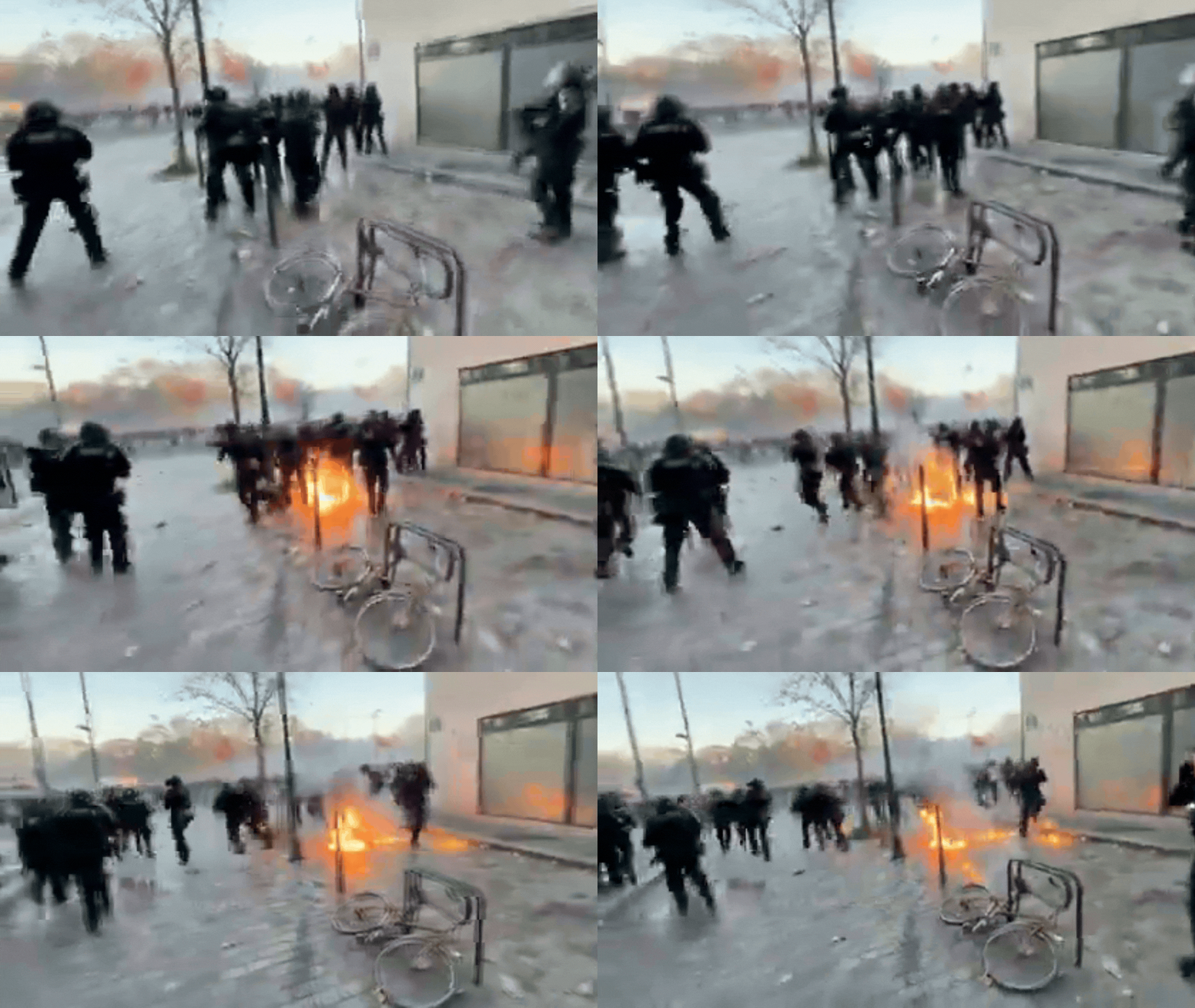
Thousands of demonstrators filling the streets of Tel Aviv and Haifa to demand a Jewish-Arab coalition to oust Prime Minister Benjamin Netanyahu represent more than a fleeting weekend protest. They are trying to solve a brutal arithmetic problem that has paralyzed Israeli parliamentary politics for nearly a decade. Without the active participation of Arab citizens—who make up roughly twenty percent of Israel's population—the center-left opposition simply lacks the seats required to form a stable governing majority in the 120-member Knesset. Yet, turning street-level solidarity into a functioning, durable government requires overcoming decades of institutional distrust, deep ideological fractures over the Palestinian conflict, and a political taboo that has long treated Arab parties as illegitimate partners in statecraft.
Street protests in Israel follow a familiar rhythm. Banners go up, chants echo off concrete facades, and opposition figures take the microphone to promise a new era of shared society. Observers who have watched Israeli elections cycle through five campaigns between 2019 and 2022 know that crowd size rarely translates directly into Knesset mandates. The gap between a rallying cry in Habima Square and a signed coalition agreement in Jerusalem is measured in bitter ideological compromises.
To understand why protesters are pushing so hard for this specific alignment, one has to look at the structural deadlock of the Israeli parliament. Because Israel uses a pure proportional representation system with a 3.25 percent electoral threshold, no single party has ever won an outright majority. Every government in the country's history has been a coalition. For years, the right-wing bloc anchored by Netanyahu’s Likud party relied on a predictable alliance with ultra-Orthodox and religious nationalist factions. When that bloc fractured over personal loyalties and legal controversies, the opposition discovered it could not assemble 61 seats on its own without either courting right-wing defectors or bringing Arab parties into the fold.
The Arithmetic of the 61-Seat Threshold
In Israeli politics, 61 is the only number that matters. Everything else is noise.
When you strip away the rhetoric of national unity and shared destiny, the push for a Jewish-Arab coalition is an exercise in cold electoral survival. Historically, Zionist parties across the political spectrum—from Labor on the left to Likud on the right—operated under an unwritten rule that Arab-led parties could support a government from the outside in rare moments, as they did during Yitzhak Rabin’s administration in the early 1990s, but could never sit around the cabinet table. That exclusion effectively removed roughly 10 to 15 Knesset seats from the pool of viable coalition partners, handing a structural advantage to the political right.
The 2021 "change government" led by Naftali Bennett and Yair Lapid shattered that precedent when Mansour Abbas, leader of the Islamist Ra'am party (United Arab List), signed a coalition deal. It was a watershed moment, though a fragile one. Abbas did not demand sweeping diplomatic breakthroughs on the Palestinian front; instead, he focused on municipal budgets, crime-fighting initiatives in Arab towns, and infrastructure funding. Even that pragmatic arrangement lasted barely a year before collapsing under the weight of internal defections and relentless attacks from the opposition, which framed the government as dependent on "terror supporters."
Protesters marching today are attempting to revive and expand that model, arguing that marginalizing a fifth of the electorate is both antidemocratic and mathematically suicidal for anyone hoping to replace Netanyahu. Yet the arithmetic gets messy quickly. The Arab political landscape in Israel is not a monolith, and treating it as a single voting bloc is a classic analytical mistake.
Divergent Paths Inside Arab Politics
Voters in Arab cities like Nazareth, Umm al-Fahm, and Rahat face a stark strategic choice that mirrors the broader debate on the streets. On one side sits Mansour Abbas and Ra'am, advocating for integration and immediate material gains through participation in state power. On the other sits Hadash-Ta'al, led by Ayman Odeh and Ahmad Tibi, an alliance rooted in secular Arab nationalism and communist traditions that prioritizes ending the occupation and achieving full civil equality, often viewing participation in Zionist governments with deep skepticism. Then there is Balad, a nationalist party that rejects the definition of Israel as a Jewish state altogether and refuses to recommend any candidate for prime minister.
Asking these factions to march under a single banner is difficult enough. Asking them to sign a binding coalition agreement with Jewish center-right politicians who support military operations in Gaza or oppose the creation of a Palestinian state borders on the impossible.
Why Street Momentum Rarely Survives the Knesset Floor
Demonstrations thrive on moral clarity. Coalitions survive on ambiguity.
When thousands gather under banners calling for peace, democracy, and Jewish-Arab partnership, the shared enemy—Netanyahu and his right-wing coalition—provides the glue. Once an election is called, however, that glue dissolves under the heat of campaign trail reality. Jewish centrist leaders, acutely aware that swing voters decide Israeli elections, consistently hesitate to embrace Arab partners openly. They fear that any public commitment to forming a Jewish-Arab coalition will hand Netanyahu a devastating campaign weapon, allowing him to rally wavering right-wing voters with warnings that the nation's security is being outsourced to anti-Zionist lawmakers.
This dynamic creates a destructive feedback loop:
- Centrist hesitation leads Jewish opposition leaders to hedge their language, promising only to form a "broad Zionist government" while leaving the door quietly ajar for Arab support.
- Arab voter disillusionment spikes when their representatives are treated as second-class partners, driving down turnout in Arab municipalities—a metric that directly determines how many seats the opposition loses.
- Right-wing mobilization accelerates as Netanyahu’s campaign apparatus highlights every meeting or handshake between opposition figures and Arab lawmakers as proof of an existential threat.
Turnout in the Arab sector is the hidden variable in every Israeli election. In March 2020, when the four major Arab parties ran together as the Joint List and turnout surged to nearly 65 percent, they captured an unprecedented 15 seats. When the alliance fractured and disillusionment set in during subsequent votes, turnout dropped below 45 percent, gutting the opposition's path to 61 seats. Protesters understand that speeches in Tel Aviv mean nothing if voters in Sakhnin and Tayibe stay home on election day.
The Elephant in the Room Foreign Policy and National Security
Domestic budgets can be negotiated in backrooms. Wars cannot.
The biggest obstacle to a durable Jewish-Arab coalition is not tax policy, judicial reform, or municipal zoning. It is the unresolved Israeli-Palestinian conflict and the recurring cycles of military confrontation in Gaza, the West Bank, and along the northern border. Any governing coalition in Jerusalem must make life-and-death decisions regarding military deployments, hostage negotiations, and rules of engagement.
Consider a hypothetical scenario where a newly minted center-left and Arab coalition takes office. Within weeks, a major security escalation erupts on the border, requiring immediate cabinet authorization for an aerial and ground offensive. Jewish ministers, answerable to an electorate that demands overwhelming military deterrence, would vote in favor without hesitation. Arab coalition partners, whose constituents view Palestinians in Gaza and the West Bank as family and brethren, would face unbearable moral and political pressure to resign on the spot. A government built on domestic civil rights would shatter the moment the first artillery shells are fired.
Past attempts to bypass this contradiction have relied on awkward political gymnastics, such as Arab lawmakers abstaining on key security votes or operating outside the security cabinet. Those workarounds function only during periods of relative calm. In a region defined by sudden, violent shocks, building a government that requires permanent quiet to survive is a massive gamble.
The Battle Over Basic Laws and Identity
Beyond immediate security crises lies a deeper constitutional clash. In 2018, the Knesset passed the Nation-State Law, enshrining Israel as the nation-state of the Jewish people and downgrading Arabic from an official language to one with "special status." For Arab citizens, the law formalized their status as second-class residents. Repealing or amending it is a non-negotiable demand for many Arab politicians and grassroots activists marching in the streets.
Yet for many Jewish politicians in the anti-Netanyahu camp—particularly figures like Benny Gantz, Avigdor Lieberman, or Gideon Sa'ar—touching the Nation-State Law is political suicide. They view themselves as ideological heirs to traditional Zionism, opposed to Netanyahu's corruption and judicial overhaul, not to the core definition of the state. Bridging that gap requires more than good intentions; it demands a constitutional compromise that neither side's base is currently prepared to accept.
The Grassroots Shift Beneath the Political Surface
Despite the grim parliamentary math, dismissing the protests as naive misses a genuine, slow-moving transformation inside Israeli society. Beneath the polarized shouting matches on television panels, shared spaces have expanded dramatically over the past two decades.
Walk through any major Israeli hospital, pharmacy, or university campus, and the integration is undeniable. Arab citizens now account for a massive percentage of Israel's medical doctors, nurses, and pharmacists—a reality brought into sharp focus during national emergencies when Jewish and Arab medical teams work side by side under extreme pressure. High-tech initiatives, though still heavily skewed toward the Jewish center, have slowly begun recruiting Arab engineers, while joint civil society organizations have built networks of municipal leaders who cooperate daily on regional sanitation, transportation, and economic development.
| Dimension | Street Protest Reality | Knesset Coalition Reality |
|---|---|---|
| Core Driver | Shared opposition to Netanyahu and desire for civil equality | Cold arithmetic of reaching 61 seats to pass budgets and laws |
| Security Policy | Broad calls for diplomatic solutions and ending war | Immediate operational decisions on military force and deterrence |
| Constitutional Stance | Demands for full equality and repeal of the Nation-State Law | Fear among Jewish centrists of alienating right-wing swing voters |
| Durability | High energy during weekend rallies and crisis moments | Vulnerable to single-member defections over any security flare-up |
This grassroots reality explains why the demand for a Jewish-Arab coalition refuses to die, even after previous failures. A growing segment of the Israeli public recognizes that treating twenty percent of the population as permanent outsiders is unsustainable. You cannot rely on Arab doctors to save lives in emergency rooms in Haifa while telling those same citizens their votes do not count when forming a government in Jerusalem.
What Would Actually Make a Coalition Work
If a future Jewish-Arab coalition is going to last longer than twelve months, it cannot be assembled in a frantic post-election scramble. It requires structural groundwork long before ballots are cast.
First, opposition leaders would need to drop the culture of political embarrassment. In 2021, several Jewish ministers acted as though their partnership with Ra'am was a temporary, slightly distasteful necessity rather than a legitimate democratic alliance. That posture weakened Mansour Abbas among his own voters while failing to appease right-wing critics. Honest, upfront campaigning that defends the legitimacy of Arab political participation is the baseline requirement for building public trust.
Second, any coalition agreement must establish clear, institutionalized mechanisms for handling security crises. Rather than pretending ideological differences over the Palestinian conflict do not exist, negotiators would need explicit protocols defining how Arab ministers or supporting factions register dissent on military operations without triggering automatic no-confidence votes that collapse the entire government.
Third, the focus must remain anchored in tangible, measurable socio-economic benchmarks. Closing the massive gaps in municipal funding, tackling the epidemic of organized crime that has claimed hundreds of lives in Arab towns, and expanding housing permits in overcrowded Arab communities deliver immediate proof that political participation yields real results. When voters see paved roads, funded schools, and safer streets, ideological purism loses its grip.
None of these steps guarantees success. The forces pulling Israeli society apart—war, trauma, religious nationalism, and decades of mutual suspicion—are far stronger than any single protest movement. A Jewish-Arab coalition remains a high-wire act without a net, vulnerable to every rocket fired, every extremist provocation, and every opportunistic defection on the Knesset floor. Until the opposition proves it can turn street-level solidarity into disciplined parliamentary math, Netanyahu and his allies will continue to hold the ultimate trump card in Israeli politics.