The air in the concrete canyons of midtown always smells faintly of hot asphalt, toasted nuts from a corner cart, and the unmistakable metallic breath of the subway grates. It is a sensory signature born of twenty-four-hour ambition. Yet, on an ordinary Tuesday that carried the heavy weight of an extraordinary political moment, that familiar atmosphere felt tightened, drawn like a piano wire about to snap.
Sirens wailed in the distance, bouncing off the limestone facades of Manhattan. For anyone who has walked these blocks after dark—navigating the sudden shifts in mood from a quiet, leafy brownstone street to the chaotic neon rush of a major thoroughfare—safety is not an abstract policy debate. It is a physical sensation. It is the tightening of a fist around house keys tucked deep inside a coat pocket. It is the quick, sideways glance when a shadow detaches itself from a scaffolding frame.
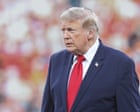
Donald Trump came back to the city that made him, bringing with him a speech centered squarely on crime, safety, and the fractured identity of urban America.
To understand why this matters, you have to look past the cable news chyrons and the partisan shouting matches that treat cities like football fields. You have to look at the people standing behind the police barricades.
Consider Marcus, a fictionalized yet painfully real composite of the bodega owners, transit workers, and night-shift nurses who keep New York breathing. Marcus runs a small corner store two blocks from where the former president took the podium. He has bulletproof glass shielding his register, a remnant of a robbery three winters ago that still makes him flinch whenever the front door bell rings too sharply. When politicians talk about crime rates dropping or rising in quarterly statistical reports, Marcus does not look at spreadsheets. He looks at the shattered glass he swept up off the sidewalk last Tuesday. He looks at the empty eyes of a teenager strung out on synthetic opioids leaning against his brick exterior.
Numbers lie. Or rather, numbers tell only half the story.
The political ritual of addressing urban crime has a long, predictable choreography. One side points to macro-level trends, insisting that violent crime remains below historic peaks of the 1990s. They show you bar charts and FBI data tables. They tell you that you are safer than you think you are. The other side—typified by Trump’s return to the New York stage—amplifies the localized rupture, the high-profile subway shove, the smash-and-grab robbery captured on a grainy smartphone video, the visceral feeling of a social contract fraying at the edges.
Both are telling pieces of a much larger, messier truth.
Walking through the city on the day of the speech, the tension was palpable. Tourists snapped photos of the barricades, treating the political circus like just another roadside attraction alongside the horse-drawn carriages in Central Park. But locals walked by with their heads down, navigating the labyrinth of police tape with the practiced annoyance of people who just want to get home to dinner.
This is the central paradox of urban safety. You cannot average out fear.
If overall crime drops by five percent across a city of eight million souls, but the specific route you take to the subway feels like a gauntlet of unpredictability, statistical comfort is cold relief. Conversely, if politicians paint a portrait of total lawlessness simply to score points on a nightly broadcast, they rob a vibrant community of its resilience, turning living neighborhoods into ghost towns fueled by paranoia.
Trump’s address leaned heavily into the latter narrative, casting the metropolis as a battleground of decline, a once-proud titan brought low by progressive prosecution policies, bail reform, and civil unrest. To his supporters packing the auditorium—many of them commuters from the surrounding suburbs or outer-borough traditionalists who feel forgotten by City Hall—the words resonated like a bell tolling for a lost era. They remember a cleaner city, a stricter city, a city where the rules felt unyielding.
Yet, listening to the speech from a crowded diner three avenues away, where waitresses rushed between tables balancing heavy trays and shouting orders over the clatter of silverware, a different reality whispered underneath.
Cities are not fragile ornaments. They are living, breathing organisms that constantly devour their own dead skin and regenerate. New York has survived cholera outbreaks, financial ruin, draft riots, white flight, the devastating grief of 2001, and a global pandemic. It is messy, loud, abrasive, and relentlessly resilient.
When a leader steps up to a microphone to declare that the city is dying, they ignore the millions of quiet, daily acts of defiance against chaos. The neighbor who walks an elderly resident home from the pharmacy. The transit cop who spends twenty minutes helping a lost tourist decipher a MetroCard machine. The countless thousands who wake up before dawn, sweep their stoops, unlock their storefronts, and refuse to cede their streets to despair.
Safety is not just a product of police presence, though that is part of the equation. It is a byproduct of social trust. It is the invisible webbing that connects strangers on a crowded platform, reminding them not to push, not to panic, to share the space.
When that trust erodes, no amount of rhetoric can rebuild it overnight. Speeches can diagnose a fever, but they cannot manufacture immunity.
As the sun dipped below the horizon, casting long, bruised shadows across the asphalt, the crowds began to disperse. The protesters packed up their signs. The press vans folded their satellite dishes. The barricades were dragged back onto municipal trucks, their metal teeth scraping against the pavement with a sharp, metallic screech.
Marcus flipped the sign on his bodega door to closed. He locked the deadbolt, checked the security cameras one last time, and stepped out into the cooling night air. He looked down the avenue, toward the distant glow of the Midtown skyline piercing the clouds. The city was still there. Bruised, complicated, imperfect, and entirely alive.
The speeches would be rebroadcast. The polls would shift by a fraction of a point. The pundits would dissect every adjective until the next news cycle swallowed this one whole. But tomorrow morning, Marcus would unlock his door again, sweep the sidewalk, and the city would wake up to write its next unscripted page.


