It took less than twenty-four hours for Donald Trump to realize he had walked into a geopolitical trap of his own making.
On Monday, the President declared the United States the official "Guardian of the Hormuz Strait" and announced a massive twenty percent transit fee on all cargo passing through the critical waterway. He argued it was a matter of basic fairness. If the U.S. military is risking lives to keep global shipping lanes open, other countries should pay for the privilege.
By Tuesday, the threat was gone.
In a sudden about-face on Truth Social, Trump announced he was replacing the proposed twenty percent fee with vague "Trade and Investment Deals" with various Gulf states. The threat of a multi-million-dollar toll on international shipping was dead on arrival.
But do not mistake this quick retreat for a de-escalation. While the widely panned shipping fee was scrapped, the U.S. military went ahead with reinstating its full naval blockade of Iranian ports. The temporary peace established by last month's memorandum of understanding is officially over. We are right back on the brink of a major shipping war, and the stakes have never been higher.
The Chaos Behind the Twenty Percent Shipping Toll
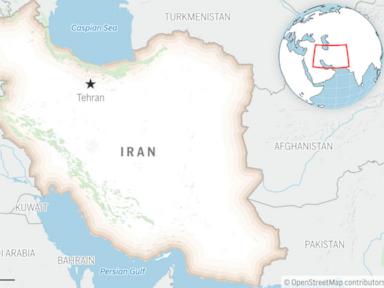
The proposed toll was a logistical nightmare. The Strait of Hormuz is the world's most vital choke point for energy. Roughly a fifth of the global oil and gas supply flows through this narrow strip of water daily, delivering over fifteen million barrels of fuel.
Had Trump followed through on the twenty percent levy, the economic shockwaves would have been felt at every gas pump on Earth.
How Much the Toll Would Have Cost
Shipping analysts and logistics firms spent Tuesday morning calculating the sheer scale of what Trump was suggesting. The numbers were staggering.
- Super-tankers: A fully laden Very Large Crude Carrier (VLCC) carrying two million barrels of oil would face a transit fee of $24 million per shipment, even if Brent crude dropped to $60 a barrel. At current prices, that fee spiked closer to $32 million.
- Liquefied Natural Gas (LNG): A large LNG carrier would see an added cost of roughly $17 million for a single transit.
- Per-Barrel Tax: The toll translated to an immediate $16 surcharge on every single barrel of crude oil passing through the strait.
It was a recipe for global stagflation. Shipping companies, already battered by months of regional conflict, warned that these costs would simply be passed down to consumers.
The Legal and Diplomatic Backlash
The international community reacted with immediate fury. Critics in the United Kingdom branded the proposal "state-backed highway robbery" and "economic extortion." The Liberal Democrats declared it a flagrant violation of international law.
They had a point. Under the United Nations Convention on the Law of the Sea, international straits are governed by the right of transit passage. No nation has the legal authority to charge commercial ships just for passing through.
Even Trump’s own allies were left scrambling. Only last month, Secretary of State Marco Rubio publicly condemned Iran for attempting to levy its own transit fees, stating flatly that no country is allowed to charge tolls on an international waterway. Trump’s proposal made the U.S. look hypocritical, effectively mimicking the very extortion tactics Washington has spent decades fighting.
Perhaps the most embarrassing response came from Tehran. Iranian Foreign Minister Abbas Araghchi took to social media to mock the U.S. President. In a tongue-in-cheek post, Araghchi agreed that whoever secures the strait deserves payment, declaring that Iran was the true, permanent guardian of the waterway. He added with a smirk: "20% is of course too much. We will be fair."
To avoid looking like he was backpedaling under Iranian pressure, Trump pivoted. He claimed his conversations with Middle Eastern leaders yielded highly productive trade commitments that made the toll unnecessary. It was a classic face-saving maneuver.
The Blockade is Back and It is Live
While the shipping fee was a distraction, the real story is what happened at 4:00 p.m. Eastern time on Tuesday.
The U.S. military officially resumed its naval blockade of Iranian ports.
U.S. Central Command (CENTCOM) confirmed that its forces are now actively blocking all maritime traffic entering or exiting Iranian coastal areas. This decision effectively tears up the fragile interim deal struck last month between Trump and Iranian President Masoud Pezeshkian.
That short-lived agreement had lifted the U.S. blockade in exchange for a sixty-day pause on Iranian interference with commercial ships. Trump now says that deal was merely a "test." In a radio interview, he dismissed the memorandum of understanding as meaningless, calling the Iranian leadership "sleazebags" who failed to honor their word.
What Triggered the Sudden Escalation?
The collapse of the ceasefire did not happen in a vacuum. It was driven by a week of intensifying military clashes and escalating provocations.
- Sunday's Tanker Attacks: Iran’s Islamic Revolutionary Guard Corps (IRGC) seized two commercial vessels in the strait, claiming the ships had switched off their tracking systems and taken unauthorized routes.
- Lethal Missile Strikes: The United Arab Emirates reported that Iranian missiles struck two oil tankers, killing one crew member and injuring eight others.
- U.S. Retaliation: The U.S. military launched three consecutive nights of heavy airstrikes on Iranian bases, including the first combat deployment of sea drones to target an IRGC naval facility.
Iran insists it has sole sovereign control over the Strait of Hormuz and declared the channel closed over the weekend. The U.S. and its allies maintain that the strait is an international waterway where freedom of navigation must be protected by force if necessary.
With the blockade reinstated, CENTCOM is drawing a hard line. Any ship carrying goods to or from Iran is now a target for interception.
How This Standoff Hits Your Wallet
If you think a naval battle in the Middle East does not affect you, look at the energy markets.
Oil prices are highly sensitive to geopolitical instability, and the return of the blockade immediately sent shockwaves through Wall Street. Benchmark Brent crude surged past $86 a barrel early Tuesday, hitting a one-month high.
Higher energy prices are a massive political liability. With crucial congressional elections looming in November, rising gasoline prices are the last thing the White House wants. This explains why Trump was so eager to drop the twenty percent cargo fee. He could not afford to be blamed for a self-inflicted spike in global fuel costs.
Yet, even without the U.S. toll, shipping through the region is becoming prohibitively expensive. Insurance premiums for vessels transiting the Gulf have skyrocketed. Some shipping lines are choosing to bypass the Middle East entirely, opting for the much longer and costlier route around the southern tip of Africa. This adds weeks to delivery times and drives up the cost of everything from electronics to grain.
Surviving the Global Supply Chain Shock
We are entering a prolonged period of maritime volatility. If you run a business that relies on international shipping, or if you are trying to protect your investment portfolio from energy shocks, you cannot afford to sit on your hands.
Diversify Your Logistics Immediately
If your supply chain relies heavily on routes transiting the Suez Canal or the Persian Gulf, you need alternatives. Look into air freight for high-value, time-sensitive components, or explore overland rail networks through Central Asia if you are moving goods between Asia and Europe. The transit times might be longer, but they are predictable.
Hedge Against Rising Energy Costs
With Brent crude flirting with $90 a barrel, businesses must brace for higher transport surcharges. If you operate a fleet or manage heavy logistics, consider locking in fuel prices now through futures contracts. Investors should look at increasing exposure to domestic energy producers and defense equities, which traditionally perform well during periods of Middle Eastern instability.
Prepare for Ongoing Regulatory Volatility
The swift rise and fall of Trump's shipping toll proves that policy can change on a whim. Keep a close eye on maritime advisories from organizations like the International Maritime Organization and Lloyd's List. Ensure your shipping contracts include robust force majeure clauses that protect you from sudden port blockades or arbitrary government levies.
The U.S. military may have backed off the idea of tax-collector-in-chief, but the blockade of Iran means the guns in the strait are far from silent.