The air at 8,000 meters doesn’t just feel thin. It feels sharp. Every breath is a calculated negotiation with a body that is screaming for oxygen it will never receive. On the jagged slopes of Mount Makalu, the world’s fifth-highest peak, the sky is a shade of indigo so deep it looks like the edge of space. It is beautiful. It is also a graveyard.
Earlier this week, that indigo sky witnessed the final moments of a seasoned American climber. He wasn't a novice looking for a selfie. He was a man who understood the gravity of the Himalaya, yet even for the elite, the mountain reserves the right to change the rules without warning. For another perspective, see: this related article.
A sudden fracture in the snow. A muffled roar. Then, the slide.
The Geography of Risk
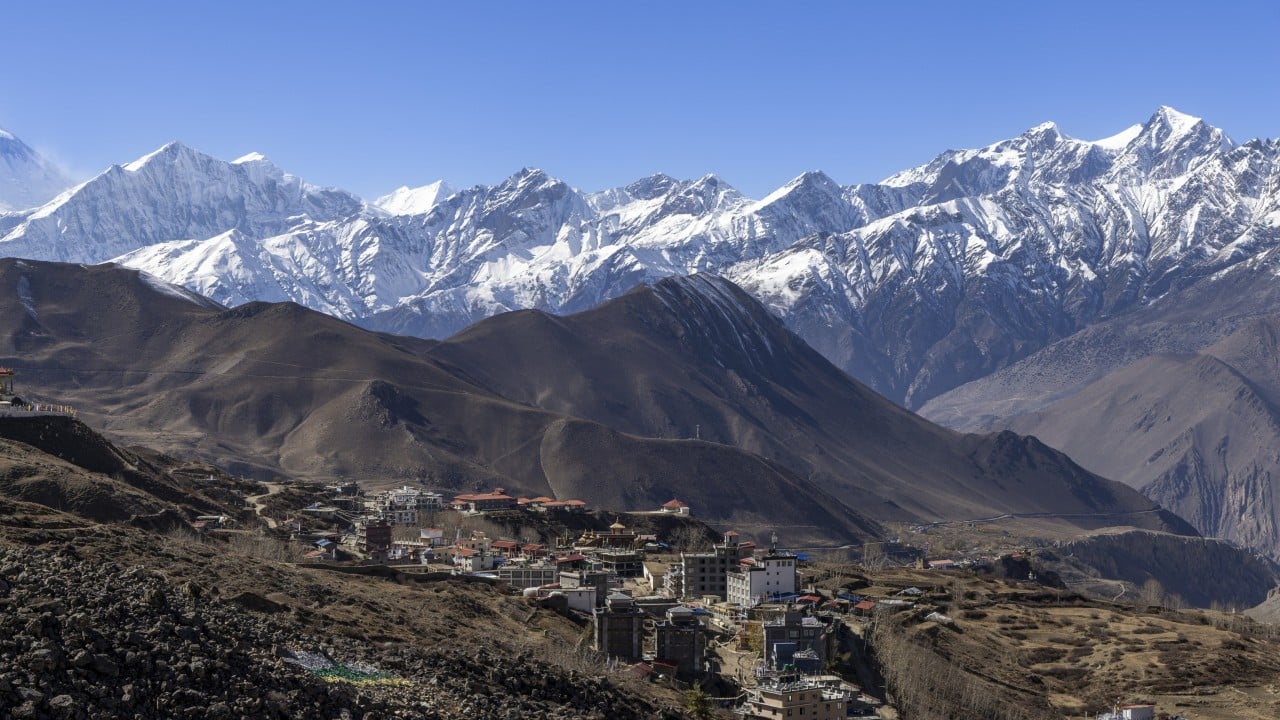
Makalu is not Everest. While the world’s tallest peak draws crowds and high-altitude traffic jams, Makalu remains a "climber’s mountain." Located on the border between Nepal and China, its pyramid-shaped summit is notorious for its technical difficulty and its isolation. To stand on its ridges is to be truly, terrifyingly alone. Related analysis on this trend has been provided by The Guardian.
http://googleusercontent.com/image_content/209
When an avalanche triggers in the "Death Zone," the physics are brutal. Gravity takes hold of thousands of tons of accumulated ice, turning a soft white blanket into a high-speed river of concrete. For the American climber, whose identity was held close by his team during the initial notification of next of kin, there was no room for error. The slide swept through a high-altitude camp, catching the expedition in a moment of extreme vulnerability.
Most people assume the danger of mountaineering is the fall. They picture a slip on a ledge. But the reality is often more insidious. It is the waiting. You spend weeks in base camp, letting your blood thicken and your lungs adapt. You wait for a "window"—a brief pause in the jet stream winds that can scour the skin off your face. When that window opens, you move. You move because the mountain has given you a fleeting permission to exist on its flanks.
The Invisible Stakes of the High Peaks
Why do they do it? This is the question whispered by those at sea level. We look at the statistics—the body count that rises every spring season in Nepal—and we see madness.
But talk to any high-altitude athlete and they will describe a clarity that doesn't exist in the valley. Up there, the noise of modern life is silenced. There are no emails. There is no debt. There is only the rhythm of the crampon biting into the ice and the singular, holy mission of the next step. It is a pursuit of the self through the lens of extreme suffering.
The American climber was part of a tradition of explorers who view the risk not as a deterrent, but as the price of admission. The "invisible stakes" are not about fame; they are about the deep, human need to see what lies beyond the edge of our own endurance.
When the Snow Moves
Eyewitness accounts from Makalu Base Camp described a day that began with deceptive stillness. The sun was hitting the upper couloirs, warming the layers of snow deposited by recent storms. This is a precarious time. As the temperature rises, the bond between the new snow and the old ice beneath it begins to fail.
It takes only a hairline fracture.
When the avalanche hit, the Sherpa guides and fellow climbers scrambled to respond. In the thin air, a rescue is a Herculean feat. Every movement feels like dragging your limbs through wet sand. Digging into debris at that altitude is an exercise in near-suffocation. Despite the heroic efforts of the rescue team and the deployment of search parties, the mountain held onto its prize.
The report from the Department of Tourism in Kathmandu was clinical: one fatality, several injuries, expedition canceled. But those dry words fail to capture the hollowed-out look in the eyes of the survivors as they descend toward the treeline. They leave behind more than a teammate. They leave a piece of their own certainty.
The Growing Cost of the Clouds
We are seeing more of this. The Himalayan climbing seasons are becoming increasingly unpredictable. While it is easy to point toward shifting global temperatures as the culprit for unstable ice, the reality on the ground is a complex web of logistics, timing, and raw luck.
As more expeditions push into the "shoulder seasons" to avoid the congestion of Everest, peaks like Makalu and Kanchenjunga are seeing increased activity. This brings more resources, yes, but it also places more souls in the path of the mountain’s whims.
Consider the logistics of a recovery at 8,000 meters. Helicopters can barely hover in air that thin. They dance on the edge of a stall, their rotors straining to find purchase. Often, a climber who perishes in an avalanche remains part of the mountain forever, encased in the very ice they sought to conquer. It is a lonely, cold immortality.
The Echo in the Valley
The tragedy on Makalu serves as a sobering reminder of the contract every climber signs. You trade the safety of the earth for the chance to touch the sky. You acknowledge that the mountain does not care about your experience, your gear, or the family waiting for you in Colorado or Seattle.
The American climber knew this. His peers knew it. Yet, the loss vibrates through the community like a bell. It forces a pause. In the climbing gyms of the US and the tea houses of the Khumbu, people are talking about the "why" once again.
The answer is never satisfying to those who stay below.
The journey to the top of the world is paved with these stories. They are stories of immense courage and catastrophic silence. As the news cycle moves on and the next storm buries the tracks of the rescue team, the mountain remains. Makalu stands indifferent, its white ridges gleaming in the sun, waiting for the next person who believes they can dance with the wind and win.
Somewhere in the high camps, a tattered prayer flag snaps in the breeze. It is the only sound left in a place where the air is too thin for voices. The white silence has returned, heavy and absolute, covering the tracks of a man who went looking for the infinite and found it.